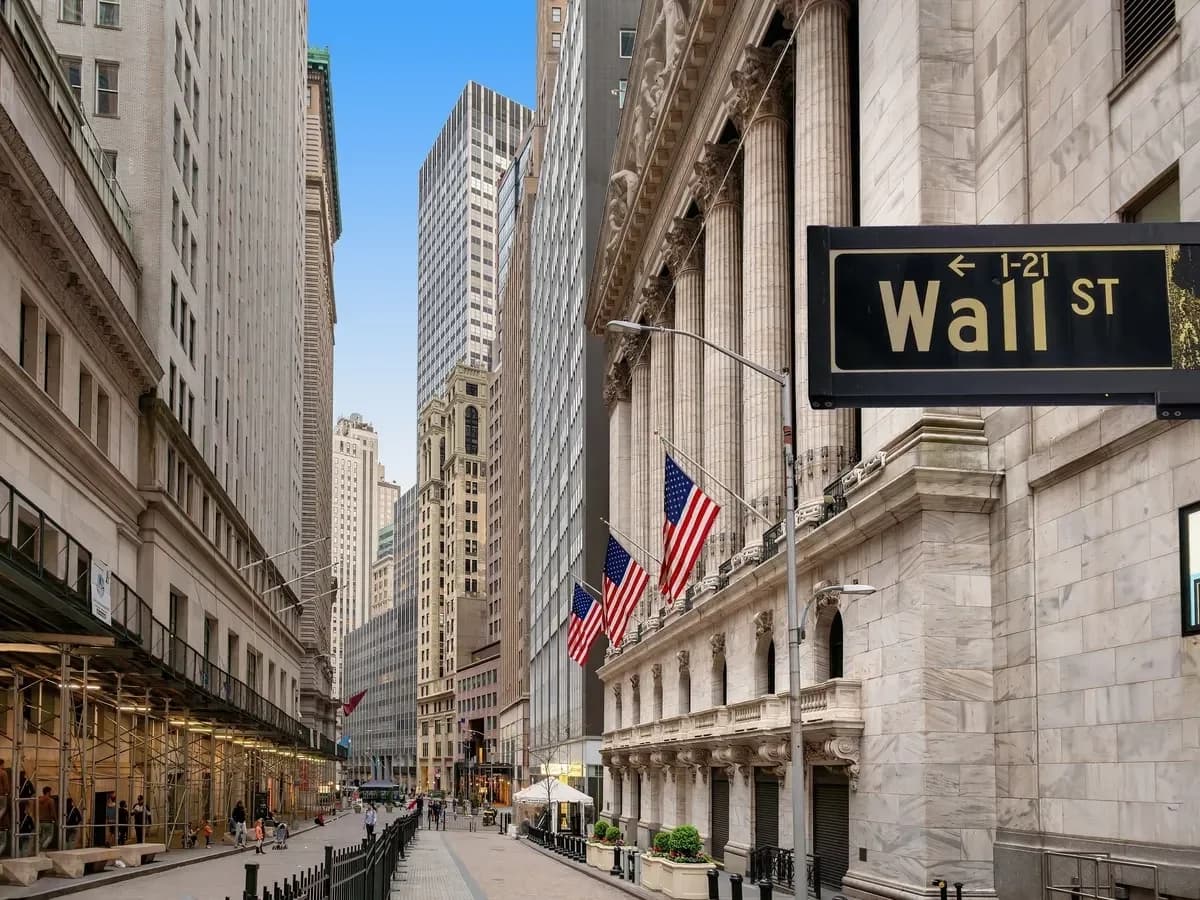
US stock markets declined on Wednesday after President Donald Trump announced the end of the fragile ceasefire with Iran and launched strikes in retaliation for Tuesday's bombing. Speaking on Truth Social, Trump said the attack was retribution for Tuesday's bombing, warning "If it happens again, it will get much worse!" The Dow Jones Industrial Average settled 1.09% lower at 52,348.39, while the S&P 500 slipped 0.28% to 7,482.71. However, the Nasdaq Composite defied the trend and advanced 0.2% to 25,870.65, showing mixed performance across major indices. U.S. Central Command said the strikes were carried out to further degrade Iran's ability to threaten freedom of navigation in the Strait of Hormuz, with the United States holding Iran accountable for recent unjustified aggression against commercial shipping and civilian crews.
Oil prices came under renewed pressure as the intensifying conflict heightened concerns over potential disruptions to crude oil supplies via the Strait of Hormuz, one of the world's most critical energy transit routes. West Texas Intermediate (WTI) rose 0.88% to $74.17 per barrel, while Brent crude, the international standard, jumped 0.90% to $78.92 per barrel. The rally in crude lifted energy stocks, with US energy stocks rallying after Trump said a tentative ceasefire with Iran is "over" and a "waste of time." Shares of Chevron Corp., Venture Global Inc., Diamondback Energy Inc. were among the top gainers in the energy sector. The surge in crude prices follows US Central Command's announcement that the United States had launched a 'series of powerful strikes' against Iran in response to attacks on three commercial vessels in the Strait of Hormuz.
Major semiconductor players experienced mixed performance, with Broadcom gaining after Apple announced plans to spend more than $30 billion as part of a chip-supply agreement reached earlier this week with the chipmaker. Nvidia rose after the Information reported that China plans to allow its top AI firms to buy a limited number of the company's H200 chips. However, AI heavyweights Microsoft, Amazon and Alphabet each fell, weighing on the S&P 500. As reported by Goodreturns, Sandisk crashed 7.3% and lost $18.76 billion market value to close around $1,618. SpaceX, despite being included in the Nasdaq 100, nosedived by nearly 7% to close around ₹149.47 apiece, wiping out almost $145 billion from the stock's market value. The impact of the selloff in Samsung shares spread to US chip makers, with Nvidia dropping 0.7% following the negative sentiment. South Korean chipmaker SK Hynix fell up to 10% on Tuesday, dragging the Kospi index down significantly.

In Asian markets, South Korea's Kospi rose 0.76%, Japan's Nikkei 225 index gained 1.96%, Hong Kong's Hang Seng index jumped 0.16% and Shanghai's SSE Composite index rose 0.20%. Indian markets are also likely to open in the positive territory, with GIFT NIFTY trading 0.46% higher. The mixed performance in Asian markets reflects varying investor sentiment across the region as the Iran conflict develops. The positive momentum in South Korean and Japanese markets suggests some investors view the escalation as a temporary geopolitical event rather than a fundamental shift in regional stability.
Investors are also awaiting the minutes of the Federal Reserve's June policy meeting, due later in the day, for further clues on the US interest rate outlook after policymakers left rates unchanged while indicating inflation risks remain. According to CME's FedWatch tool, traders project a likely rate hike by the Fed's December meeting. Inflation worries mounted at the U.S. central bank's meeting last month, as officials followed Federal Reserve Chairman Kevin Warsh's lead to a more stripped-down policy statement, with minutes of the session showing on Wednesday. The International Monetary Fund on Wednesday once again lowered its 2026 global growth forecast to 3%, warning of ongoing risks posed by the war in the Middle East. Cooper Howard, director of fixed income research and strategy at the Schwab Center for Financial Research (SCFR), noted that the minutes may show how close of a call it was to keep rates unchanged vs. hiking at Warsh's first meeting at the helm. Market strategist Ed Yardeni said the rupture in the ceasefire between the US and Iran risks sparking a fresh acceleration in price growth, which in turn could compel the Federal Reserve to raise interest rates.