The United States has depleted nearly half of its total inventory of advanced missile-defence interceptors in defending Israel during the now-paused war with Iran, according to Defense Department assessments described to The Washington Post. The US launched more than 200 Terminal High Altitude Area Defence (THAAD) interceptors in defence of Israel, along with more than 100 Standard Missile-3 and Standard Missile-6 interceptors fired from naval vessels in the eastern Mediterranean. By contrast, Israel fired fewer than 100 of its Arrow interceptors and around 90 David's Sling interceptors, with some used against less sophisticated projectiles fired by Iran-backed groups in Yemen and Lebanon. The numbers reflect what The Washington Post describes as a lopsided dynamic in the military relationship between the two countries, with the US using more advanced interceptors to defend Israel than Israel itself spent defending its own homeland. Military analysts told The Washington Post that the data gives a rare peek into the scale of the US-Israel defence partnership, with Kelly Grieco, a senior fellow at the Stimson Center, noting that "the United States absorbed most of the missile defense mission while Israel conserved its own magazines."
The US and Israel began the war with Iran on February 28 with attacks targeted at Iran's military, navy and air force facilities. The hostilities have resulted in significant casualties, including the elimination of top Iranian leadership, including the supreme leader, Ayatollah Khamenei. According to The Washington Post, the US shot around 120 more interceptors and engaged twice as many Iranian missiles during the operation. The hostilities have been put on pause following a ceasefire that came into effect on April 8, with the US and Iran since discussing a peace deal to end over four decades of hostilities. As The Washington Post reports, the battle was a race between the US, Israel, and Iran, with the US and Israel trying to destroy as many of Iran's ballistic missiles and launchers inside the country as possible, while Iran tried to outlast the supplies of US, Israeli, and Gulf interceptors. The reality of the military burden was very different from the razzmatazz surrounding the depiction of the US-Israel partnership, with The Washington Post noting that "the numbers are striking."
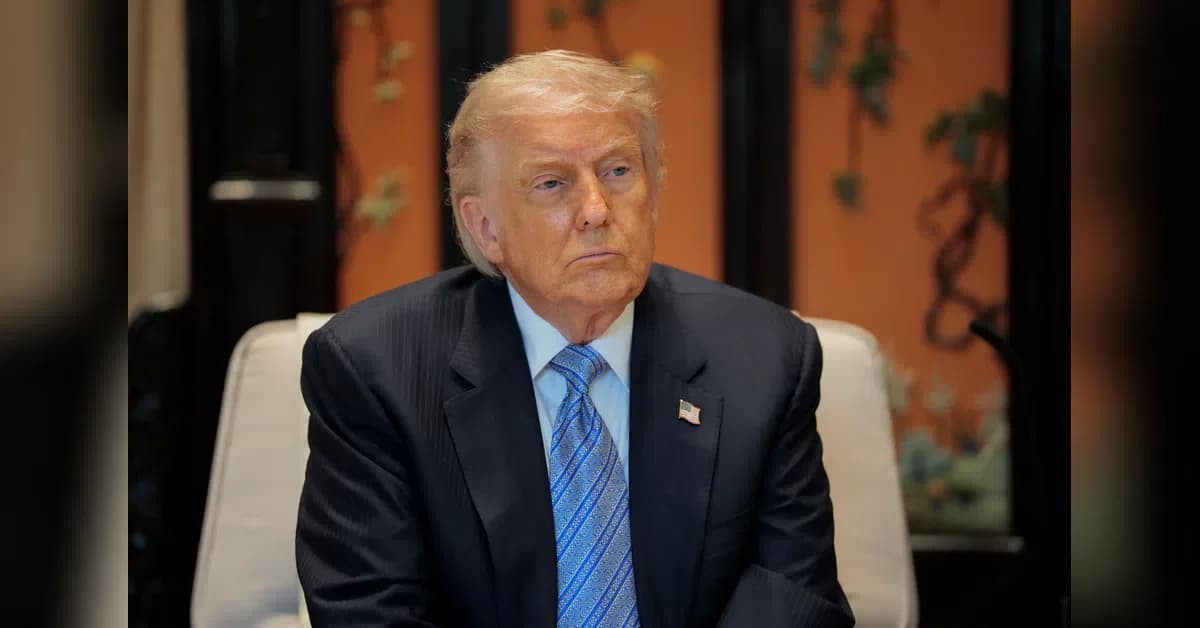
If hostilities resume between the US and Israel against Iran, as President Donald Trump has threatened, the US military is likely to expend an even greater share of interceptors due to a recent decision by the Israeli military to take some of its missile defence batteries offline for maintenance, according to The Washington Post. An administration official noted that "the imbalance will likely be exacerbated if fighting restarts." The Pentagon defended the balance of military resources used between Israel and the United States, with Sean Parnell, the Pentagon's chief spokesman, telling The Washington Post that "ballistic missile interceptors are just one tool in a vast network of systems and capabilities that comprise a layered and integrated air defence network." He emphasized that both Israel and the United States carried the defensive burden equitably during Operation Epic Fury, which saw both countries employ fighter aircraft, counter-UAS systems, and various other advanced air and missile defence capabilities with maximal effectiveness. However, The Washington Post reports that US allies such as Japan and South Korea are concerned over the shortage of interceptors, as both countries rely on the US security umbrella to deter threats from China and North Korea.
In a statement, the Pentagon defended the balance of military resources used between Israel and the United States. Sean Parnell, the Pentagon's chief spokesman, told The Washington Post that "ballistic missile interceptors are just one tool in a vast network of systems and capabilities that comprise a layered and integrated air defence network." He emphasized that both Israel and the United States carried the defensive burden equitably during Operation Epic Fury, which saw both countries employ fighter aircraft, counter-UAS systems, and various other advanced air and missile defence capabilities with maximal effectiveness. The US's Gulf allies were brushed off when they requested interceptor refills during the height of the war, as reported by Middle East Eye. The Israeli Embassy in Washington also defended the coordination, stating that "Operations Roaring Lion and Epic Fury were coordinated at the highest and closest levels, to the benefit of both countries and their allies." The Israeli government noted that "The US has no other partner with the military willingness, readiness, shared interests, and capabilities of Israel."
Despite the extensive US and Israeli military action, Iran maintains significant capabilities that could pose future challenges. According to The New York Times, Iran still has about 70 percent of the mobile missile launchers and roughly 70 percent of the missile stockpile it had before the war. This substantial remaining arsenal, combined with the US's depleted interceptor inventory, suggests that any future conflict could quickly strain the US military's defensive capabilities. The numbers have drawn significant attention from analysts, with Trita Parsi, executive vice president at the Quincy Institute, writing on X that "the US depleted far more of its advanced missile defense interceptors inventory to defend Israel than Israel itself did," calling it "very understandable that many view the Iran war as 'Israel first' when you see these statistics." The reality of the military burden was very different from the razzmatazz surrounding the depiction of the US-Israel partnership, with The Washington Post noting that "even if the operational logic was sound, the United States is left with roughly 200 THAAD interceptors and a production line that can't keep pace with demand."