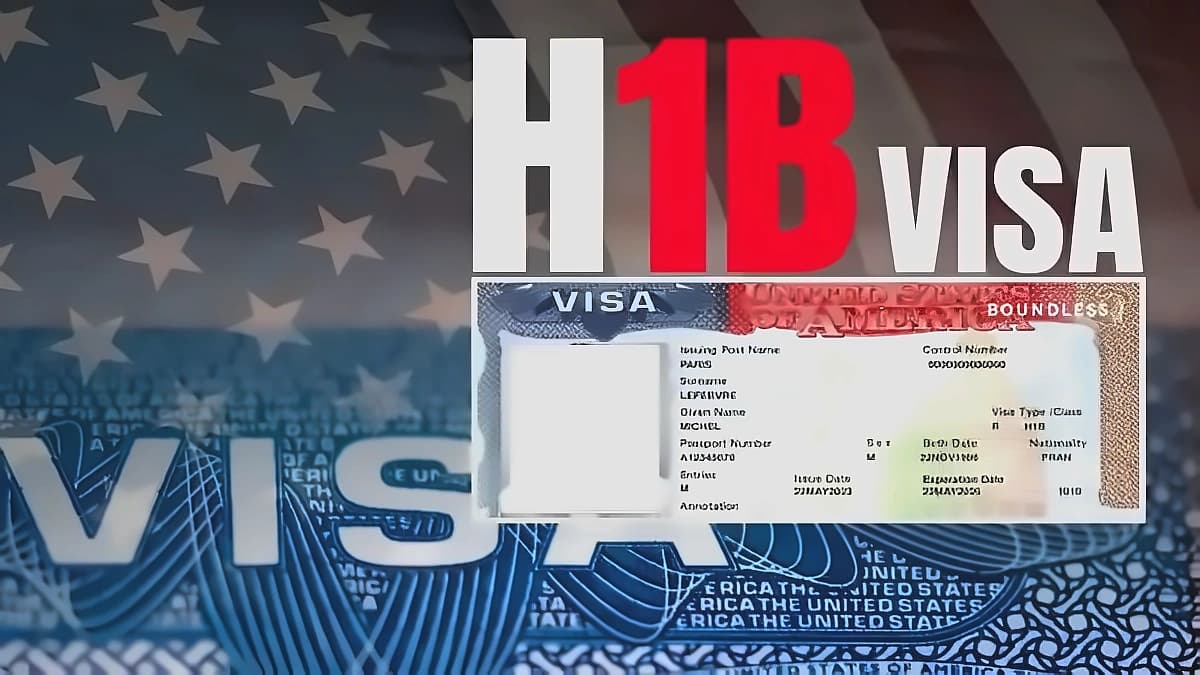
The Trump administration suffered a significant setback on Friday when the 1st US Circuit Court of Appeals in Boston refused to lift a ruling that blocks the government from charging a $100,000 fee for new H-1B visas. According to reports from Reuters, the appeals court left in place a June 8 decision that found the fee unlawful, allowing the order to remain in effect while the administration challenges it in court. The July 24 order by the US Court of Appeals for the First Circuit means the payment requirement cannot currently be enforced while the government's appeal continues, offering temporary relief to employers and skilled foreign workers, including thousands of Indians.
The case originated from a lawsuit brought by 20 Democratic attorneys general, who argued that the administration had effectively created a new tax without congressional approval. As reported by Reuters, a district judge agreed with this argument, ruling that the fee exceeded the executive branch's authority. The three-judge appellate panel rejected the administration's emergency request, stating that the government had not shown it was likely to prevail in its appeal. The appeals court stressed that its decision does not determine whether the policy is ultimately legal, only concluding that the government had not shown it was likely to succeed in obtaining a stay.
President Trump announced the steep fee increase through a presidential proclamation in September, stating it was aimed at curbing what he described as misuse of the H-1B programme by employers. According to the administration's rationale reported by Reuters, Trump argued that the H-1B program had been deliberately exploited to replace, rather than supplement, American workers with lower-paid, lower-skilled labor. The requirement did not apply to every H-1B application but was limited to petitions filed on or after September 21, 2025, where the beneficiary was outside the US and required consular processing before entering the country, with workers already in the US seeking extensions exempt.
For Indian professionals applying for H-1B visas from outside the US, the immediate takeaway is that the $100,000 payment is not currently being enforced for petitions covered by the litigation. As reported by immigration law firm Fragomen, USCIS is expected to issue updated guidance and filing procedures in light of the ruling, though it may take several days for that guidance to be announced. The court decisions do not address refunds for employers or applicants who may already have made the payment, with whether refunds will be issued likely to depend on future court rulings or guidance from USCIS. Employers with affected petitions should watch for updated USCIS filing instructions and retain records of any payments already made.
The Trump Administration is expected to continue its appeal of the district court invalidation, with the government's appeal remaining pending. According to Fragomen, a separate district court decision upholding the proclamation is on appeal before the U.S. Court of Appeals for the D.C. Circuit, and additional challenges remain pending in other federal courts. The appeals court noted that Congress must clearly authorise financial burdens of this kind, observing that the immigration provisions relied upon by the government do not explicitly authorise a $100,000 payment. Employers planning to file H-1B petitions that would have been subject to the fee should consult with immigration counsel before proceeding.