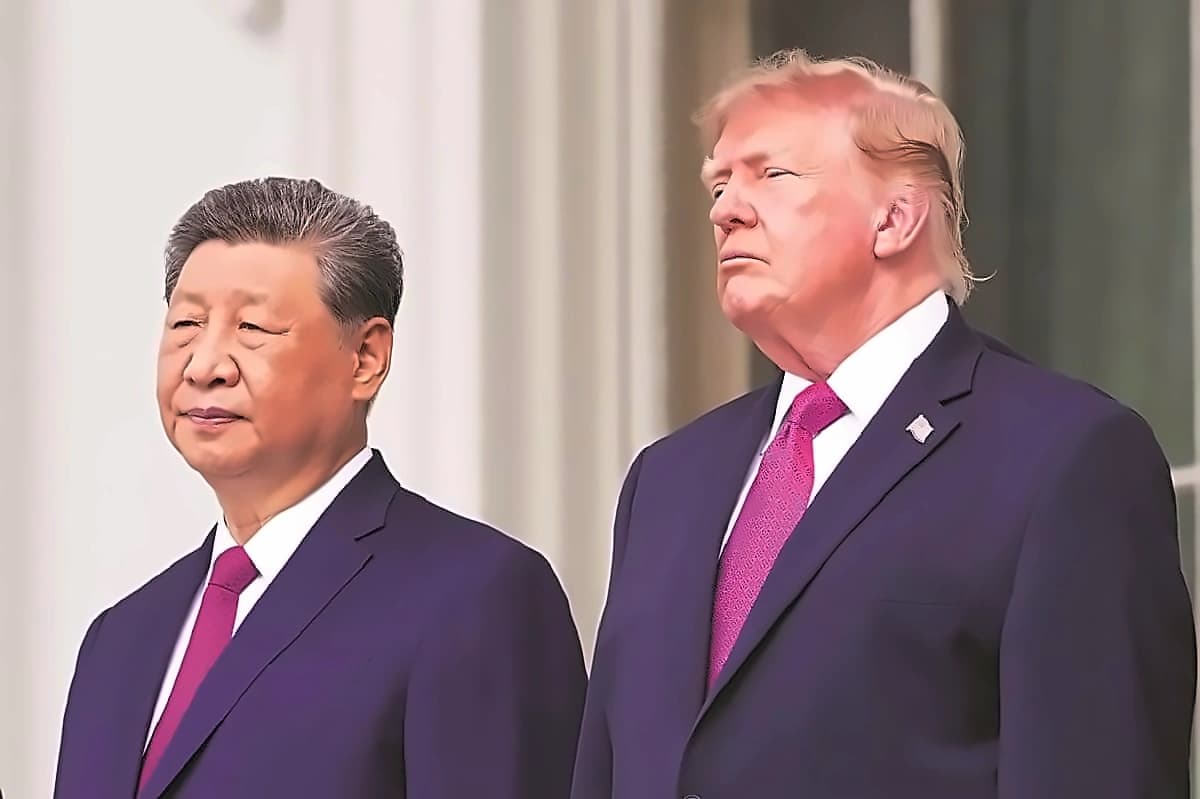
Deutsche Bank expects a quiet summit with limited deliverables when President Donald Trump and President Xi Jinping meet in Washington on September 24, according to the latest analysis from the Deutsche Bank Research Institute. The bank's base case is not a breakthrough summit packed with sweeping agreements, but rather a meeting heavy on optics, lighter on deliverables, and ultimately useful precisely because expectations for a grand bargain should remain low. A successful tactical summit within a much larger strategic competition could extend top-level stability into the first half of 2027 while reducing near-term risks of decoupling, another trade escalation, or a security confrontation. The distinction matters, as markets are tempted to treat US-China relations as a switch that flips between cooperation and confrontation, when the reality looks much more like a dimmer where the rivalry remains but intensity can be turned down enough to stop every political disagreement from immediately becoming a market event.
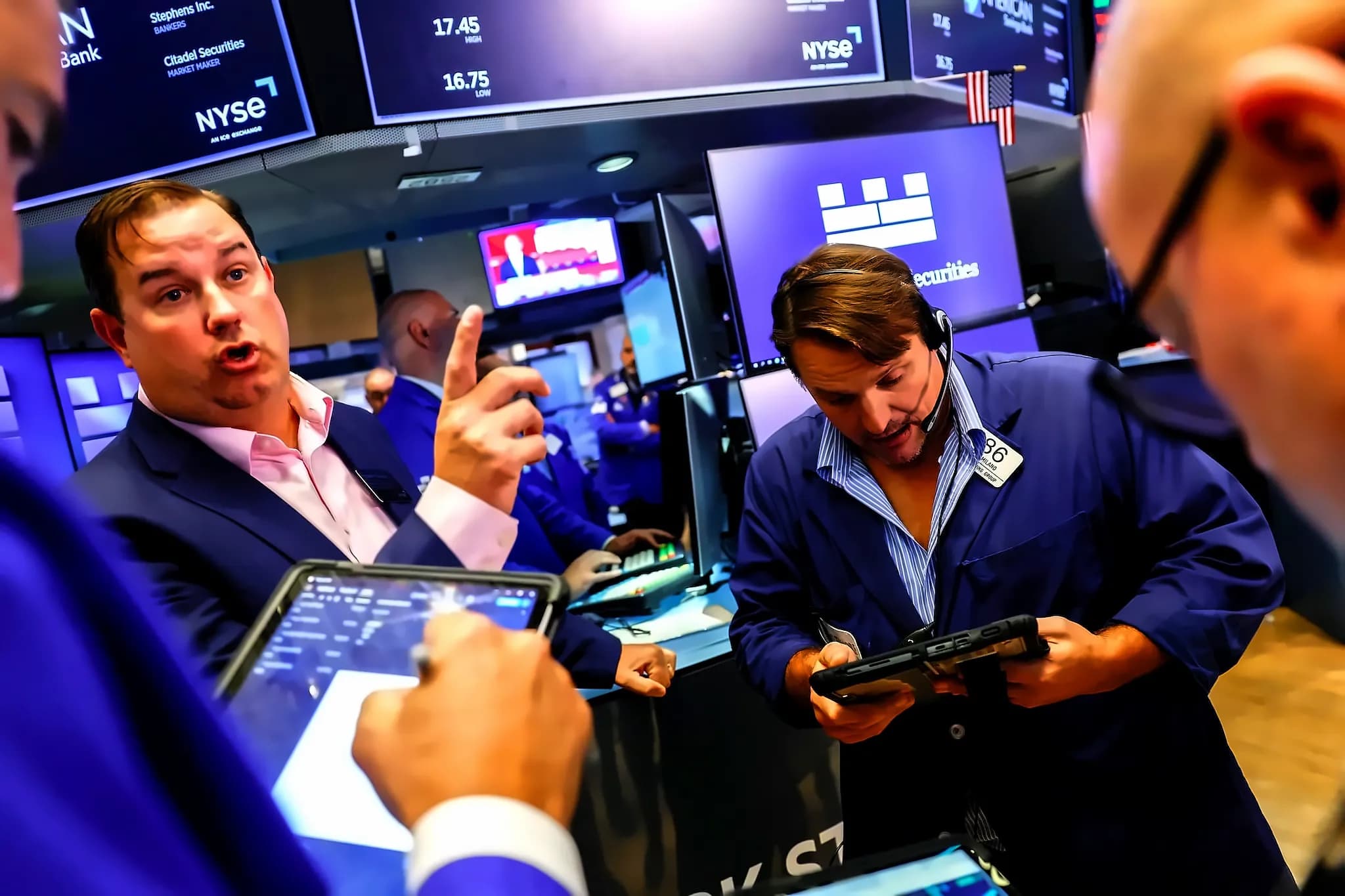
The S&P 500 and Dow Industrials posted weekly losses as investors grappled with rising yields, according to reports from CNBC TV18. The Federal Reserve raised rates for the first time since 2023, signaling additional tightening ahead, with policymakers penciling in one more rate increase in 2026. Fed funds futures are currently pricing in roughly 42% odds that two more increases are still possible, as reported by the CME FedWatch Tool. Investors have moved past the latest Federal Reserve meeting relatively unscathed, but are settling in for a higher-for-longer rate environment and anticipating market choppiness in the coming months. The current market sentiment reflects investor uncertainty about the trajectory of interest rates and their impact on equity valuations.
Trump and Xi Jinping's talks this week will be the pivotal event for global markets, covering crucial issues from tariffs to technology between the world's two largest economies. While the leaders meeting in Washington on Thursday will try to keep their awkward relationship as stable as possible, tensions have ramped up since their May meeting, with US officials criticizing China for not living up to the terms of their one-year trade truce. Everything from tariffs to artificial intelligence controls is expected to be up for discussion, with Chinese export curbs on critical minerals and rare earths causing supply shocks for US and other global companies. Negotiations are likely to come down to the wire after both sides played for leverage in recent weeks, with it's not clear if their trade truce will be extended by a year as many observers expect, or if the US side will insist on a shorter timeframe. Reuters reporting ahead of the meeting similarly points to trade, artificial intelligence, rare earths, Taiwan and Iran among the subjects expected to feature, while expectations for a sweeping new economic settlement remain restrained. Oxford Economics said in a report that the meeting could make the US-China relationship more predictable, but trade, technology, and security policies were likely to remain structurally restrictive, describing the likely outlook as a calmer but not closer relationship.
Separate reporting has pointed to earlier steps this year, including discussed approval for Nvidia (NVIDIA) H200 chip sales to Chinese technology firms, framed as part of a broader easing in the bilateral technology relationship ahead of the leaders' meeting. Nvidia's CEO Jensen Huang is expected to sell twice as many chips next year, as reported by Asia Times. The summit's intersection with AI chip exports and technology relationships adds complexity to market expectations, with traders particularly focused on USDCNH movements and AI chip exporters around the meeting date. Trump will hold a state dinner at the White House, the second of his current term, with the guest list expected to include top tech chiefs including Nvidia CEO Jensen Huang, making the summit especially relevant for technology-focused investments. The technology sector accounts for about 38% of the S&P 500 and has gained more than 20% in 2026, although it has lost ground since the beginning of June, as reported by Reuters. Deutsche Bank argues that the AI race is moving too quickly for summit diplomacy to meaningfully slow it, with the two sides likely finding room to discuss obvious common interests, particularly misuse by non-state actors, but seeing little prospect that high-level talks will reverse the broader escalation in the technological competition.
European trade tensions are adding pressure on Chinese stocks, with Fitch Ratings saying China's trade shock had affected the euro zone, with export-oriented Germany particularly exposed. The ratings agency cut its forecast for China's 2026 economic growth by 0.1 percentage point to 4.5%, citing growing economic imbalances. Chinese automakers were among the sectors under pressure, with an index tracking carmakers falling 0.6%, while an index of new-energy vehicle companies declined nearly 1%. The weakness followed calls from some European auto executives and politicians for local-content requirements and broader tariffs aimed at limiting vehicle sales from China. The mixed sector performance highlighted cautious investor sentiment ahead of the Trump-Xi meeting, as markets weighed the possibility of improved US-China stability against continued restrictions on trade, technology, and strategic industries.
Property shares in both mainland China and Hong Kong jumped after reports that Chinese regulators had asked some banks not to classify overdue loans to China Vanke as non-performing and to extend repayment deadlines for the state-backed developer. The move provided a boost to the property sector, which has remained under pressure from weak demand, high debt levels, and a prolonged housing downturn. Artificial intelligence will remain another key theme for investors after industry leaders called for a slowdown in AI development and raised concerns about the potential risks associated with the technology, as reported by Reuters. Those concerns have weighed modestly on semiconductor stocks that have been at the center of the AI investment boom. A sustained recovery in technology shares could be important for the broader market's ability to challenge its previous highs, with the S&P 500 remaining broadly range-bound over the past several months despite corporate earnings remaining strong. Despite the recent volatility, the S&P 500 has remained broadly range-bound over the past several months, even as corporate earnings have remained strong, with investors continuing to see earnings growth as an important support for equity valuations. Some strategists are warning that narrow market breadth and complacent sentiment point to further downside, as noted by BTIG's Jonathan Krinsky, while Ed Yardeni has cut his year-end S&P 500 target to 7,900 from 8,400 and says the risks of a downturn have increased over the next three to six months.