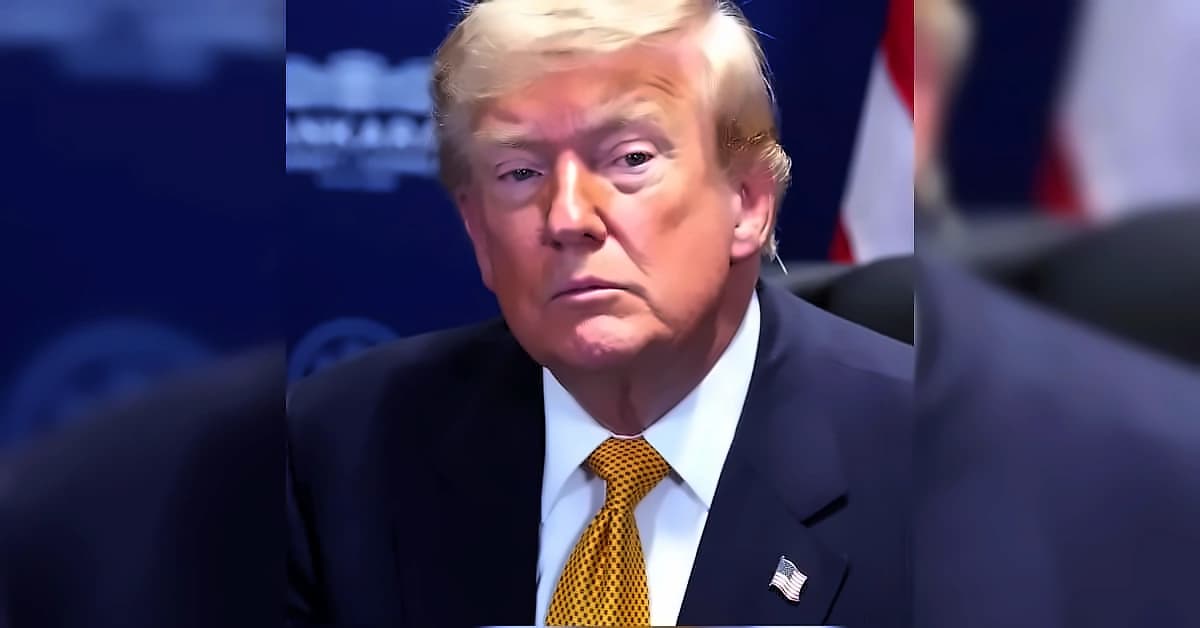
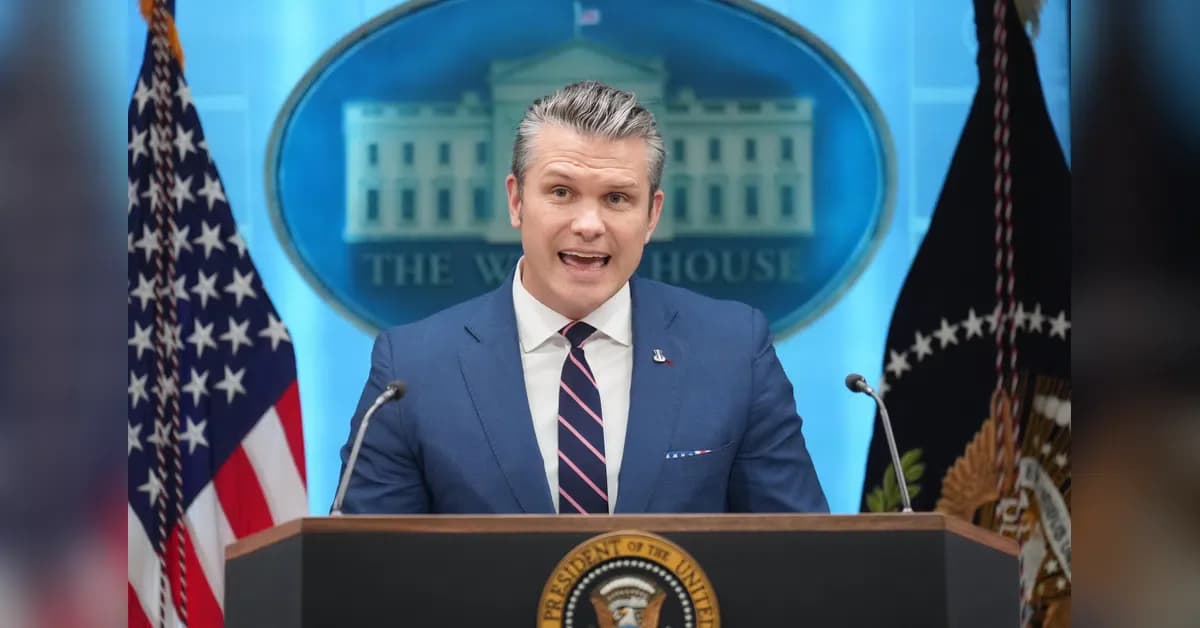
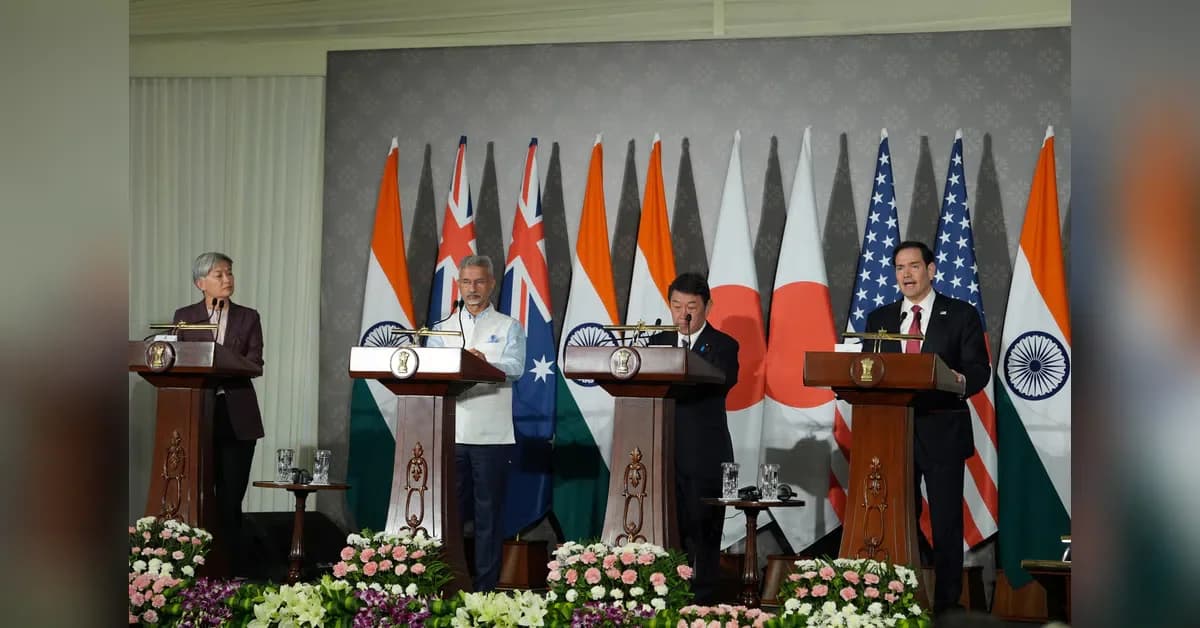
US President Donald Trump's state visit to China in mid-May produced the most elaborate encounter between the two leaders in recent memory, resulting in a formal shift in bilateral relations. According to reports from Business Standard, Trump accepted Xi Jinping's formulation of a constructive China-US relationship of strategic stability — the first time a US administration has validated a Chinese-designed conceptual framework as the agreed basis for bilateral relations. The framework defines stability across four dimensions: positive stability with cooperation as the mainstay, healthy stability with competition within proper limits, constant stability with manageable differences, and lasting stability with expectable peace. Chinese Foreign Minister Wang Yi described it as strategic guidance for the next three years and beyond, designed to embed the concept before a potentially less accommodating successor arrives.
Despite Trump's warmer rhetoric towards China, his government continues to pursue restrictive policies that define Washington's broader China strategy, raising questions about the durability of the truce between Washington and Beijing. As reported by Business Standard, Trump shocked his political base with a series of rhetorical concessions during his state visit, including warm endorsement of Chinese students studying in America, support for China-linked acquisition of US farmland, and dismissal of concerns over state espionage as routine two-way reality. However, some experts suggest Trump's musings highlighted a purely transactional approach towards China, resulting in verbal positivity that rarely translates into major policy shifts. Others argue his tone reflects a growing appetite for a less adversarial relationship with Beijing, which creates an opportunity to restabilise bilateral ties.
The summit produced substantial commercial outcomes, though the details reveal significant divergence between official accounts. As reported by Business Standard, the White House announced China committed to purchasing at least $17 billion annually in US agricultural products through 2028, an initial order of 200 Boeing aircraft, restored access for beef and poultry, and a pledge to address rare-earth supply concerns. However, the Chinese Ministry of Commerce listed five preliminary outcomes that diverge significantly, confirming in-principle agreement to reduce tariffs on products of mutual concern at an equivalent scale and arrangements on aircraft procurement alongside a US guarantee of supply of aircraft engines and parts. The ministry characterized all outcomes as preliminary, with details still under consultation, suggesting China is holding commercially valuable commitments in reserve as leverage over future US behavior on technology controls. Recent developments show the US maintains tariffs on China while establishing a Board of Trade to identify $30 billion worth of goods on each side where tariffs could be modified, focusing on nonsensitive goods rather than strategic products.
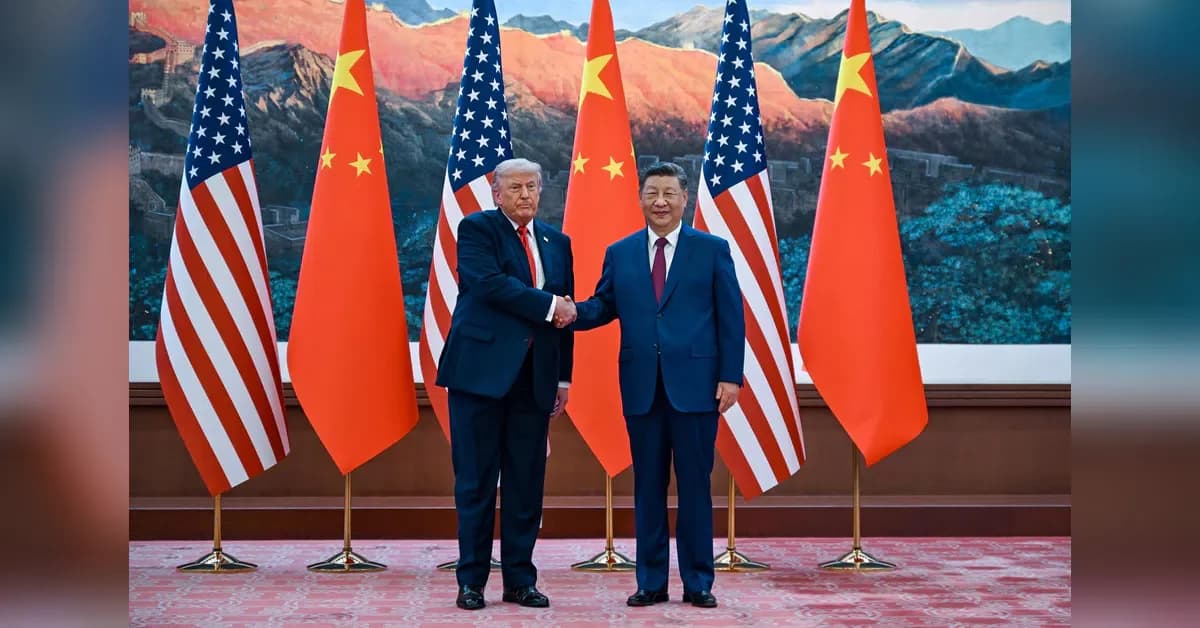
The Taiwan dimension emerged as the summit's sharpest edge, with Xi warning that poor handling of the issue could lead to clashes and conflicts. According to Business Standard, Trump acknowledged he had made no commitment either way on approving an arms package, describing it as a very good negotiating chip, and when reminded of Reagan's Six Assurances dismissed the commitment as ancient history. Wang Yi's post-summit statement that China sensed the US side does not agree with or accept that Taiwan moving towards independence was a calibrated public assertion of diplomatic gains. The practical consequence shifts the baseline of credible US commitment, recalibrating threat assessments across Taiwan, Japan, South Korea, and the Philippines, with strategic ambiguity now tilting in a direction China finds advantageous.
The war on Iran demonstrated that overwhelming military superiority no longer automatically produces decisive political outcomes or durable strategic compliance, exposing fundamental limits to American predominance. As noted in recent analysis, the war highlighted that "the United States acts multilaterally when it can (i.e., when others support U.S. policies), and unilaterally when it decides that it must, which is much of the time." Several European governments also resisted participation in the war on Iran and instead favoured diplomacy and regional containment, reflecting growing skepticism about American leadership and the costs of continued escalation. This development points to an international environment where assumptions formed during the unipolar era no longer align with contemporary political and economic realities, requiring Washington to negotiate with Beijing rather than simply issue demands.
For India, the Beijing summit reveals critical realities about the evolving strategic environment. As reported by Business Standard, three realities have been sharpened: the US has formally adopted China's preferred conceptual framework, reducing its reliability as a counterweight to Chinese power; a China that secured the relational framework it sought for over a decade has reduced incentive to offer India concessions on outstanding issues; and the G-2 overlay effect constricts India's space to organize third-party coalitions and build multipolar architecture. India faces acute material vulnerabilities including dependence on Chinese upstream manufacturing across the solar supply chain, negligible rare-earth processing capacity, and deep integration with Chinese electronics supply chains, which China understands well and compounds as India cannot allow one set of dependencies to be substituted by another set of dependencies on the US.
The concept of the 'reluctant merchant' emerges from this environment where the United States negotiates with rival powers through bargaining and symbolic parity while managing much of the international order through hierarchy and military dependence. As analysis suggests, this approach reflects a powerful state operating in circumstances where "command has become more costly and bargaining more necessary." The merchant seeks agreements because they are cheaper and more sustainable than prolonged confrontation, with negotiation becoming not a sign of weakness but a response to a more demanding international environment. The result is an international order in which power remains highly concentrated, yet its exercise produces fewer automatic outcomes than in the decades immediately following the Cold War. This transition from uncontested American predominance to a more fragmented system of great-power management represents a fundamental shift in how global politics operate, with military capabilities alone no longer guaranteeing political compliance or durable strategic outcomes.