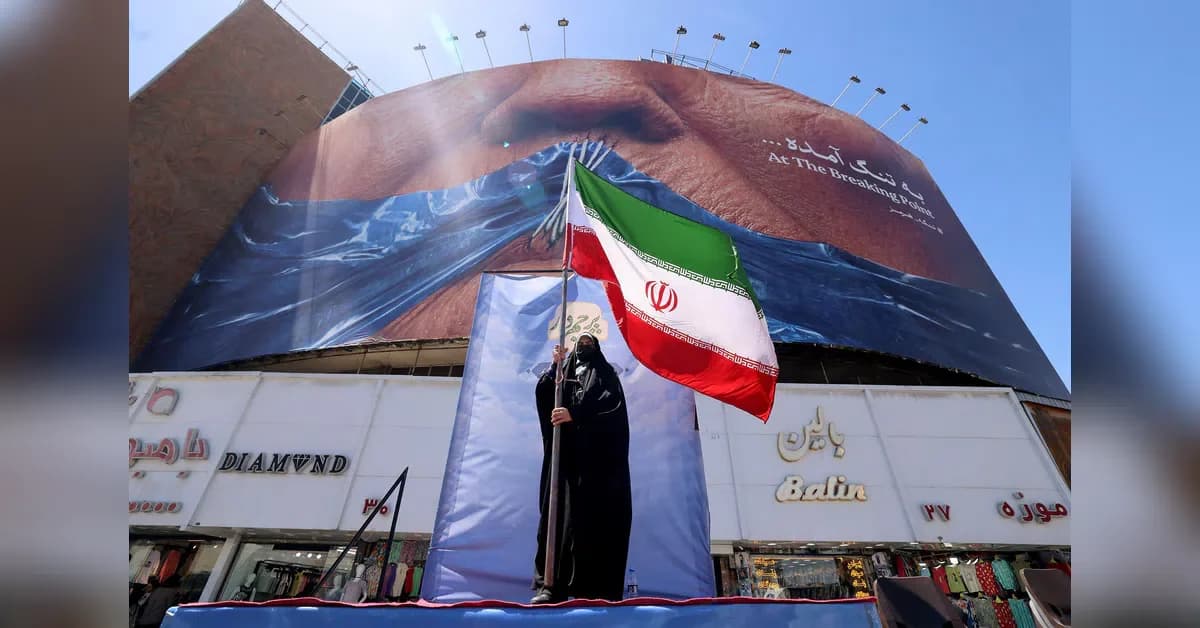
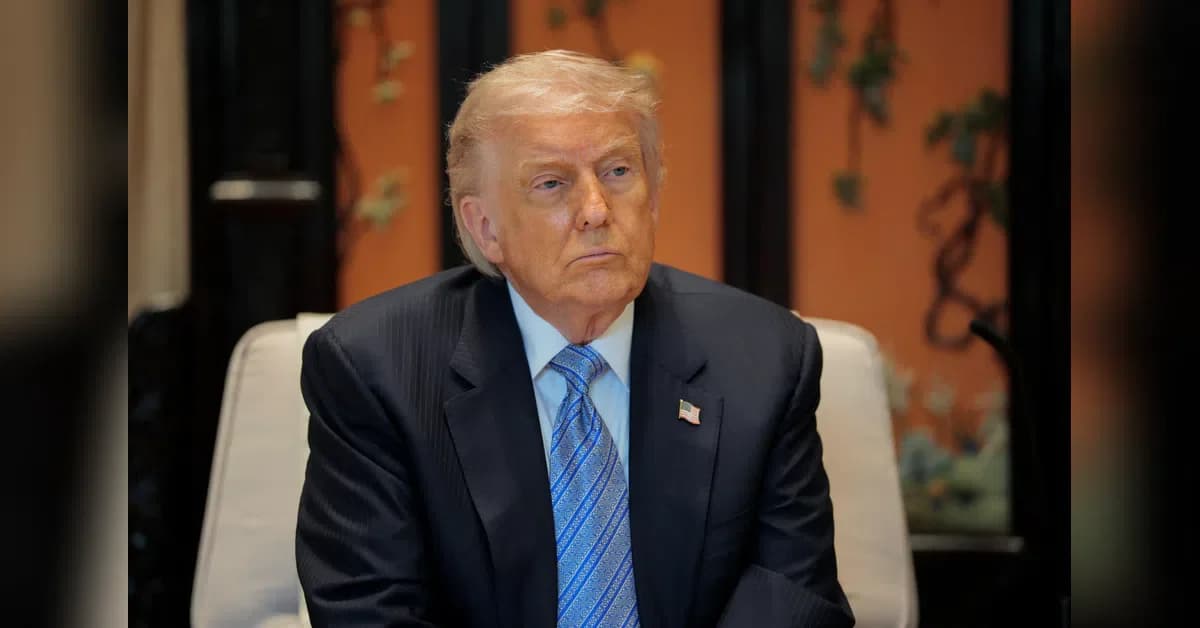
Iran has made a concerted diplomatic push with Gulf states, warning them explicitly that Tehran will hit their oil, power and water plants unless they convince Donald Trump to end United States strikes on Iran and instead seek a negotiated end to the war. According to Business Standard, the warning envisaged attacks on energy facilities, oil fields, refineries, electricity grids, water infrastructure, transport networks and other strategic assets of Washington's closest Arab allies. The message was delivered through a flurry of high-level diplomatic contacts after Trump threatened on July 28 to strike Iran's energy network and infrastructure, with Iranian Foreign Minister Abbas Araghchi speaking with his Saudi, Turkish and Qatari counterparts, as well as Pakistan's army chief. As per Business Standard, Saudi Crown Prince Mohammed bin Salman subsequently spoke with Trump, urging him to delay military action, return to negotiations, secure a ceasefire and pursue a diplomatic settlement.

Iran has categorically denied President Trump's claim that Tehran agreed to reopen the Strait of Hormuz as part of a potential peace deal. According to Fars News Agency, citing sources close to Iran's negotiating team and military, 'There is no agreement on reopening the Strait of Hormuz.' The source emphasized that the waterway would remain closed while US 'hostile actions' continue. Iranian officials also rejected reports that Tehran had approved any plan to change its policy on the strategically important shipping route. As per Fars, vessels would only be permitted to pass through a designated route after coordinating with and receiving approval from the Islamic Revolutionary Guard Corps Navy, with military sources warning that vessels attempting to use other routes could face 'incidents'. However, a proposed deal between Iran and Oman that would give Tehran control over ships entering the Gulf through the Strait of Hormuz is not easily workable due to US sanctions and restrictive insurance clauses on any payments, according to four industry sources cited by Business Standard.
President Trump has dismissed concerns about depleted weapons arsenals in the Iran war, instead blaming the Biden administration's military aid to Ukraine for current stockpile issues. According to Business Standard reports, Trump stated that 'Biden gave a lot to Ukraine and so we're building that up, but we have a lot. We have a lot of the midlevel stuff, too; I mean, more than we could ever use, no matter what.' However, military experts challenge this characterization. Mark F. Cancian, a retired Marine Corps colonel and expert at the Center for Strategic and International Studies, noted that the vast majority of equipment transferred to Ukraine was related to ground combat and not critical to the Iran war. The Biden administration provided Ukraine with thousands of armored vehicles, anti-tank weapons like Javelin and TOW missiles, and millions of rounds of ammunition, while the Iran war has been fought primarily in the sky using air-to-surface missiles.
Recent military usage data reveals significant depletion of key missile systems in the Iran war. According to Business Standard reporting and calculations from Colonel Cancian, the military has used 1,200 Patriot missiles out of an inventory of 2,330, more than 1,000 Tomahawk cruise missiles out of 3,000, and more than 1,100 Joint Air-to-Surface Standoff Missile (JASSM) out of 4,400. The Pentagon has also used 40 to 70 Precision Strike Missiles out of 90, 130 to 250 SM-3 missiles out of 410, and 90 to 370 SM-6 missiles out of 1,160. Additionally, 190 to 290 Terminal High Altitude Area Defense (THAAD) missiles out of 360 have been deployed. The Wall Street Journal reported in August 2022 that some officials thought the level of 155-millimeter combat rounds in the US arsenal was 'uncomfortably low' after transfers to Ukraine.
Iranian officials have strongly rejected Trump's claims and warned of their military preparedness. According to Mehr News Agency, officials described Trump's claims as 'another lie' and an attempt to pressure Gulf countries through threats. Iranian Foreign Minister Abbas Araghchi reiterated Tehran's readiness to respond to any US or Israeli military action during a phone call with Saudi Foreign Minister Prince Faisal bin Farhan on Saturday. Araghchi said Iran was prepared to defend its sovereignty, territorial integrity and national security, adding that any aggression would face a 'decisive and proportionate response' from Iranian forces. Brigadier General Seyyed Majid Ebn-e-Reza, acting minister of defence and armed forces logistics, accused Iran's adversaries of engaging in psychological warfare and said Tehran would use the perceived threat to increase military readiness, strengthen deterrence and expand its capabilities. The Iranian warning was unequivocal: if America targeted Iran's infrastructure, they would retaliate by striking Gulf energy facilities and other regional targets, as one Gulf source told Business Standard.
Trump celebrated a 9% decline in Brent crude prices to $88 per barrel and a 7% drop in West Texas Intermediate to $83 per barrel on Monday, calling it a 'very big drop.' As reported by Business Standard, these were the largest single-day declines since late May, though prices remain elevated compared to pre-war levels. Before the war began in February, Brent crude was trading at $72 per barrel. However, prices had risen to over $100 per barrel the week before and briefly topped $91 per barrel on Wednesday. The White House spokeswoman defended Trump's characterization, stating that prices would plummet to pre-war levels as the US reopens the Strait of Hormuz. On August 2, Trump said he agreed to cancel the attack on Iran 'subject to being able to rapidly make a deal'.