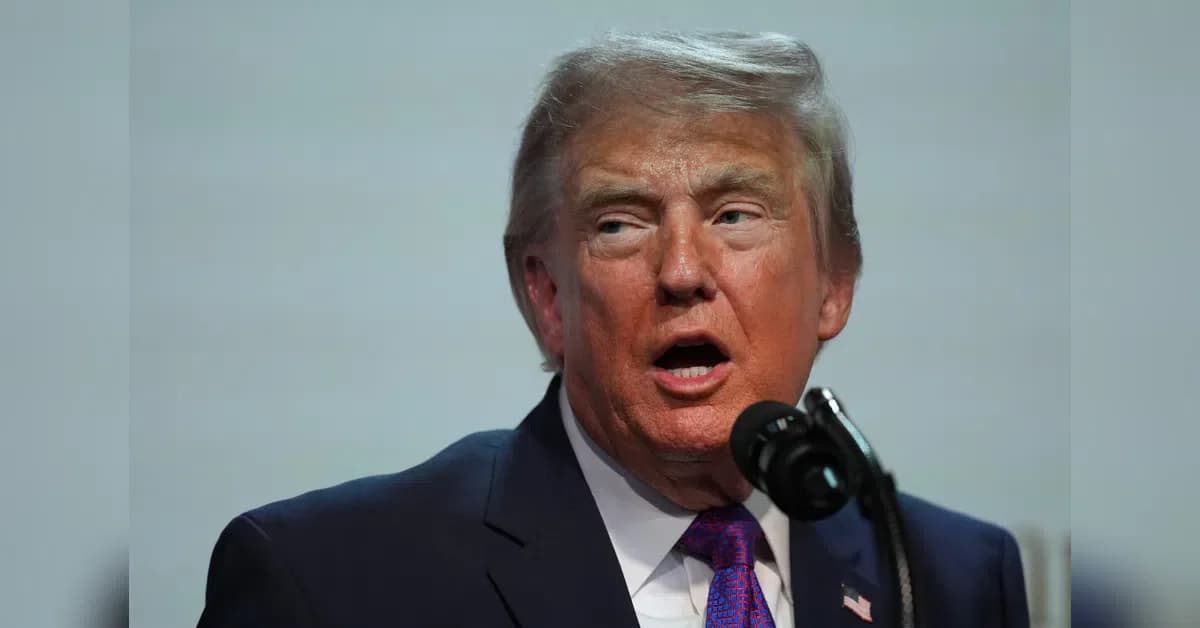
President Donald Trump announced this week that he had postponed a 'very major attack' against Iran after leaders of Saudi Arabia, the United Arab Emirates and Qatar asked for more time to pursue an agreement over Iran's nuclear program. According to reports from Business Standard, Trump stated there was 'a very good chance' that a deal could be reached, though he remained vague about the timeline, saying only 'a limited period of time' for Tehran to return to negotiations. The president reiterated his pledge to resume attacks if Iran didn't agree to his terms, stating 'We'll either have a deal, or we're going to do some things that are a little bit nasty.' Treasuries surged and oil dropped sharply following these latest comments. In his latest comments, Trump told reporters he was 'an hour away' from ordering strikes on Monday evening before Persian Gulf allies requested he hold off, stating he would allow 'a limited period of time' - two or three days at least - for talks to continue. As per CBS News, Trump said he was 'in no hurry' to make a deal, adding that he would prefer to see 'few people killed as opposed to a lot' if negotiations break down.
The Islamic Revolutionary Guard Corps (IRGC) issued a stark warning on Wednesday that any new attack on Iran would provoke them to spread the war beyond the Middle East, according to Iranian state media. The IRGC stated that if 'aggression against Iran is repeated,' it would deliver blows 'in places you cannot even imagine.' This threat echoed growing fears in Washington that Iran or allied groups could seek to strike Western interests outside the Middle East. The IRGC's warning came as the US military continues to maintain pressure on Iranian shipping and oil operations in the region. In its latest statement, the IRGC warned that 'if aggression against Iran is repeated, the regional war that had been warned of will this time spread beyond the region, and our crushing blows will bring you to ruin in places you cannot even imagine.' The IRGC also stated it had 'not brought all the capacities' of the country into action yet, suggesting it could escalate further if provoked.
The Islamic Revolutionary Guard Corps (IRGC) warned it would retaliate beyond West Asia if the US or Israel renewed strikes, according to the semi-official Tasnim news agency. The IRGC vowed 'crushing blows in places you do not expect,' though it was unclear if Tehran had the capability to do so. Iran fired drones and missiles at several countries when the US and Israel began the war, including targets in Turkey and Cyprus beyond the Gulf Arab states. While Tehran's military was battered by airstrikes until a truce was agreed on April 8, it still has the ability to attack countries in the region and potentially beyond. The Islamic Revolutionary Guard Corps (IRGC) has now explicitly warned that any renewed US or Israeli attacks would be met with retaliation 'beyond the region.' The IRGC added that 'we are men of war, and you will witness our power on the battlefield, not in hollow statements or on social media pages.'
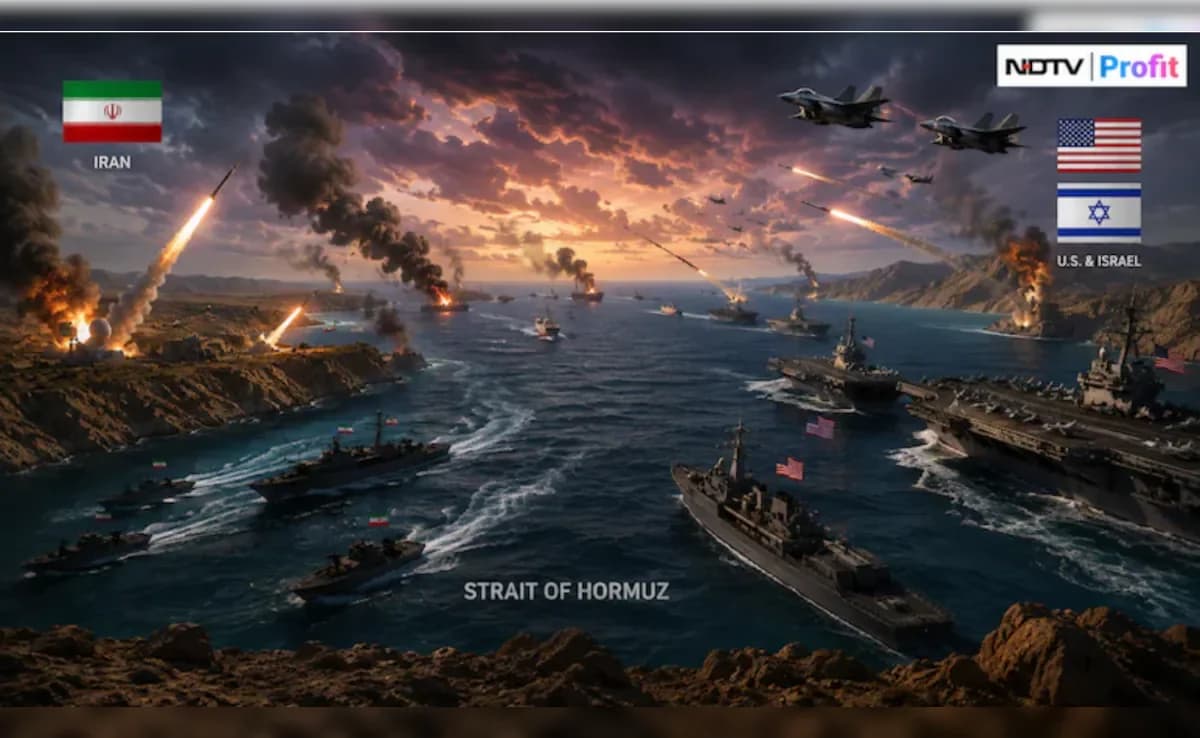
The US military on Wednesday boarded and later released an Iranian-flagged oil tanker in the Gulf of Oman, according to US Central Command. The vessel, M/T Celestial Sea, was 'suspected of attempting to violate the US blockade by transiting toward an Iranian port.' Following a search of the vessel, American forces released it and directed the crew to alter course. Iran claimed that 26 ships passed through Hormuz in the past day 'with the coordination of and security provided by the IRGC Navy,' which would be an unusually high number for recent weeks, though still far below pre-war levels. The US has imposed its own blockade on Iran-linked shipping, throttling maritime traffic and rattling global energy markets. US Central Command reported that U.S. forces have redirected 90 ships under the blockade and 'disabled' another four vessels to ensure compliance. The Iranian Revolutionary Guard Corps (IRGC) has effectively blocked shipping in the strait since early April, accusing the US of violating an ongoing ceasefire agreement. The strait is a crucial transit route for around a fifth of the world's crude oil supplies.
Negotiations to end the conflict have stalled over the fate of Iran's nuclear program and the Strait of Hormuz, a critical transit point for oil and gas. A criminal complaint unsealed in the United States last week accused an Iraqi man — described as a senior commander in Kataib Hezbollah, an Iran-backed militia in Iraq — of helping to plan attacks in the United States, Europe and Canada since the start of the war. Asian stocks followed Wall Street higher as optimism over talks eased concerns, while Brent crude oil edged higher to $105.60 a barrel after falling more than 5% in the previous session. According to Bloomberg Economics analysts, 'After almost three months of war, Trump's aims are seemingly far from being achieved, and Iran is emerging bruised but emboldened with newfound global leverage.' The Iranian Revolutionary Guard Corps (IRGC) has now established a new Persian Gulf Strait Authority (PGSA) on Wednesday, releasing a map of what it claims is its 'controlled maritime zone' in the Strait of Hormuz. The PGSA defined the zone as the 'line connecting Kuh Mobarak in Iran and the south of Fujairah in the UAE in the east of the strait to the line connecting the end of Qeshm Island in Iran and Umm al-Qaiwain in the UAE in the west of the strait.'