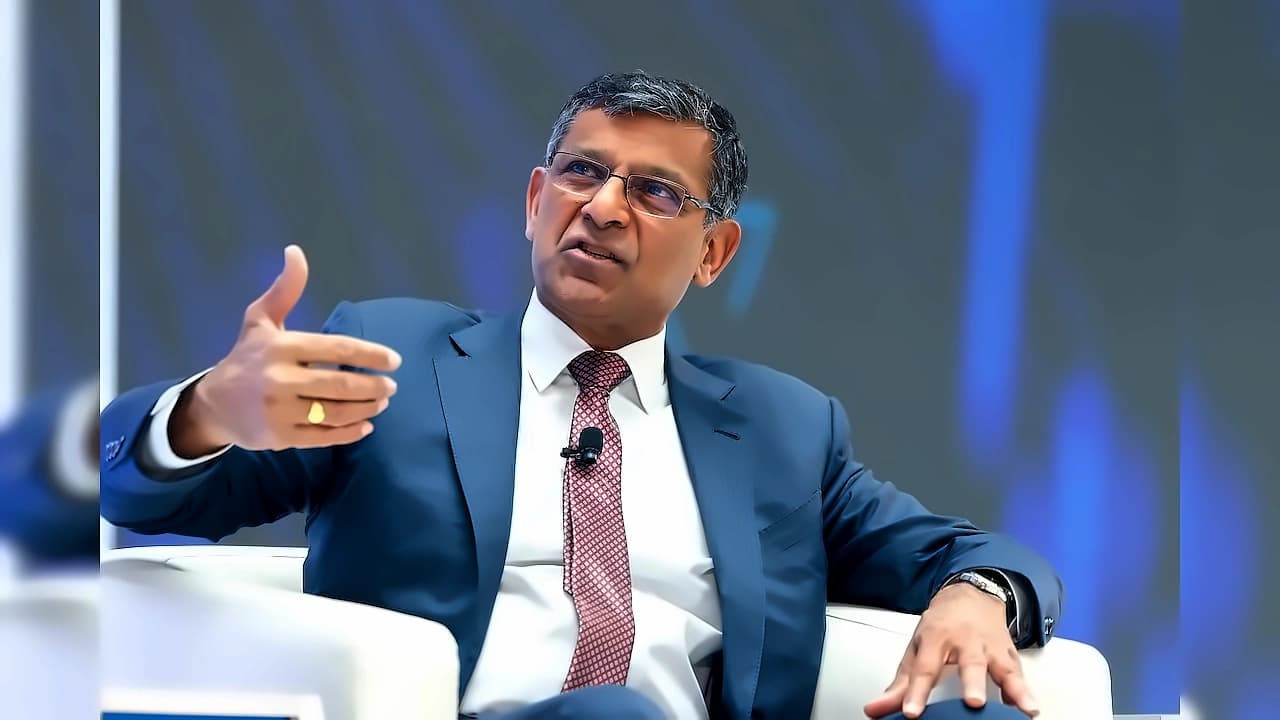
Sriram Krishnan, the 42-year-old architect of US President Donald Trump's artificial intelligence policies, announced his departure from the White House on Saturday. According to reports from PTI, Krishnan made the announcement on X, stating he would be leaving his role as Senior Policy Advisor for Artificial Intelligence at the end of June 2026. The Chennai-born technologist, who has previously worked at Microsoft, Facebook, Twitter, Yahoo, and Snap, expressed gratitude for serving the American people and acknowledged the privilege of working under President Trump's leadership. As per PTI, Krishnan wrote: "This journey has been the privilege of a lifetime." He also praised Trump, stating "Without his leadership, we would not be leading in the AI race." Krishnan did not provide a specific reason for his departure but indicated he intends to help "tackle some of the large challenges facing America" related to AI.
Krishnan was instrumental in developing the Trump administration's AI Action Plan, which provided a blueprint to roll back regulation of emerging technology and promote the build-out of data centres across the country. As reported by PTI, he also served among Trump's tech advisers who crafted an executive order limiting states' ability to regulate AI. During his tenure, Krishnan highlighted the administration's AI Action Plan, the National AI Policy Framework, and forging AI acceleration partnerships among his key achievements. According to The Washington Post, Krishnan helped design the administration's "AI Action Plan," which laid out a roadmap to ease regulations on emerging technology and support the expansion of data centers nationwide. The administration has since issued several executive orders touching on AI, including one signed on December 11, 2025, that seeks to limit states' ability to regulate artificial intelligence — a measure the tech industry had actively lobbied for. A separate executive order focused on oversight was delayed and narrowed following industry pushback. Among his accomplishments, Krishnan helped negotiate international AI partnerships, develop a national AI policy framework, and represent the United States at AI summits and diplomatic engagements in countries including India, France and Britain. According to PTI, Krishnan stated: "The past 18 months have given me a front row seat to this critical moment on AI facing America and its allies."

As Krishnan prepares to leave his White House position, President Trump is exploring new approaches to AI governance, including the possibility of the U.S. government acquiring stakes in AI firms. According to The Washington Post, Trump told reporters aboard Air Force One on Friday: "There's something very interesting about it, where it almost becomes a partnership with the American public." Trump indicated he planned to meet with AI executives as soon as next week to discuss these potential partnerships. This development comes as the administration considers new regulatory frameworks for AI development. The White House in a Tuesday executive order directed federal agencies to ask leading AI developers to voluntarily submit their most capable models for government cybersecurity tests before releasing them to the public, demonstrating the administration's focus on security oversight in AI deployment.
Despite Trump's embrace of AI, the administration's AI policies have faced significant security challenges and industry tensions. Fears over AI's unknowns in national security contributed to a months-long standoff between the Trump administration and AI firm Anthropic. The Pentagon blacklisted Anthropic earlier this year after the tech company refused to allow the U.S. military to use its models for domestic surveillance and fully autonomous weapons systems. However, after a White House meeting with the CEO of Anthropic, which is preparing to go public, tensions have appeared to thaw. Additionally, some populists in the president's orbit warn that AI presents a political risk, as proposals to build data centers to power these companies have stirred intense backlash. In his State of the Union speech in February, Trump said he told big tech companies to build their own power plants, with tech CEOs later agreeing to tackle new electricity generation and efficiency measures.
Before joining the government, Krishnan was a general partner at venture capital firm Andreessen Horowitz and worked at Facebook and Twitter. As reported by PTI, he is a close ally of Elon Musk and advised him on his 2022 takeover of Twitter, which was renamed X. Born in Chennai in 1984, Krishnan earned his Bachelor of Technology in Information Technology from SRM University in 2005 before moving to the US to join Microsoft. Krishnan faced criticism from Trump's right-wing influencers for supporting policies on green cards and skilled foreign worker access that allegedly contradicted the 'Making America Great Again' agenda. Looking ahead, Krishnan indicated he plans to remain active in AI policy circles, stating he will be "building institutions" to tackle large challenges for 'America and its allies' and is planning to establish an outside organization that would allow him to continue influencing Trump's AI agenda. According to PTI, Krishnan wrote: "The past 18 months have given me a front row seat to this critical moment on AI facing America and its allies. I plan on building institutions that help tackle some of those challenges."