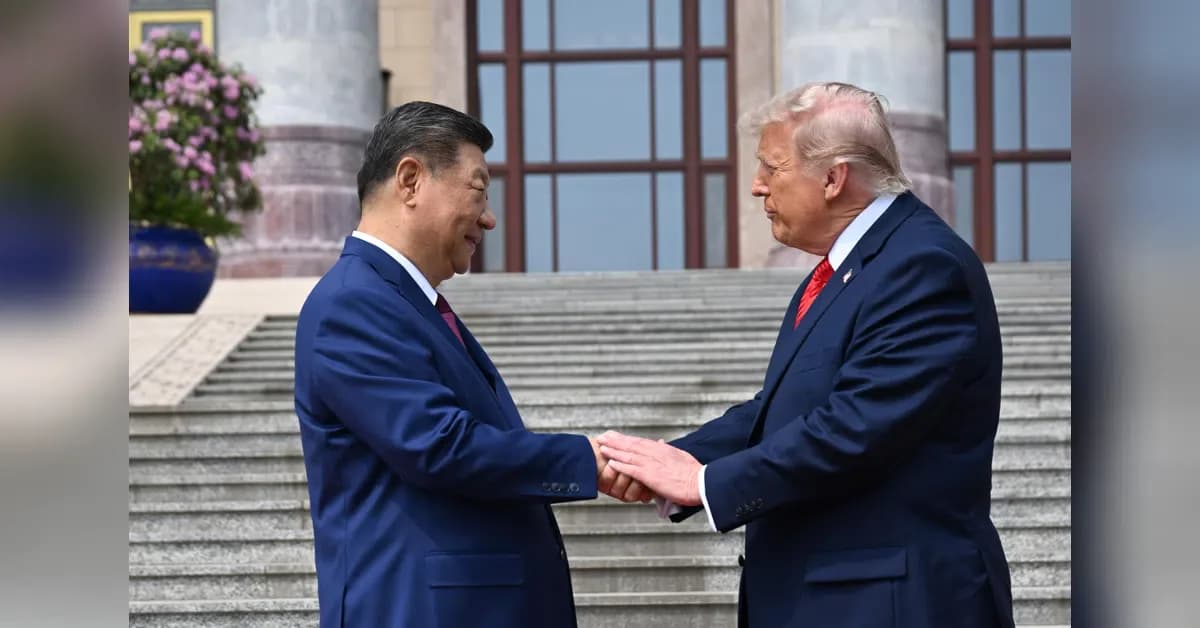
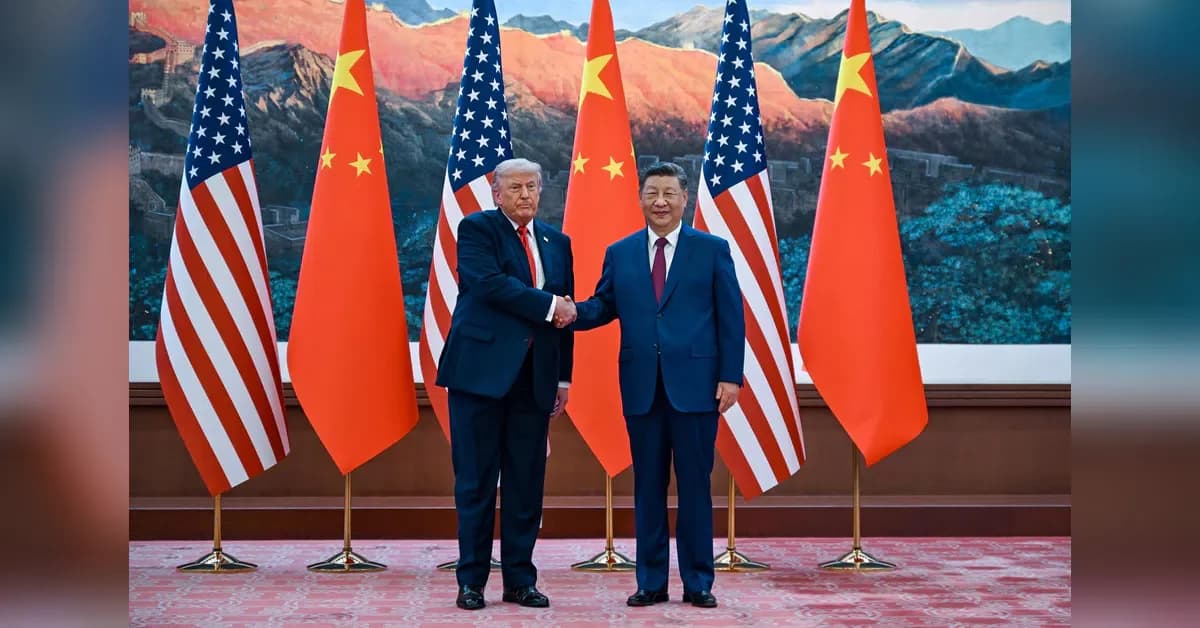
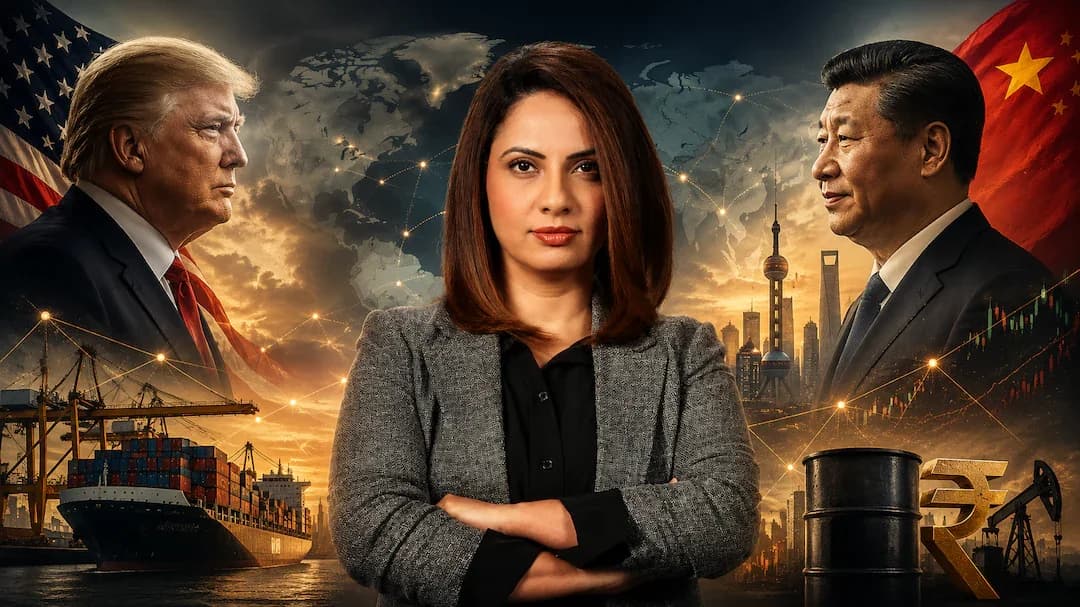
The May 14-15 summit between Chinese President Xi Jinping and US President Donald Trump marked the beginning of a new phase in US-China relations, with both sides establishing a framework for 'constructive and strategically stable' engagement. According to The Straits Times, the concept was first aired in Kuala Lumpur in July 2025 when Secretary of State Marco Rubio met with Chinese Foreign Minister Wang Yi, with the State Department readout noting that Rubio advocated for this strategic stability approach. Dr Yun Sun, a China specialist at Stimson Center, explained that this framework implies 'some level of parity has been reached between the two sides', with both having 'the ability to impose significant damage on the other side's critical national interest'. The summit's focus on establishing rules of engagement suggests a shift from previous confrontational approaches, with Dr Sun predicting that Chinese officials will use this term to define and judge US behaviour, potentially including responses to issues like US weapons sales to Taiwan. Robert Manning, a China expert at Stimson Center, described this as the 'third stage – bargaining' in the relationship cycle, moving beyond previous periods of denial and anger.
Despite Trump's initial claims that 'we didn't discuss tariffs' during the summit, recent developments reveal that both sides actually agreed to significant tariff reductions. According to The Straits Times, China's Ministry of Commerce confirmed on Saturday that the countries had agreed in principle to reduce tariffs on a set pool of products that were 'of concern to each side'. The commerce ministry stated that both sides had agreed to push forward with resolving issues in agricultural trade, including China's concerns about American treatment of bonsai trees, dairy and aquatic products, and the recognition of Shandong province as an area free of bird flu. China would work to resolve US concerns about beef and poultry exports from certain states, while the sides also reached an agreement for China to buy aircraft and aircraft engines and parts from the United States. Jamieson Greer, the US trade representative, confirmed that the two sides would set up a board of trade that would oversee tariff cuts in $30 billion of goods on each side, with more information expected in the coming days on some of China's purchases, including of engines and agricultural products. A US readout noted that China restored US beef trade and agreed to buy over $10 billion worth of agricultural products and over 400 GE aerospace engines, with China potentially buying more US oil and medical devices.
The summit failed to address major geopolitical flashpoints that continue to strain bilateral relations. According to The Straits Times, the summit did not break new ground on two geopolitical hot buttons: the war in Iran and the self-governing island of Taiwan, which China claims as its own. The White House said the two leaders agreed that Iran could not have a nuclear weapon, the Strait of Hormuz must remain open, non-militarised and free of tolls for passage, but China, which is Iran's most important trade and strategic partner, has shown no inclination to go beyond words to pressure Teheran. Trump refrained from reacting to a loud warning from Beijing that Taiwan is 'the most important issue' and mishandling it would result in 'clashes and even conflict' between the US and China. Trump demurred when the Chinese President asked outright if Washington would defend Taiwan in case of a conflict, responding 'I don't talk about that.' Trump told reporters on the flight back that Xi told him he opposed Taiwan's independence, saying 'I heard him out. I didn't make a comment...I made no commitment either way.' Trump added that he will decide on a pending arms sale to Taiwan shortly, after speaking to 'the person that right now is...running Taiwan.' Jamieson Greer, the US trade representative, noted that the 'most important thing that needs to happen' is maintaining the 'status quo' of the Taiwan Strait, stating there's 'no change in American policy on Taiwan'.
Despite the limited diplomatic outcomes, the S&P 500 managed to extend its weekly win streak to seven consecutive weeks, rising 0.13% for the week - the longest such winning streak since December 2023. According to The Straits Times, tech stocks provided support during record-high sessions on Monday, Wednesday, and Thursday, with information technology being one of four S&P 500 sectors higher for the week. However, soaring oil prices and rising bond yields pressured the market, with Boeing emerging as the worst performer of the week, down 7% following Trump's revelation about China's aircraft orders. Trump provided new details on what he described as a commitment from China to buy Boeing jets, stating China agreed to order 'approximately 400, 450 engines, 200 planes, and a promise of up to 750 if they do a good job', though neither China nor Boeing has made any official announcements and Wall Street estimates were looking for more like 500 aircraft. One bright spot emerged when Xi told American CEOs traveling with Trump that the door to business in China will 'open wider,' with Apple CEO Tim Cook and Tesla and SpaceX chief Elon Musk among the delegation.