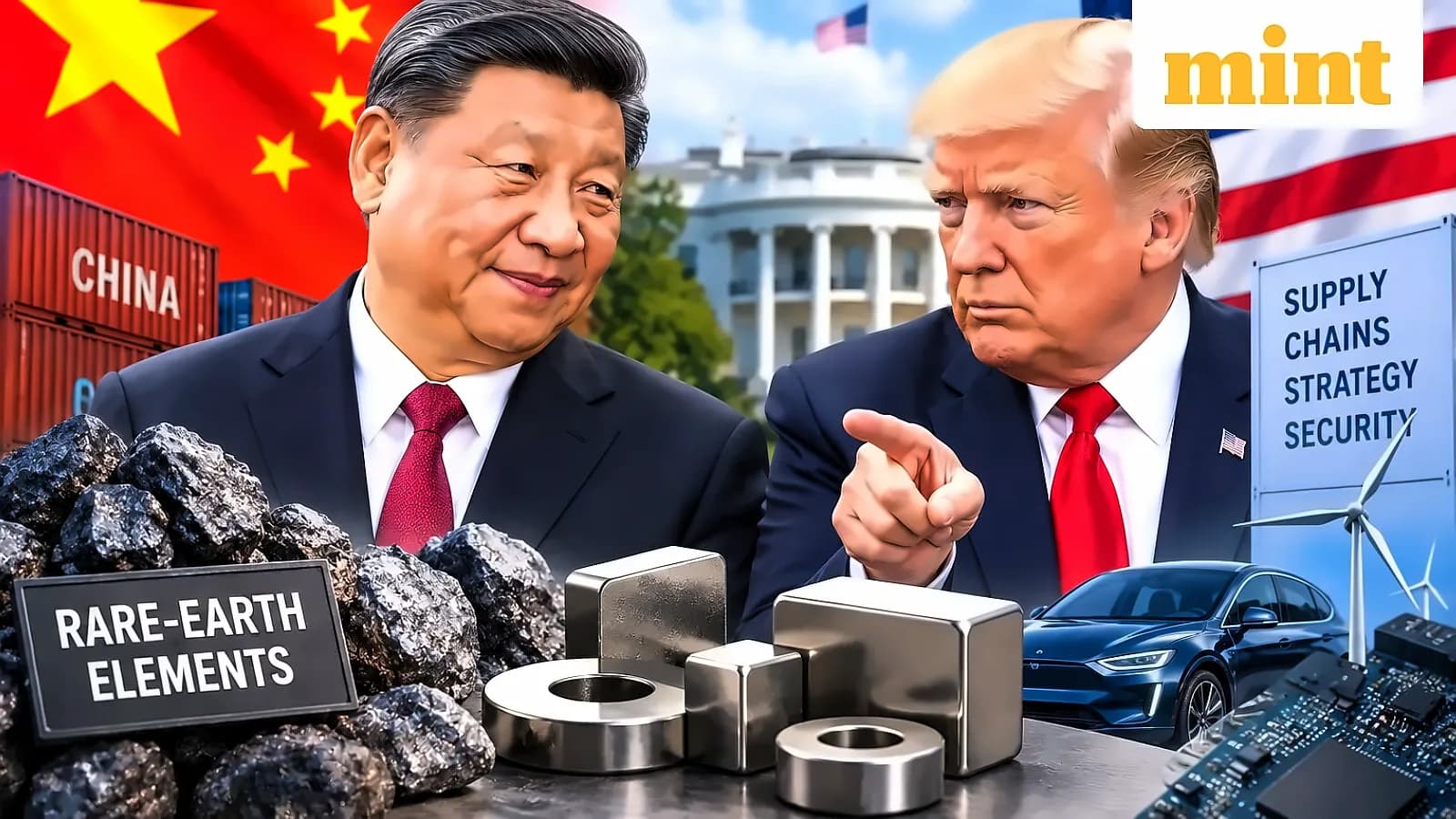
President Trump has not yet decided whether to proceed with the $11 billion arms package to Taiwan, despite the White House announcing the deal in December. Speaking before boarding Air Force One after wrapping up critical talks with Chinese President Xi Jinping, Trump said "I will make a determination" regarding the major arms sale. The uncertainty comes as Xi warned Trump on Thursday of potential "clashes and conflicts" over Taiwan if the U.S.'s $11 billion arms package to the island is not handled properly. This represents a significant escalation from previous warnings, with Xi telling Trump that the entire United States-China relationship now hinges on how Washington handles Taiwan.
Taiwan's ruling Democratic Progressive Party administration has reaffirmed its commitment to sovereignty, with Lai Ching-Te, the head of the Mainland Affairs Council, declaring that Taiwan will not be sacrificed in any negotiations with China. As reported by WorldDNA, Lai emphasized that Taiwan will not be sacrificed for the sake of U.S.-China relations, reinforcing the island's consistent stance that it does not need to declare independence while already operating as a sovereign entity in practice. The main Kuomintang (KMT) opposition party, traditionally more China-friendly, has shown no appetite for a formal declaration although some members acknowledge the island's de facto independence. This political reality undercuts much of the rhetoric from both Washington and Beijing, with bne IntelliNews noting that calls to avoid independence by both Trump and Xi ring hollow and are little more than statements aimed at external audiences, not fully versed on the political realities of East Asia.
President Trump has applied a consistent geographic logic to both Taiwan and Ukraine, treating distance as a determining factor in US foreign policy commitments. As reported by Kyivpost, Trump explained that Taiwan is 59 miles from China but 9,500 miles from the US, while Ukraine sits roughly 5,000 miles from Washington but borders Russia - a nuclear superpower with overwhelming conventional military superiority. This 'selective political geography of convenience' approach has become Trump's defining foreign policy doctrine, where distance and size matter only when appeasing autocrats. The president has repeatedly stated that 'when you look at the odds, China is a very, very powerful, big country. That's a very small island' - a logic that mirrors his stance on Ukraine, where he has declared 'It's not our war' despite the country's strategic importance to European security.
President Trump and President Xi Jinping concluded their historic summit with pledges to stabilize the relationship, though disputes over Taiwan, Iran, and trade continue to cloud U.S.-China relations. According to ABC15 Arizona, the leaders found common ground during the 'milestone' talks, but fundamental disagreements remain unresolved. During the summit, Xi Jinping issued a sharp warning on Taiwan, describing it as the 'most important issue' in United States-China ties and cautioning that mishandling it could trigger war between the two nations. As reported by Xinhua, Xi told Trump that the entire United States-China relationship now hinges on how Washington handles Taiwan. However, recent analysis from bne IntelliNews suggests that regional policymakers and analysts see little substance behind the statements made by either Trump or Xi, with nothing materially changing in the underlying relationship dynamics.
Despite the dramatic rhetoric, US policy on Taiwan remains built around a deliberately ambiguous framework that has remained largely consistent for decades. According to bne IntelliNews, Washington acknowledges China's position that there is one China and that Taiwan is part of it, but the US has never explicitly endorsed that claim, and neither has Donald Trump. Without an act of Congress, Trump cannot alter this fundamental position. The core strategic reality remains that in the event of a Chinese push into the Pacific, the US would not be defending Taiwan for its political status, but seeking to prevent China from gaining unopposed access to Hawaii and the West coast of the mainland US. Taiwan sits as a geographic node in a broader network designed to restrict Chinese access to the Pacific, with its role being tactical rather than ideological. This framework explains why Taiwan is perceived as the most vulnerable component of the US-aligned chain, which includes Okinawa, Taiwan, and the Philippines.
The summit message carried direct implications for partners such as India and Japan, with analyst Anushka Saxena from the Takshashila Institution telling Firstpost that the meeting signalled 'the era of the US as a reliable constant is effectively over' for countries that previously counted on Washington for regional stability. Saxena argued that like-minded states, including India, Japan and Australia, now need to assume greater responsibility for their own security planning, with India urged to pursue strategic autonomy through domestic capability, varied partnerships, and avoiding plans that depend on American promises. Poland's doing the math too - they're 300 miles from Russia, about the same distance as Beijing to Taipei, and have already started talking about European nuclear deterrence. South Korea's defense budget just hit record levels as they prepare for potential North Korean aggression, while Japan is talking openly about scrapping constitutional limits on military power - conversations that were taboo five years ago. Kyivpost reports that allies face impossible choices where doing the right thing might cost them everything, and the pragmatic move means accepting that power and proximity are all that matter.