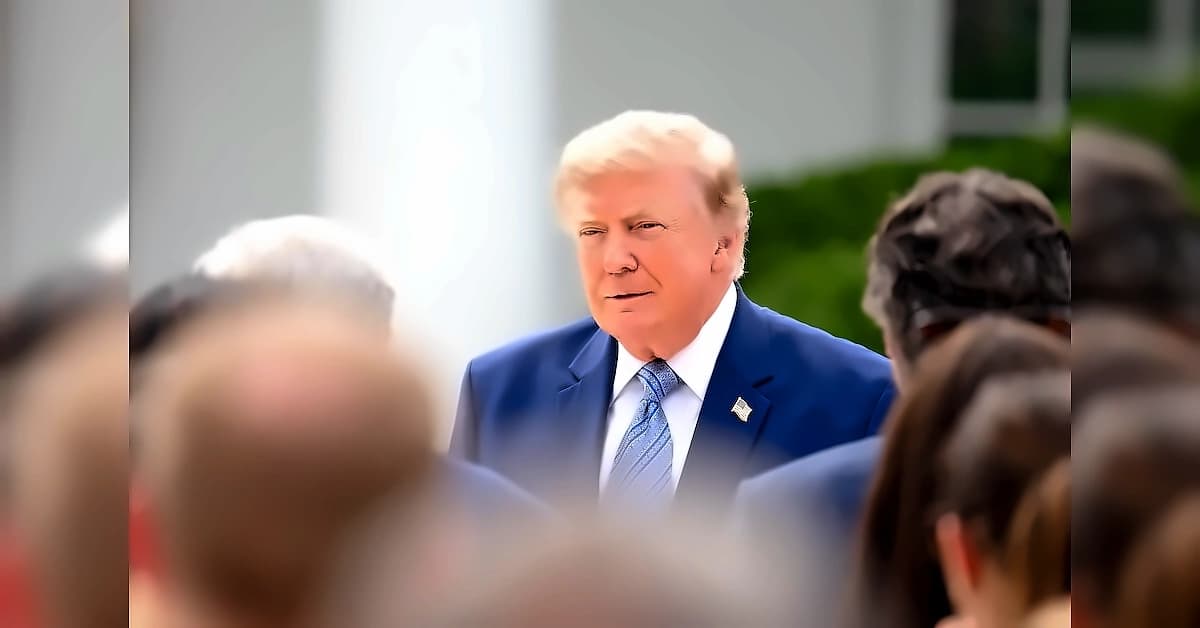
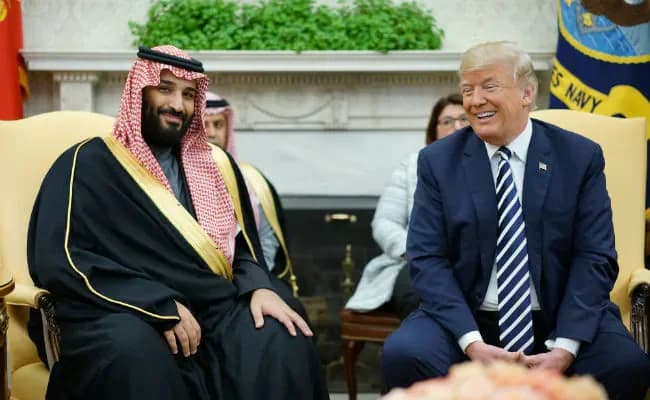
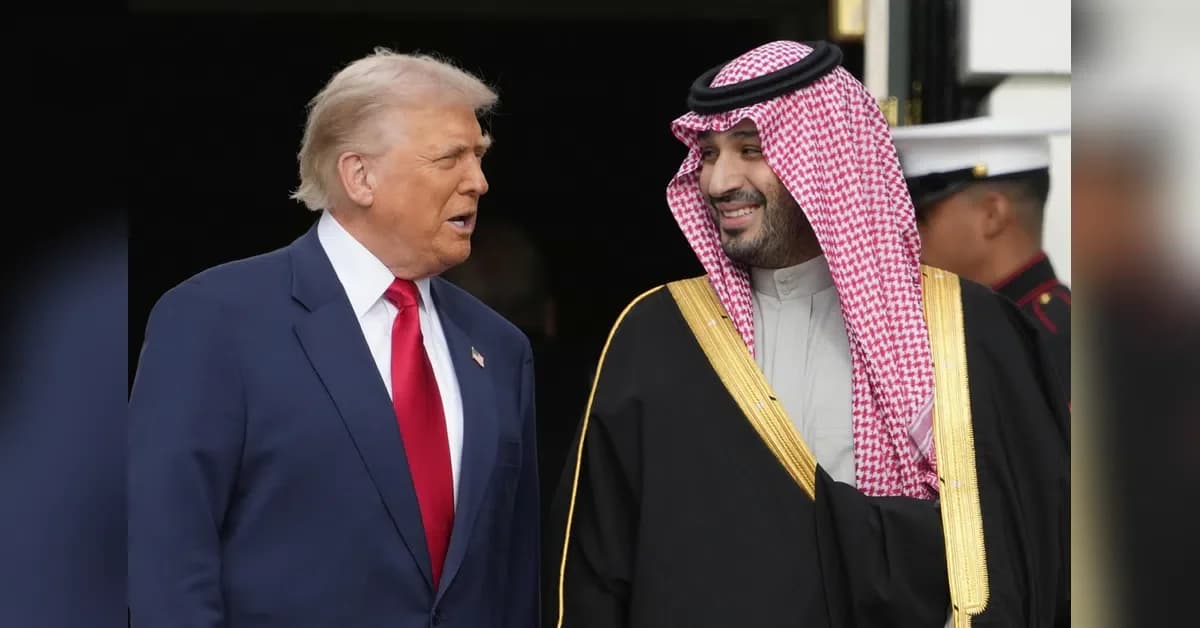
President Trump has submitted a civil nuclear agreement with Saudi Arabia to Congress for review, as reported by Associated Press. The classified document was submitted to Capitol Hill on Monday as required by the Atomic Energy Act. Under law, Congress has 90 days while in session to review the agreement. Unless Congress passes a joint resolution rejecting the agreement during the review period, the agreement can take effect without a vote by either chamber. The agreement was sent to leaders in Congress and is expected to be handed to committees on Wednesday, according to two congressional sources.
The agreement was signed last month in Washington by US Energy Secretary Chris Wright and his Saudi counterpart. According to Associated Press, the deal is expected to last 30 years and is also expected to involve US firms in developing the program following a joint US-Saudi study. The deal, which was reached in July, would allow US companies to export civilian nuclear technology to the kingdom. It is unusual for the entire contents of such agreements to be classified at such a high level, as previous civil nuclear pacts with other countries have been made public, although some have contained classified annexes that were not released. The 30-year nuclear deal calls for the construction of AP1000 reactors, a project worth tens of billions of dollars that would benefit Westinghouse, jointly owned by Canada-based Cameco and Brookfield Asset Management.
Trump announced he was requiring the Saudis to normalize relations with Israel through the Abraham Accords as part of the pact, raising doubts that the agreement would come to fruition. As reported by Reuters, Trump's continued insistence on the Saudis joining the accords could complicate the path to final approval. The U.S. official confirmed that "the president's position has not changed that the agreement will only move forward if Saudi Arabia joins the Abraham Accords." The accords approved in 2020 and 2021 were between Israel and the UAE, Bahrain, Morocco and Sudan. Diplomats thought Riyadh was close to normalizing relations with Israel in 2023, but the start of Israel's war on Gaza in October 2023 changed the landscape. Saudi Arabia has demanded an irreversible path to a Palestinian state before recognizing Israel, making the normalization condition particularly challenging.
Trump faced fierce criticism from some lawmakers, including those concerned it could potentially help the Saudis fulfill their long-standing desire to enrich their own uranium and, in the process, spur new rounds of nuclear proliferation and competition. According to Reuters, some Democratic lawmakers and nonproliferation advocates have criticized the nuclear pact for not barring Saudi Arabia from enriching uranium or reprocessing nuclear waste, two potential pathways for making a nuclear weapon. The UAE agreed to such measures, known as the gold standard, in its 2009 civil nuclear deal with Washington. The Trump administration says the deal has nonproliferation measures required by law. By starting the process, Trump has opened the possibility that Congress could allow the deal to proceed without normalization and proliferation stipulations, said Henry Sokolski, the head of the Nonproliferation Policy Education Center. "This is hardly ideal if you're serious about no enrichment and recognition of Israel," Sokolski said.