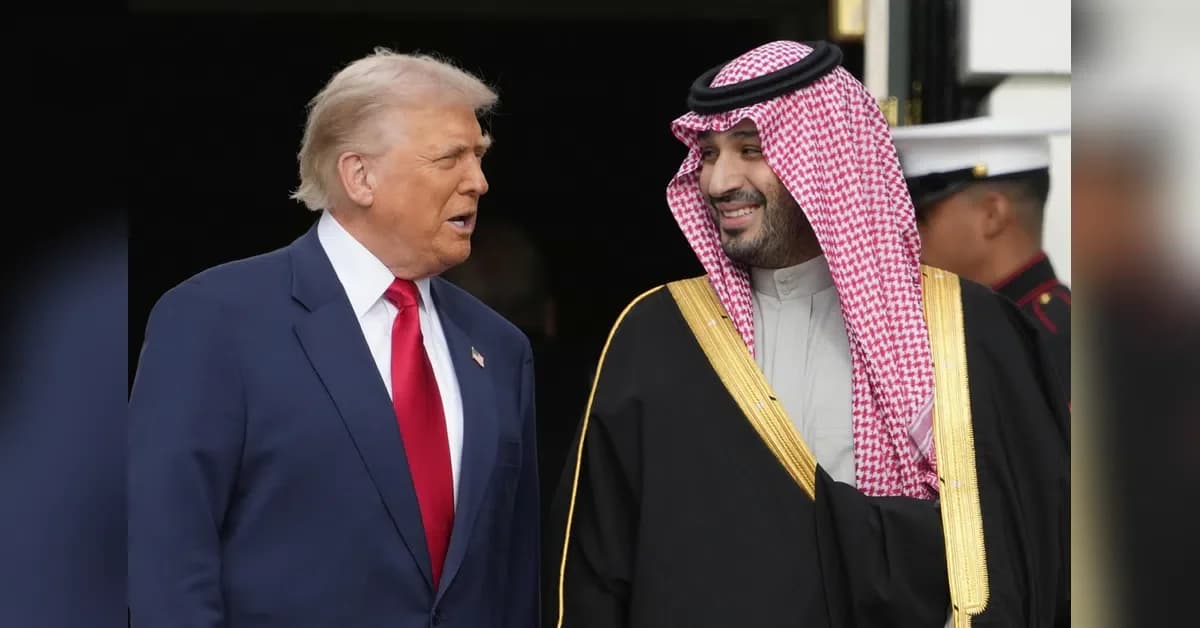
President Donald Trump has formally approved a landmark nuclear agreement with Saudi Arabia that will provide the kingdom with a civilian nuclear programme, but has now conditioned the deal on Saudi Arabia joining the Abraham Accords to normalize relations with Israel. As reported by Business Standard, Trump stated on Thursday that "The Civil Nuclear Deal (There will be no enrichment of material!)... pertains only to non-military use such as the ones that Iran and UAE (and others) already have, will be approved, but is totally subject to Saudi Arabia joining the very respected and successful Abraham Accords." The United States is not opposed to Civil (Non-Enriched) Nuclear Facilities, Trump confirmed in a post on Truth Social. The kingdom has so far refused to take this action, maintaining its longstanding position that it would not sign the Abraham Accords unless there was an agreement on a roadmap to Palestinian statehood. Israel welcomed the condition on Thursday, with Israeli Prime Minister Benjamin Netanyahu's office stating that "Saudi Arabia's joining of the Abraham Accords would be an historic leap forward for peace in the Middle East."
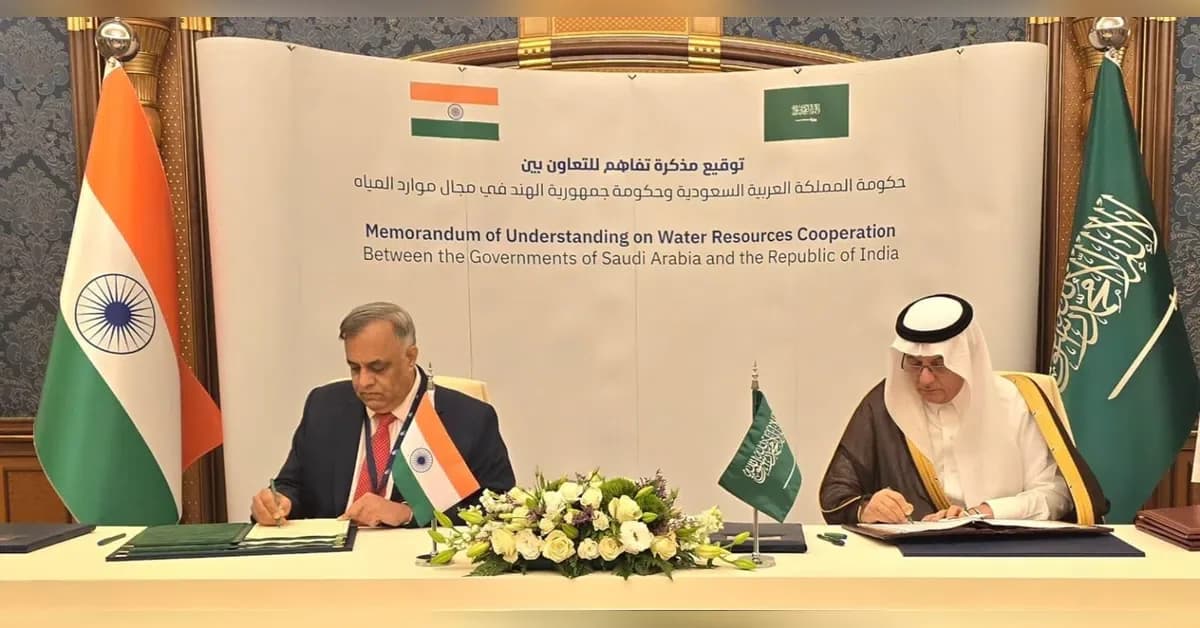
President Donald Trump has formally approved a landmark nuclear agreement with Saudi Arabia that will provide the kingdom with a civilian nuclear programme, according to The Wall Street Journal citing US officials. US Energy Secretary Chris Wright and Saudi Energy Minister Prince Abdulaziz bin Salman signed the agreement Wednesday, known as a '123 agreement' under the US Atomic Energy Act, as reported by Upstox. The deal is expected to be announced publicly as early as Wednesday, as reported by Associated Press. The agreement is estimated to be worth tens of billions of dollars and is set to run for 30 years, according to The Wall Street Journal. The deal is designed to give American companies a leading role in building Saudi Arabia's nuclear infrastructure, while shutting out other foreign competitors, as reported by The Wall Street Journal. The agreement is expected to involve US firms in developing the programme, with the deal expected to be sent to Congress for review in the coming days.
The signed agreement establishes the legal framework for civil nuclear cooperation under Section 123 of the US Atomic Energy Act, which is a prerequisite for the US government and American companies to engage in significant nuclear cooperation with another country. According to Business Standard, the agreement creates a legal pathway for cooperation across the nuclear fuel cycle, including uranium enrichment. The US Department of Energy said the agreements would support a decades-long, multi-billion-dollar partnership, expand opportunities for U.S. companies in Saudi Arabia's planned nuclear energy sector and reinforce nuclear safety, security and nonproliferation standards. The deal could allow the construction of a uranium enrichment facility in the kingdom following a joint US-Saudi study, as reported by Associated Press. While the proposed pact is expected to remain in force for 30 years, it has reportedly been designed in a way to make US firms the preferred partners for projects in Saudi Arabia, limiting the role of foreign competitors.
Any uranium enrichment activity would first require a joint US-Saudi assessment of its commercial viability, according to US officials cited by American media. Any enrichment facility would be built by the United States without transferring sensitive enrichment technology to Saudi Arabia, as reported by Upstox. The agreement bars Saudi Arabia from developing or acquiring its own uranium enrichment technology from other countries for 10 years, according to reports. Unlike the United Arab Emirates, which signed a so-called 'gold standard' nuclear cooperation agreement with Washington in 2009, Saudi Arabia is not required under the new arrangement to adopt the International Atomic Energy Agency's Additional Protocol. The two countries negotiated a separate bilateral safeguards agreement, which will require approval by the IAEA's Board of Governors. It was not immediately clear if Trump's statement about "no enrichment of material" was a specific reference to the highly enriched uranium used in weapons, as weapons-grade uranium is enriched to about 90 per cent while fuel for nuclear reactors is enriched to up to 6 per cent.
The deal, which is expected to be submitted to Congress for review, could face opposition from lawmakers worried about expanding nuclear capabilities in an already unstable Middle East, as reported by The Wall Street Journal. Under US law, the agreement must now be submitted to Congress for a mandatory review period, with lawmakers able to block the deal by passing resolutions of disapproval in both the House of Representatives and the Senate, according to Upstox. This nuclear cooperation represents a significant shift in US-Saudi relations and could have broader implications for the Middle East's nuclear landscape. The agreement would provide Saudi Arabia with the technical capability to enrich uranium for peaceful purposes, potentially reshaping the region's energy and nuclear development strategies. The deal would give the US a role in monitoring Saudi Arabia's nuclear activities, which Trump administration officials say could help stop the programme being used to develop weapons, according to The Wall Street Journal.
Energy Secretary Chris Wright traveled to Saudi Arabia last year shortly before Trump visited the kingdom and discussed building out the kingdom's commercial nuclear power industry with his Saudi counterpart, as reported by Associated Press. The kingdom has pursued nuclear power as part of its broader strategy to diversify an electricity system that remains heavily reliant on fossil fuels, though it has yet to operate its first nuclear power reactor. Saudi Arabia, the world's top oil exporter, said the agreement supports efforts to diversify energy sources, and includes the "highest international standards" of nuclear safety, security and nonproliferation, according to Business Standard. The Trump administration on Wednesday said the civil nuclear deal abides by nonproliferation agreements in the US Atomic Energy Act, which are among the world's strongest. Nonproliferation experts warn any spinning centrifuges within Saudi Arabia could open the door to a possible weapons program for the kingdom, something its assertive de facto leader, Crown Prince Mohammed bin Salman, has suggested he could pursue if Tehran obtains an atomic bomb. The deal could allow for the building of a uranium enrichment facility in Saudi Arabia following a joint US-Saudi study, potentially positioning the kingdom as a regional nuclear power with civilian applications.