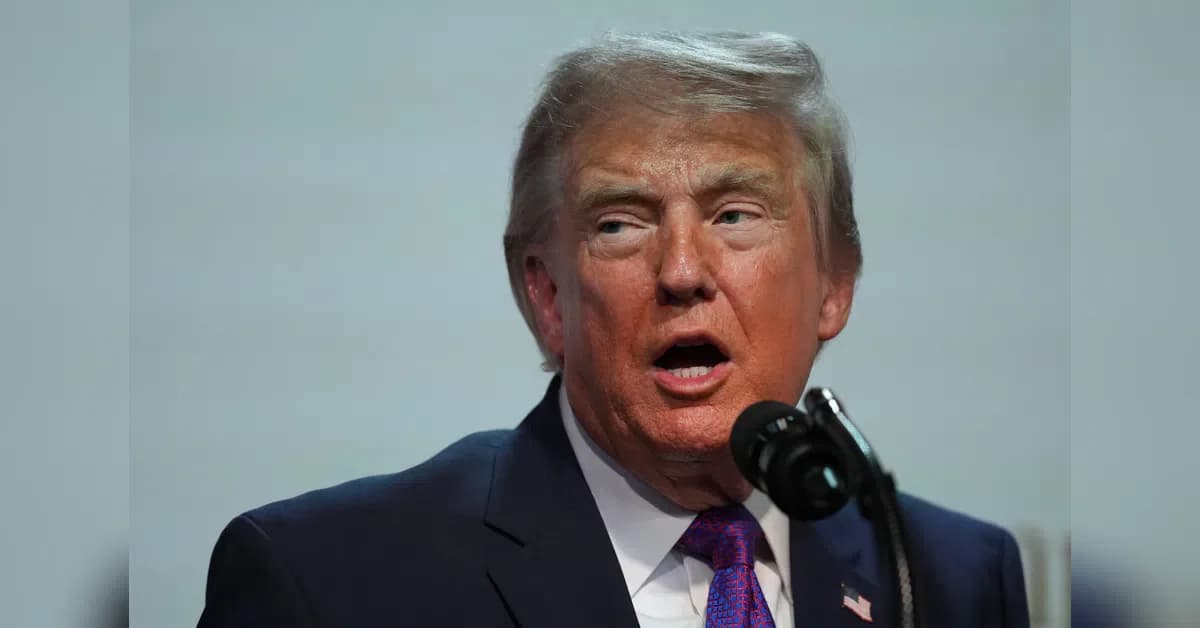
US President Donald Trump announced Wednesday that the United States is in the final negotiations to bring an end to the war with Iran, signalling that a diplomatic breakthrough could be near even as political opposition to the conflict grows in Washington. Speaking after the US House of Representatives approved a war powers resolution aimed at curbing his authority over the conflict, Trump downplayed the significance of the vote, calling it 'meaningless'. 'We're in the middle of final negotiations to end the Iran war,' Trump stated, expressing confidence that diplomatic efforts could soon yield results. The president's comments come as four Republicans joined Democrats in what marks the first time the House has successfully advanced such a measure in four attempts, with the resolution representing the fourth time Congress has attempted to curb the three-month-long conflict and the first time the House has successfully passed such a measure.
The **US House of Representatives delivered a rare rebuke to President Donald Trump on Wednesday, approving a war powers resolution that would halt US military action against Iran with a 215-208 vote. As reported by The New York Times, four Republicans joined Democrats in what marks the first time the House has successfully advanced such a measure in four attempts. Cheers erupted on the House floor as the tally was announced, with the resolution representing the fourth time Congress has attempted to curb the three-month-long conflict and the first time the House has successfully passed such a measure. House Speaker Mike Johnson had previously tried to prevent the outcome that would show mounting opposition to the war, abruptly shutting down floor action two weeks ago when the resolution was on the verge of approval. House Democratic Leader Hakeem Jeffries stated that the war has 'cost the American taxpayer over $100 billion -- that's extraordinary -- and left our country in a weaker position relative to Iran'. Rep. Gregory Meeks of New York, the top Democrat on the House Foreign Affairs Committee, who led the effort, declared 'Enough is enough. It is time for the president to do the right thing. The people are tired of suffering because of his war of choice — suffering at the gas pump, suffering at the supermarkets'. Republican Representatives Thomas Massie, Brian Fitzpatrick, Tom Barrett and Warren Davidson voted in favor of the measure, with Massie noting that 'People are tired of this. They're tired of $5 gallon gas and $6 gallon diesel, and fertilizer we can't afford to put on our fields in Kentucky'.
The resolution invokes Section 5(c) of the War Powers Resolution and directs the President to remove US armed forces from hostilities against Iran unless Congress explicitly authorises military action or declares war. According to CNN, the measure allows for military action only to defend the United States or its allies from an imminent attack. Rep. Gregory Meeks argued that the administration had failed to achieve its stated objectives and instead pushed a diplomatic solution to Iran's nuclear program further out of reach, stating 'Trump's war has failed to accomplish the Trump Administration's stated goals with respect to Iran. If anything, it has pushed a diplomatic resolution of Iran's nuclear program further away.' The resolution represents a concurrent resolution that must pass both chambers in identical form but does not go to the president for signature, as reported by the Senate website. House Democrats argue the resolution would be binding under the War Powers Resolution, with a Democratic aide involved in the effort stating that legal questions about enforcement would likely be settled if the resolution ultimately cleared Congress.
The latest developments show escalating military tensions as both sides launch retaliatory strikes across the Middle East. US Central Command (CENTCOM) reported that US forces launched self-defence strikes overnight, shooting down ballistic missiles and drones fired at ships and Gulf countries. The strikes targeted Qeshm Island in the Strait of Hormuz, with CENTCOM stating the action was 'in response to attempted attacks by Iran across the Middle East'. Iran responded by firing two missiles at Kuwait and three at Bahrain, all of which were intercepted by US and Bahrain air defence forces. Kuwait's army later confirmed that Iranian drones hit its international airport, causing significant building damage and injuries to multiple people, with air traffic suspended on Wednesday morning. As reported by CENTCOM, Iran also launched several ballistic missiles towards regional countries, though the US military successfully intercepted them all.
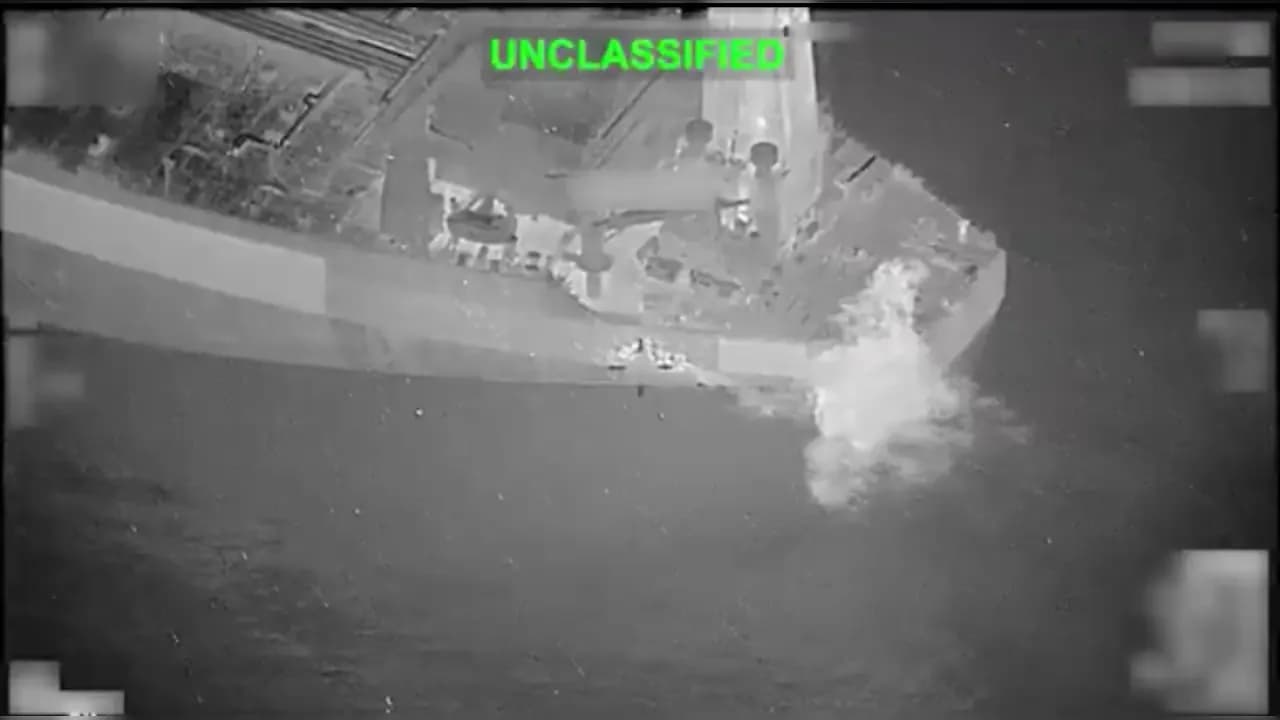
The interdiction of the Botswana-flagged M/T Lexie represents part of a strict naval blockade initiated by President Donald Trump on April 13, aimed at halting all maritime traffic entering and exiting Iranian ports to pressure Tehran into negotiating a peace agreement on American terms. According to CENTCOM, since the blockade's inception, US forces have disabled six commercial vessels and redirected 122 others. The latest strike on the Lexie marks the sixth commercial vessel disabled since American forces began enforcing the naval blockade. The enforcement action comes amid a fragile weeks-long ceasefire embedded within a larger, three-month-old conflict triggered by joint US and Israeli airstrikes against Iran on February 28. The blockade has added acute pressure to an already fragile diplomatic situation, with the ceasefire between the United States and Iran, brokered by Pakistan on April 8, remaining nominally in effect though peace negotiations have been severely strained.
The conflict has created significant economic pressures, with Americans seeing gas prices spike at the pumps since the US joined Israel in launching the February 28 strikes on Iran, adding to inflationary pressure on consumer spending. House Speaker Johnson spent three hours at the White House this week as Trump calls on allies to help reopen the Strait of Hormuz for commerce, especially oil flow. 'We're working on that final piece,' Johnson said, noting that 'the entire world has an interest in the Strait of Hormuz being reopen for commerce'. However, Secretary of State Marco Rubio warned Wednesday that Iranians would think the administration's hands are tied if Congress approved a war powers resolution, saying they would think 'we won't be able to do anything to them, so why make a deal?'. The broader conflict has drawn in regional actors and strained global energy markets, with the Strait of Hormuz, through which a significant share of the world's oil and liquefied natural gas flows, remaining a central point of contention. Rep. Tom Barrett pointed to frustrations among voters dealing with the economic fallout from the conflict, stating 'I think that people are frustrated, certainly' when asked about the impact on constituents.