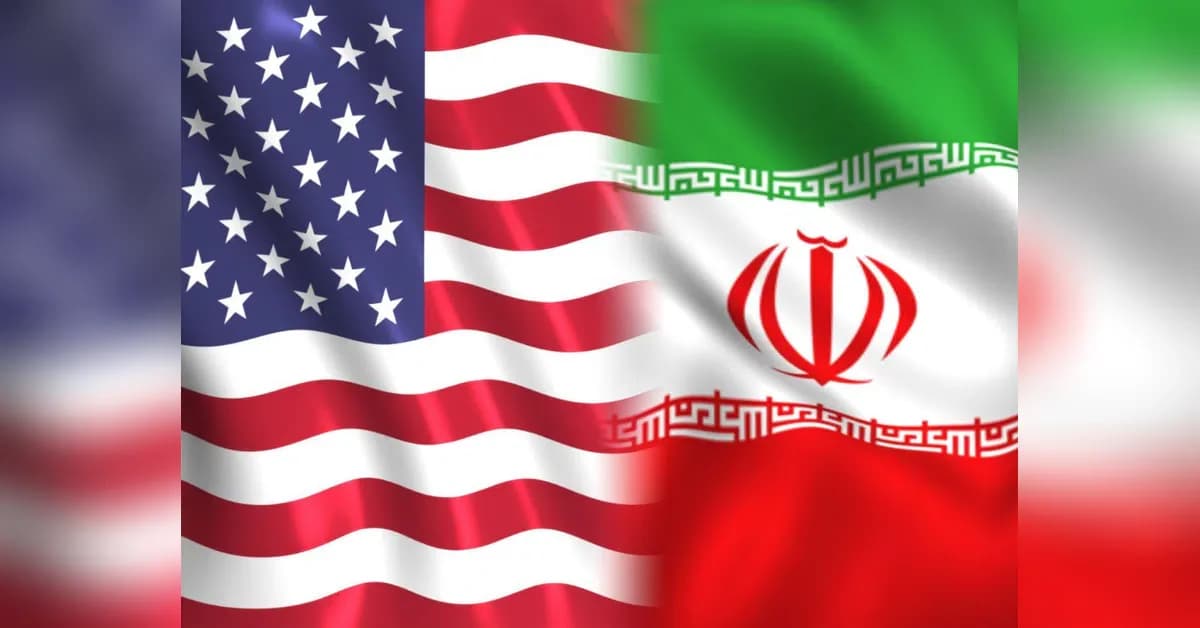
Nearly four months after President Trump ignited war against Iran on February 28, analysts are expressing bafflement over what exactly has transformed in the Middle East. As reported by Business Standard, neither the war nor the agreement ended what US and Israeli officials regard as the main threats emanating from Iran. The country's nuclear program, while heavily damaged, was not eliminated — its fate punted to future negotiation. Iran's ballistic missiles, which the deal does not address, remain a threat, while the country's authoritarian regime endured, albeit with new leaders. Israel and Hezbollah persisted in attacking each other, with the Lebanon situation considered the soft underbelly of the memorandum. According to Caitlin Talmadge, a professor at M.I.T. who specializes in Persian Gulf security issues, "This is not a document the United States agreed to because the war demonstrated a new US military superiority."
The Strait of Hormuz reopening is facing new challenges even as the most significant immediate result of the deal. As reported by Business Standard, by Saturday, even the most significant immediate result of the deal — Iran's reopening of the Strait of Hormuz — seemed at risk. Iran's military said it was closing the waterway again, because the United States had failed to stop the fighting in Lebanon. The US military contested that, saying the strait remained open as the agreement stipulated. Although the memorandum allows for free passage of ships for two months, Tehran has threatened to implement transit fees for services, a system that did not exist before the war. Mohammad Bagher Ghalibaf, the speaker of Iran's parliament and a lead negotiator, hailed a revelation that Iran had taken from the war: that it could exert leverage by controlling the Strait of Hormuz, stating "This was a potential capacity that had never been activated."
The Congress party has launched a scathing attack on the Modi government following the signing of the US-Iran peace deal, with Congress general secretary Jairam Ramesh calling the agreement a severe setback to both the substance and style of Prime Minister Modi's foreign policy. Ramesh noted that the fact that it is called the Islamabad MOU shows the new-found regional standing and global influence of Pakistan, a country that had once been isolated on the global stage by Dr. Manmohan Singh following the Mumbai terror attacks in November 2008. The Congress leader argued that Pakistan is now even more deeply embedded in the geopolitical and security architecture of West Asia which has grave and great implications for India. Ramesh criticized Mr. Modi's continuing appeasement of Mr. Trump and claimed that only Mr. Modi remains steadfast in his support of Mr. Netanyahu's actions in the region -- including in Lebanon, Gaza, and the occupied West Bank.
The 14-point memorandum of understanding declares an intent to bring about "immediate and permanent termination of military operations" in the U.S.-Israeli war with Iran, which began February 28. According to the released text, the agreement stipulates that "the U.S. will terminate all types of sanctions" and "make fully available for use the frozen or restricted funds and assets," while beginning removal of the naval blockade of Iran's ports. The Strait of Hormuz will reopen with Iran agreeing to allow "safe passage of commercial vessels with no charge for 60 days only," followed by negotiations with Oman to define future administration of the vital trade route through which 20% of the world's oil passed before the war. Both sides will commit to further talks toward a more substantive "final deal" within 60 days, extendable with mutual consent. As per the latest reports, the Islamabad MoU shall enter into force with immediate effect and as a first step, the Islamic Republic of Iran will instantly reopen the Strait of Hormuz.
The agreement includes significant financial incentives for Iran, with Trump claiming the price of oil had fallen to $72 and would soon fall below pre-war levels. As reported by Business Standard, for Tehran, weathering the blistering assaults from the United States and Israel, and demonstrating the ability to retaliate and inflict damage, constituted a victory. The deal provides immediate lifting of the US naval blockade on Iranian ports and issuance of waivers for Iranian crude oil to be shipped abroad. Trump has also indicated the potential lifting of all international sanctions against Iran and plans to develop a $300 billion reconstruction fund for Iran funded by regional partners in the Gulf. However, Trump angrily rejected suggestions that the US would be contributing to the $300 billion fund, instead saying payouts by Gulf states were likely to be "conditional on Iran's good behaviour." The GCC countries that have borne the full weight of Iran's counter-attacks have cautiously welcomed the MOU but will undoubtedly rethink their relationships with other countries. If the reopening of the Strait of Hormuz holds, the first effect could be a reduction in risk premiums across crude oil benchmarks, with lower oil volatility helping import-dependent economies like India where fuel prices influence transport costs, corporate margins and consumer inflation.
Under the agreement, Iran "reaffirms that it shall not procure or develop nuclear weapons," with a mechanism to be "mutually agreed" upon relating to its "enriched material" stockpile. According to the released text, the agreement includes provisions for discussion of down-blending Iran's 440kg stockpile of highly enriched uranium, which could be further enriched for use in a nuclear weapon. Trump has indicated he was "open to the stockpile being diluted inside Iran under the supervision of the International Atomic Energy Agency." The agreement includes an executive mechanism to monitor successful implementation of the deal, which will be endorsed via a binding U.N. Security Council resolution. Iranian parliament speaker Mohammad Bagher Ghalibaf warned that Tehran's compliance would depend on Washington fulfilling its commitments, stating "If the United States does not honor its commitments, there is no way Iran will honor its own commitments."
A 2020 X post by US President Donald Trump resurfaced widely after the US and Iran signed the peace deal, with a journalist confronting him directly with his own words during a press conference at the G7 Summit in France. In the post, dated January 3, 2020, Trump had written: "Iran never won a war, but never lost a negotiation!" The line was originally posted amid tensions following the killing of Iranian general Qassem Soleimani. Fox News correspondent Peter Doocy raised the old post to Trump at the G7 press conference in Évian-les-Bains, asking: "A wise man once said in January of 2020, 'Iran never won a negotiation'" When Trump asked "Who said that?," Doocy replied: "You did." Doocy then pressed Trump on how he intended to "convince a skeptical American public" that the agreement amounted to a win, given the line's resonance with current criticism of the MOU.