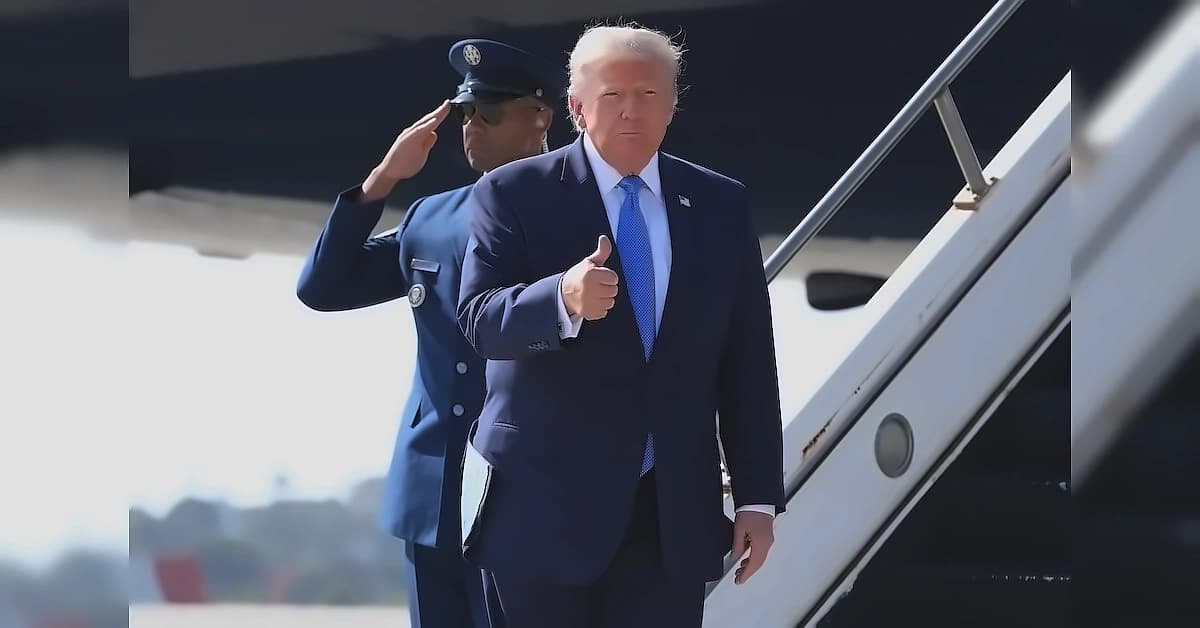
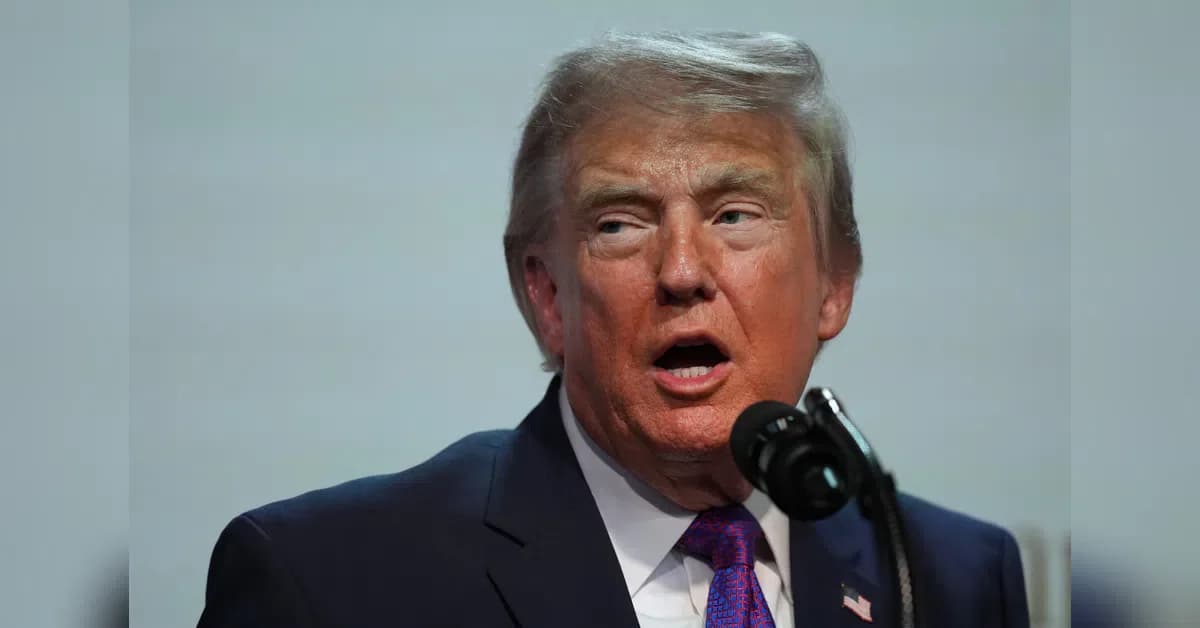
US President Donald Trump announced on Sunday that he has ordered the Pentagon to scale back planned joint military exercises with South Korea, citing the country's refusal to participate in denuclearization efforts. According to reports from Associated Press, Trump stated in a social media post that he had recently asked South Korea's president to join the US in its efforts to denuclearize Iran, to which South Korea responded with 'No thanks'. The US president characterized the exercises as both costly and sending an inappropriate signal to North Korea, which he described as 'unthreatening and respectful' during his time in office. 'Therefore, and based on the fact that it is too late to cancel, I have instructed Secretary of War, Pete Hegseth, to substantially reduce the Joint Military Exercises!' Trump wrote in his post. In the same post, Trump linked his frustration over the military exercises to a separate diplomatic exchange, noting that while it was somewhat unrelated, he recently asked the President of South Korea if they would like to join the US in the denuclearization of the Islamic Republic of Iran, and they said 'No thanks!'
The planned 11-day exercises involving 18,000 South Korean soldiers were designed to enhance readiness against North Korean threats. As reported by Associated Press, the Ulchi Freedom Shield exercises began on Monday as planned, despite Trump's announcement, and were intended to reinforce the alliance's role as the linchpin for regional peace and security. The joint training would have included complex scenarios such as live-fire exercises for precision targeting, wet gap crossing operations, and distribution of prepositioned military equipment. The US military had emphasized that these exercises reaffirmed the 'ironclad commitment' between the United States and the Republic of Korea to defend their homelands, with the exercises being one of the two main combined drills conducted by the South Korean and US militaries annually. This year's exercise is set to involve roughly 18,000 South Korean troops, a level similar to previous years, with about 28,500 U.S. service members stationed as part of U.S. Forces Korea. According to Business Standard, South Korea's military said the ongoing drills with the US would end Friday, not Aug. 27 as initially planned, with the allies also agreeing to downsize some joint field training exercises. The Ulchi Freedom Shield exercises are largely computer-simulated command post exercises meant to hone the allies' ability to deal with potential regional security threats like North Korean aggression.
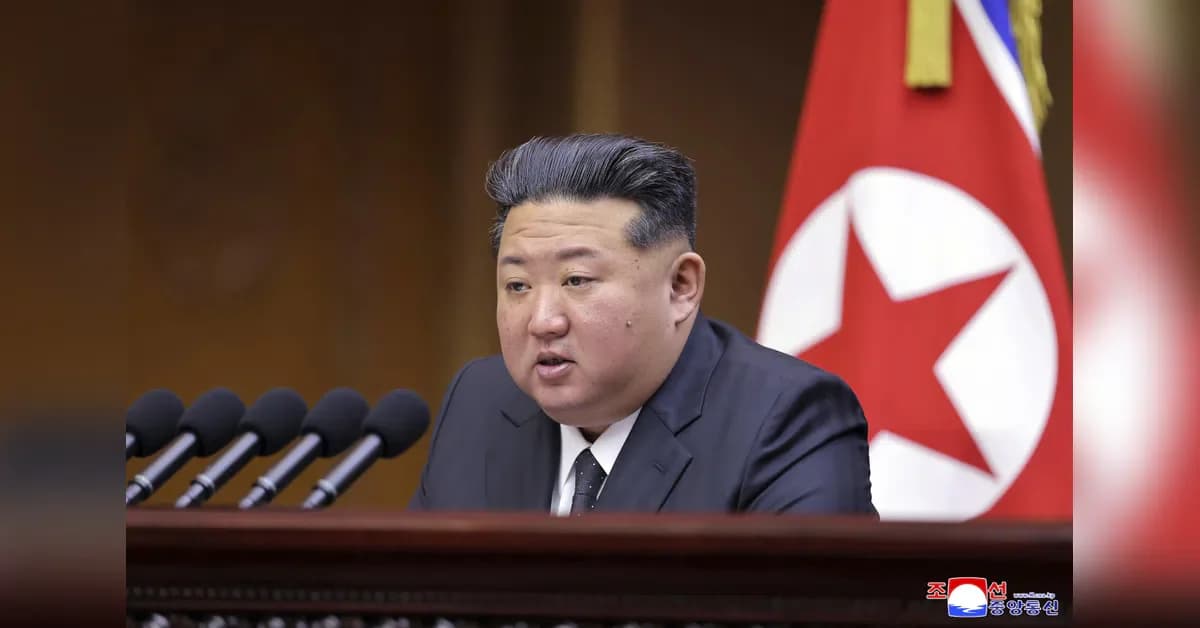
The joint training announcement came days after North Korea resumed ballistic missile testing activities that are banned by the UN. According to Associated Press, South Korea, the US and Japan detected the launches of two ballistic missiles from North Korea earlier this month, marking its first ballistic weapons testing activities since late June. The missiles landed in the waters off North Korea's east coast. North Korea has been expanding its nuclear and missile arsenals since Kim's diplomatic efforts with Trump collapsed in 2019, with experts suggesting Kim likely believes a bigger weapons arsenal would increase his chances for securing future US concessions. North Korea on Wednesday published commentary through its state news agency KCNA, slamming the US-South Korean military drills as "frantic" and "extremely dangerous" and vowing to completely frustrate its rivals' hostilities. Following the most recent test on August 12, U.S. Indo-Pacific Command said it was consulting closely with regional allies, adding that its assessment indicated the launch did not pose an immediate threat to U.S. personnel, territory or allies. Experts note that North Korea often uses its rivals' drills as a pretext to ramp up testing activities to expand its weapons arsenals and promote public support for the reclusive North Korean leader.
Trump's announcement has drawn sharp criticism from Democratic circles, with Senator Mark Kelly of Arizona, a former Navy pilot, saying that 'hollowing out these joint exercises is shortsighted and a mistake' in a social media post just hours after the president's announcement. The move represents the latest example of Trump appearing to side against an ally in favor of an authoritarian leader that previous administrations have cast as an adversary. Trump and administration officials have also criticized NATO allies over perceived lack of support for his war against Iran while seeking to confront an increasingly aggressive Russia in the Baltic region. This represents a sharp turnaround from how his administration viewed South Korea in recent months, as Defense Secretary Pete Hegseth praised the ally in May for its 'commitment to increase defense spending' and its 'leadership in assuming primary responsibility for the security of the Korean Peninsula.' Trump's announcement came a day after he posted a photo of himself standing next to North Korea's Kim, writing that the two leaders get along great 'despite the unfriendly look on this particular picture.'
The exercise suspension comes as the US military made significant regional deployments, with the USS George Washington being sent to replace the USS Abraham Lincoln in the Persian Gulf. According to Associated Press, this deployment drew scrutiny over conditions on board the Abraham Lincoln, which had been undergoing maintenance and repairs. The timing of these military movements coincides with Trump's decision to scale back the joint exercises, as the president cited his 'very good' relationship with North Korea's Kim Jong Un as a reason for curtailing the annual drills. North Korea routinely criticizes the annual drills as a 'war rehearsal,' which the U.S. and its allies deny, and threatens to retaliate. The South Korean defense ministry emphasized that the exercises are meant to build understanding among several agencies to ensure 'their ability to fortify the combined defense posture and enhance Alliance response capabilities against a spectrum of security threats.' The Ulchi Freedom Shield exercises and a similar springtime exercise are a central pillar of the US-South Korea alliance, which dates to the 1950-53 Korean War, but it's also a long-running source of tensions with North Korea, which has denounced the exercises as a rehearsal for war.