Federal Reserve Chair Kevin Warsh's recent hawkish pivot raises troubling questions about whether he's genuinely worried about inflation or building the Fed's inflation-fighting credibility. At his recent Jackson Hole speech, Warsh provided specific inflation data, disaggregating the PCE's 199 components and finding 54% rose above 3% over the past year, citing it as evidence of broad-based inflation. However, this represents an unusual choice of inflation data given his prior dismissal of headline PCE as 'rough swag' and a 'scientific wild guess' at his Senate confirmation hearing four months ago. The Dallas Fed Mean Trimmed PCE has been hovering around 2.3% for the last five months, which Warsh previously called the better gauge of 'underlying' inflation. As a new Fed chair, Warsh must sound vigilant about persistent above-target headline inflation, but the risk is that he puts credibility over proper monetary policy and risks a policy error if he raises rates without employment and inflation data justifying higher rates.
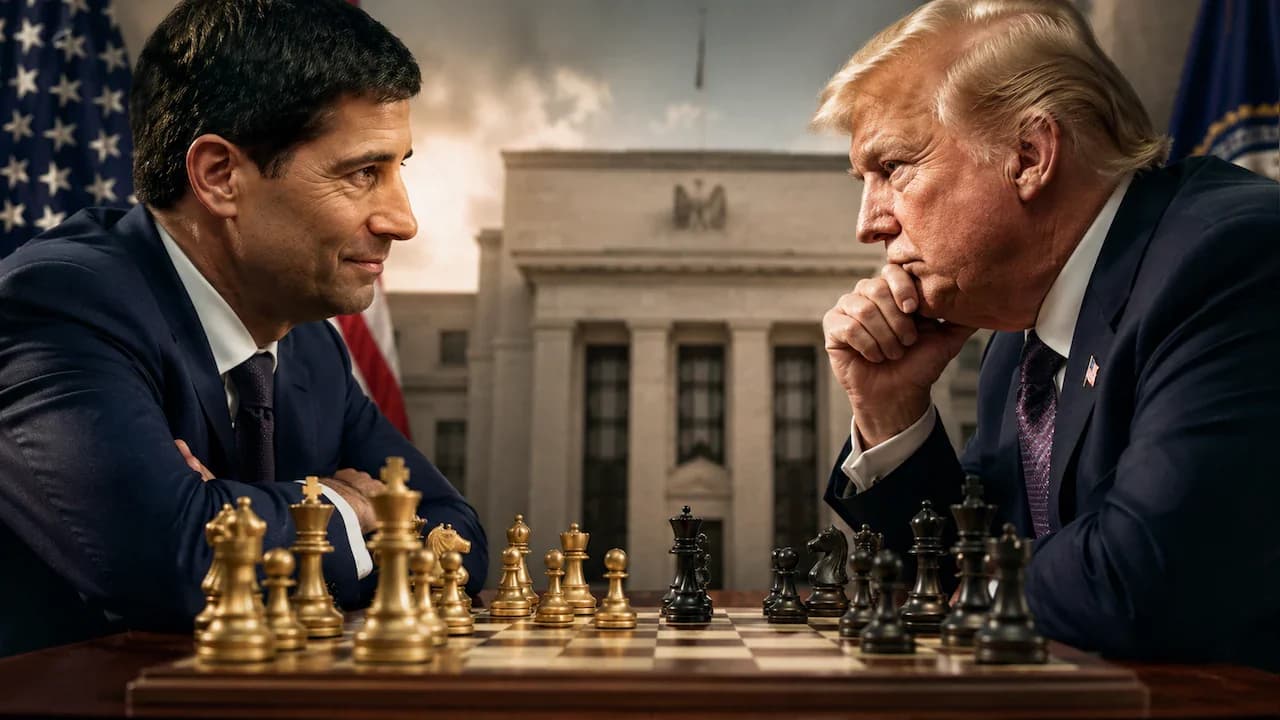
The Federal Reserve faces an intensifying debate over whether to raise interest rates at its September 16 meeting, with Fed funds futures pricing in a 60% chance of a September hike, up from approximately 33% a few weeks prior. According to Investing.com India, the debate has been framed as a courtroom exercise, with prosecution arguing for a rate hike and defense advocating for holding rates steady. The uncertainty stems from conflicting signals, with three of the twelve FOMC members voting for a rate hike in the last meeting, while the Trump administration continues to push back against rate increases. Fed Chair Kevin Warsh has repeatedly made it clear that markets should not expect forward guidance from the Fed anymore, effectively telling investors to 'don't guess the next Fed move' under his leadership. The latest market data shows Fed funds futures pricing in a 36% chance of two rate hikes by mid-March 2027, with roughly equal 25% chances of three hikes or only one.
A stronger-than-expected U.S. jobs report has put a September interest-rate hike back firmly on the table, leaving Federal Reserve Chair Kevin Warsh facing a difficult choice as President Donald Trump intensifies his demands for lower borrowing costs. According to Reuters, U.S. employers added 162,000 jobs in August, nearly three times what economists had expected, while the labor force participation rate rose to 61.6%. More people moved from the sidelines directly into jobs, helping keep the unemployment rate at 4.1% even as the pool of available workers expanded. The report strengthens the argument for the Fed to raise rates at its September 15-16 meeting, particularly after Warsh last week said he needed confidence that inflation was moving back toward the central bank's 2% target 'clearly and at sufficient speed.' New York Fed President John Williams has claimed that rising bond yields simply "reflect the strength of the economy," while Fed Governor Lisa Cook, a more dovish member, told reporters she would support an increase if necessary to bring inflation down.
The prosecution's case for a rate hike rests on three key pillars: Fed Chair Kevin Warsh's hawkish stance, strong employment data, and persistent inflation concerns. Beth Hammack, President of the Cleveland Fed, has been the most consistently hawkish voice on the committee and presents the third leg - the persistence of high inflation. She dissented at the last FOMC meeting in favor of a hike, arguing that the Fed likely needs a sequence of rate increases rather than a single move, and has recently said that "now is the time to act." Hammack doesn't seem concerned that higher interest rates will impede the economy, stating "One 25 basis point move probably doesn't do a whole lot for the economy" and believing delaying rate hikes only makes the job harder later. Richmond Fed President Tom Barkin offers a more nuanced view, describing the labor market as "not loose, it's not tight, it's sort of been a weak balance," with employers neither firing employees aggressively nor expanding payrolls significantly.
The defense's case centers on skepticism about recent employment data and concerns about inflation trends. Investing.com India notes that "the defense will not put much faith in the recent employment report" and will focus on large revisions that have turned good job reports into bad ones. The 2025 benchmark knocked 911,000 jobs off the year ended March 2025, cutting average monthly growth in half from a reported 147,000 to 71,000, while the 2024 benchmark had already cut 818,000 jobs from the year ended March 2024. More recently, April's initial 179,000 gain is now 148,000, and May's initial 172,000 gain is just 63,000. The defense argues that five-year inflation expectations sit at 2.4%, slightly below where they were before the Iranian conflict, and that the Dallas Fed Trimmed Mean PCE sits at 2.28%, close to the Fed's 2% target. Governor Waller argues against rate hikes, believing that forces pushing yields higher are largely outside the Fed's mandate, including deficits, dollar concerns, AI-related capital needs, and the oil shock tied to shipping disruptions rather than domestic demand.
Markets moved toward pricing a hike after Friday's report, with interest-rate futures implying about a 62% chance of an increase this month, up from roughly 55% before the data. According to Nationwide Chief Economist Kathy Bostjancic, "We now see two, 25 basis-point rate hikes by year-end, lifting the fed funds rate to 4-4.25%." However, as reported by Pantheon Macro economists, "The upshot of today's numbers is that the September FOMC meeting remains finely balanced." The bond market's reaction has been positive to Warsh's hawkish pivot, with Fed rate-hike odds rising and the yield curve flattening, suggesting investors are taking the rhetoric seriously. The big question remains whether Warsh will back up his words with actions and support a rate hike at the September 16 FOMC meeting. Oil prices have topped $100 as U.S.-Iran fighting escalates, adding another layer of complexity to the Fed's inflation assessment, while U.S. stock futures remain subdued as oil exceeds $100, reflecting market concerns about the economic impact of rising energy costs.