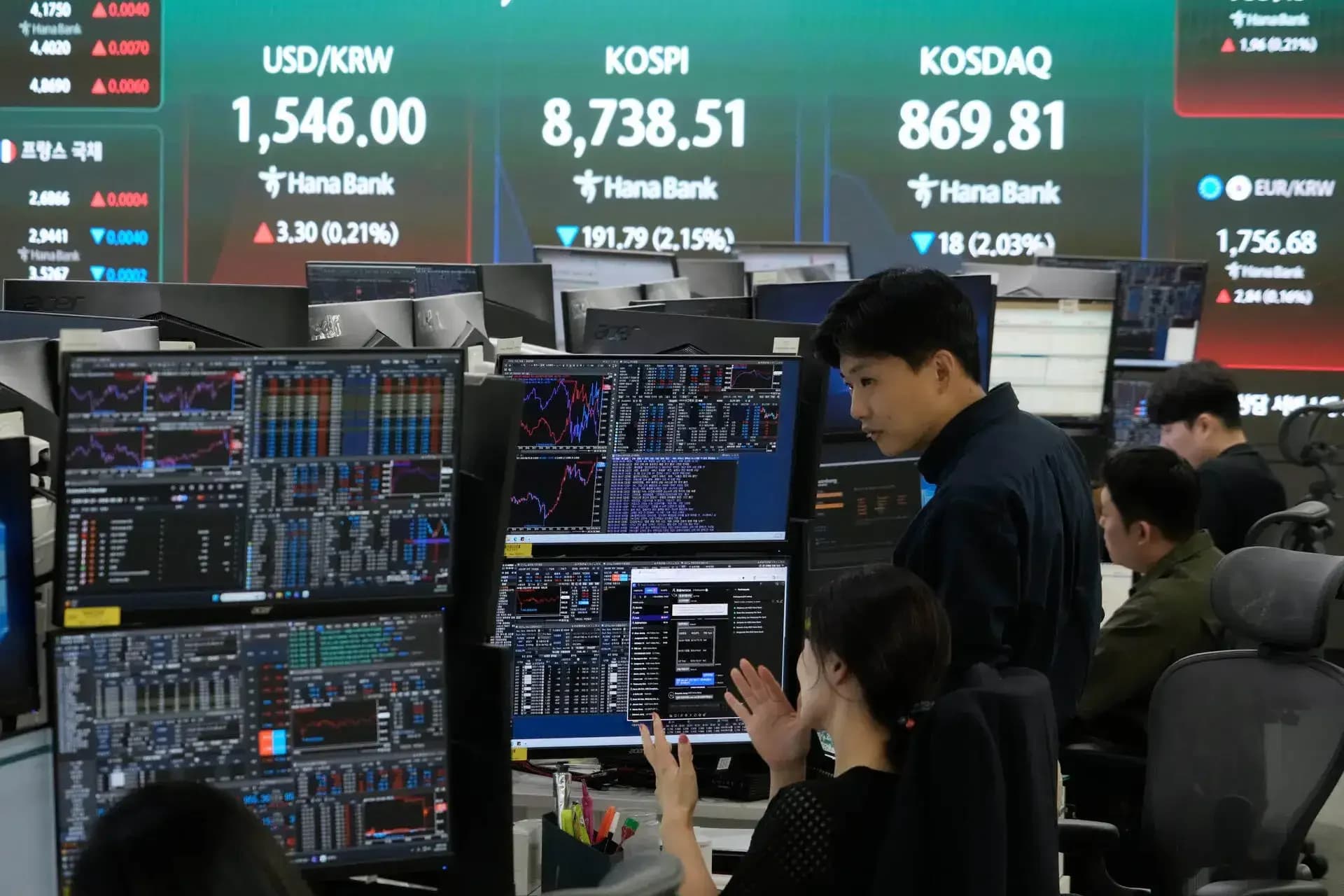
The dollar index is struggling near a seven-month low on Wednesday morning in Asia, reflecting continued pressure on the greenback amid rising inflation concerns. According to Business Standard, the dollar index is quoting at 98.48, down marginally on the day, as investors await key US inflation data this week that could provide further clues on the Federal Reserve's policy outlook ahead of next week's meeting. The dollar's weakness comes despite rising expectations for Federal Reserve rate hikes, with short-term interest-rate futures now implying about a 57% chance of an increase this month, up from about 55% before the latest employment report. As BBH's Elias Haddad noted, "A hot CPI print would all but seal a September hike and underpin a firmer U.S. dollar. A cooler reading would strengthen the case for a hold and leave the U.S. dollar vulnerable to a dovish Fed repricing."
U.S. stocks declined following the release of a blockbuster August jobs report that significantly increased expectations for Federal Reserve rate hikes. According to reports from Reuters, nonfarm payrolls surged by 162,000 jobs last month after an upwardly revised rise of 21,000 in July, the Labor Department's Bureau of Labor Statistics said on Friday. The report also included upward revisions to the July payroll data, with the Labor Department revising the July figure to 21,000 jobs created, up from its previous report of a loss of 23,000 jobs. The unemployment rate remained unchanged at 4.1%, while average hourly earnings rose 0.3% by 10 cents to $37.75 per hour in August and 3.1% in the past 12 months. As Capital Economics analysts noted, "Even the most committed dove would struggle to find anything in the August employment report to justify keeping interest rates unchanged."
The strong employment data has prompted significant shifts in prediction markets, with short-term interest-rate futures now implying about a 57% chance of an increase this month, up from about 55% before the report. According to Reuters, Nationwide Chief Economist Kathy Bostjancic wrote that "We now see two, 25 basis-point rate hikes by year-end, lifting the fed funds rate to 4–4.25%." Capital Economics analysts added that "the strength in the labor market means we'll only need to see data that are consistent with a moderately above-target-consistent gain in the core PCE deflator to shift our forecast back to a September hike." Fed Governor Christopher Waller told Reuters NEXT that he would support keeping rates steady in the 3.50%-3.75% range if next week's inflation data shows price pressures continuing to moderate, calling Friday's jobs report "satisfactory."
The Japanese yen rose more than 0.2% to 155.88 per dollar on Monday, extending gains after Japanese Prime Minister Sanae Takaichi's economic adviser projected a BOJ hike this month. The yen had surged more than 2% last week, following a confluence of factors including the unwinding of carry trades and expectations of capital repatriation that would boost the yen. According to Standard Chartered's Eric Robertsen, "If the JPY were to strengthen persistently, this may signal that the increase in JPY and USD rates is starting to trigger a change in asset allocation." Robertsen noted that "while carry trades have been among the strongest macro performers year-to-date despite a surge in borrowing costs globally, the "recent burst" of yen strength is a "potential threat to carry outperformance." In other currencies, the Australian dollar advanced 0.12% to $0.7208, while the New Zealand dollar was flat at $0.5880. Bitcoin steadied above the $80,000 level at $80,145.95, having drawn support as investors diversified away from the dollar into other assets.
Global central banks are moving toward policy tightening amid rising inflationary pressures. The European Central Bank is seen certain to lift rates to 2.75% on Thursday, with futures implying a 75% chance of another hike to 3.0% by December. Similarly, markets are pricing a 75% chance the Bank of Japan will raise rates a quarter point at its meeting on September 18, with a 60% probability of another move by December. The inflationary impulse from still-elevated oil prices is a major factor driving these policy decisions, as noted by Reuters. Rising oil prices are intensifying inflation concerns and strengthening expectations for a Federal Reserve rate hike, with investors awaiting key US inflation data this week that could provide further clues on the Federal Reserve's policy outlook.