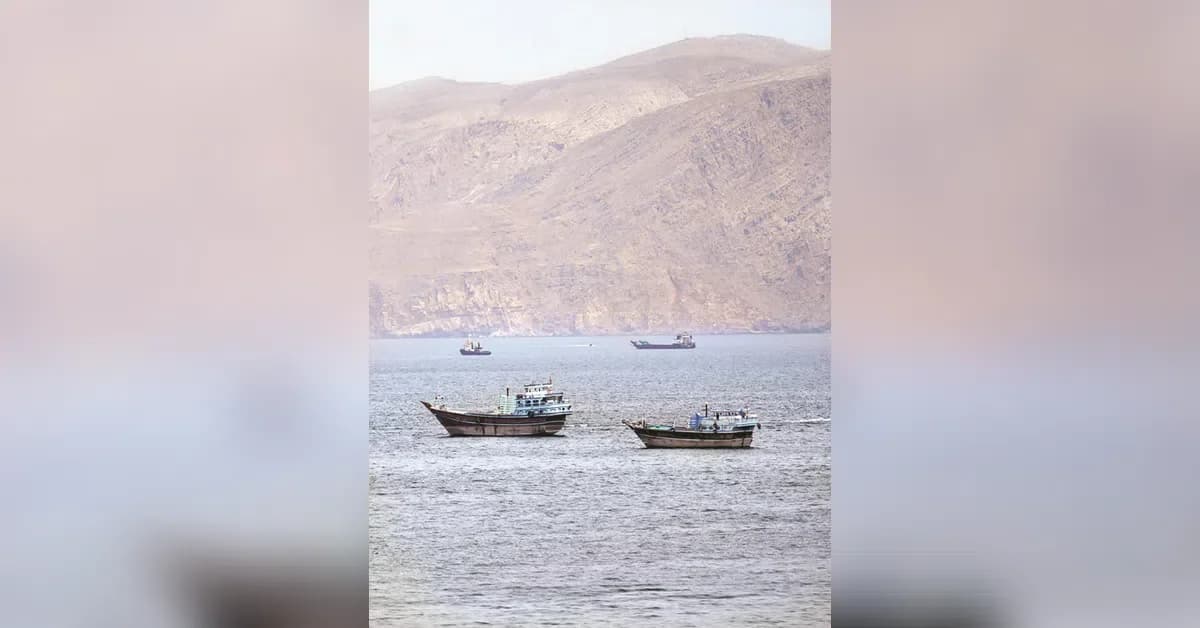
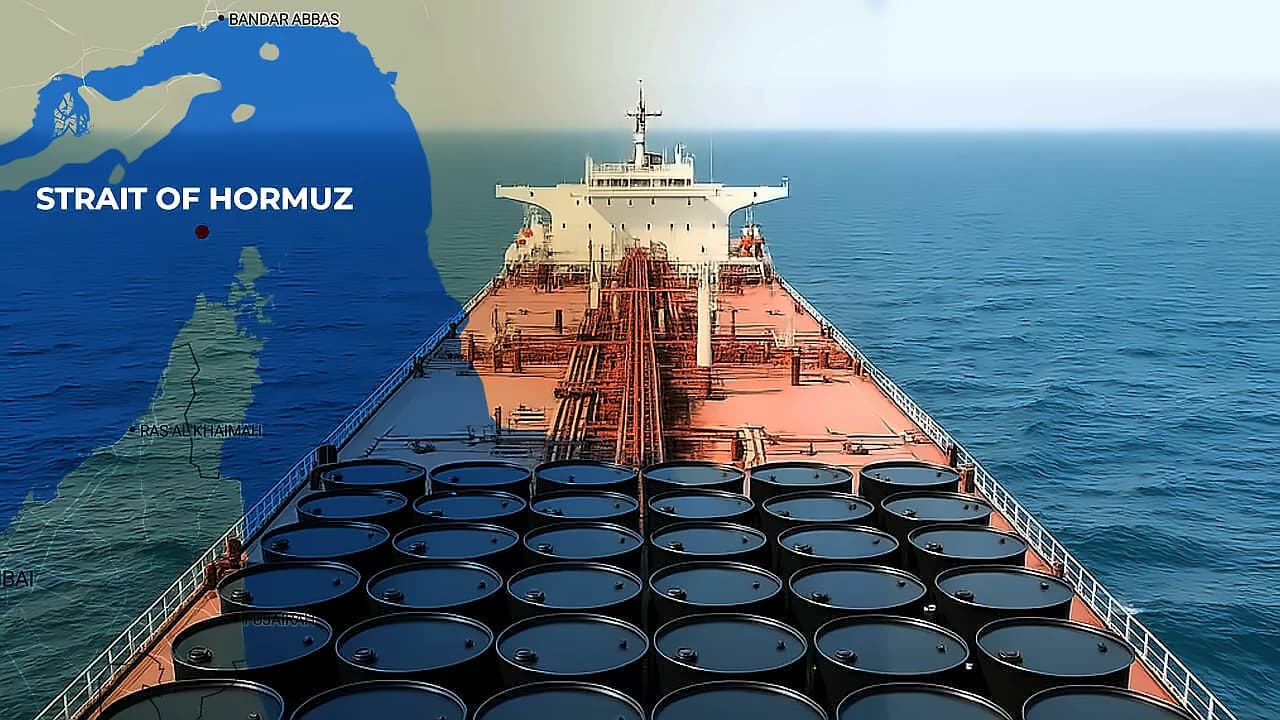
US President Donald Trump on Friday accused Iran of carrying out drone attacks against Indian ships leaving the Strait of Hormuz, calling the actions 'totally unacceptable'. As reported by Business Standard, Trump claimed in a post on Truth Social that 'Their (Iran's) totally rebuffed Drone attack last night against Indian Ships leaving the Hormuz Strait is TOTALLY UNACCEPTABLE'. This latest development comes as three vessels with Indian crew came under attack off the Oman coast this week, with one resulting in the death of three Indian seafarers on Wednesday. The attacks have escalated tensions in the region and prompted strong diplomatic responses from both India and Iran.
Iran has vehemently rejected Trump's allegation, calling it 'baseless'. As reported by Business Standard, the Iranian Embassy in India said in a social media post late Friday night: 'The US president's accusation against Iran regarding an Indian vessel in the Strait of Hormuz is simply baseless'. The Iranian diplomats stated that 'It is an attempt to divert public attention from the brutal fact that the US has attacked 3 Indian vessels in less than a week and killed 3 innocent Indian sailors. That's pathetic!'. This rejection comes as Iranian Foreign Ministry spokesperson Esmaeil Baqaei had earlier strongly condemned the US attacks on Thursday, describing the actions as evidence of Washington's policy of 'armed robbery' and 'state piracy'.
India on Friday summoned US charge d'affaires Jason Meeks and told him that the American military's 'lethal and deadly' strikes on commercial vessels with Indian crew members off the coast of Oman are 'unacceptable'. As reported by Business Standard, MEA spokesperson Randhir Jaiswal addressed a weekly media briefing, stating 'We had summoned the US CDA here to register a strong protest' over the incident. The MEA described the continuing attacks on commercial shipping in the Gulf as 'deeply worrisome', saying the incidents were a consequence of the ongoing conflict in the region. Jaiswal emphasized 'These attacks must cease and end. We also call for dialogue and diplomacy so that we can have an early return to peace and stability in the region'. The US Central Command has acknowledged the strike on the vessel, saying it violated the ongoing US blockade of the Iranian ports by attempting to transport oil from Iran.
The Indian government has placed all relevant security and maritime agencies on high alert, directing them to maintain a constant state of readiness to safeguard the nation's maritime interests and seafarers. As reported by the Ministry of External Affairs, 'The Government has directed all concerned agencies to remain on heightened alert and maintain readiness to respond to any contingency involving Indian seafarers or Indian maritime interests'. This heightened security measure comes as the latest attack on the Guinea-Bissau-flagged tanker Jalveer, carrying 20 Indians, was disabled by US forces on Thursday. The US Central Command stated that Jalveer was 'disabled' as a combat aircraft fired two Hellfire missiles into the vessel's engine room after the crew 'repeatedly failed to comply with directions from US forces'.
The suspected US missile strike occurred 20 nautical miles northeast of Sohar in Oman, with the vessel experiencing an engine room fire. The ship was a Palau-flagged chemical/oil products tanker that was partially laden and last located off Oman's coast on June 1, as reported by the MarineTraffic ship-tracking platform. The vessel was travelling from Lianyungang port in China to Fujairah in the UAE when the UK Maritime Trade Operations reported an engine room fire. British maritime risk management group Vanguard confirmed that the ship had transmitted a distress call reporting a missile strike that caused the fire. The Omani Navy responded to the ship's distress call, while the India-based operator could not be reached for comment. India's foreign ministry confirmed that their embassy in Oman is closely monitoring the situation and proactively coordinating with Omani authorities in the ongoing search and rescue operation. The attack came two days after a Palau-flagged vessel with 24 Indians came under attack as the ship tried to evade the US blockade of Iranian ports.
MEA Secretary (West) Sibi George indicated that the evolving situation in West Asia as well as restrictions on shipping through the Strait of Hormuz may figure in Prime Minister Narendra Modi's bilateral meetings on the sidelines of the G7 summit in France next week. According to Business Standard, two of the three vessels were subject to sanctions administered by the US Treasury's Office of Foreign Assets Control (OFAC), while one had been classified as non-compliant. The MEA stated that 'The three ships that have been involved in these incidents were foreign-flagged vessels. Two of them were Palau-flagged, while the third ship is Guinea-Bissau-flagged. They were not Indian-owned ships'. More than 18,000 Indian seafarers remained in the Gulf region, including 562 crew members aboard 13 Indian-flagged ships - 329 on vessels on the west of the Strait of Hormuz and 233 on vessels in the Gulf of Oman. The Seamen Welfare Fund Society has been asked to pay ₹10 lakh to the family of each deceased seafarer.