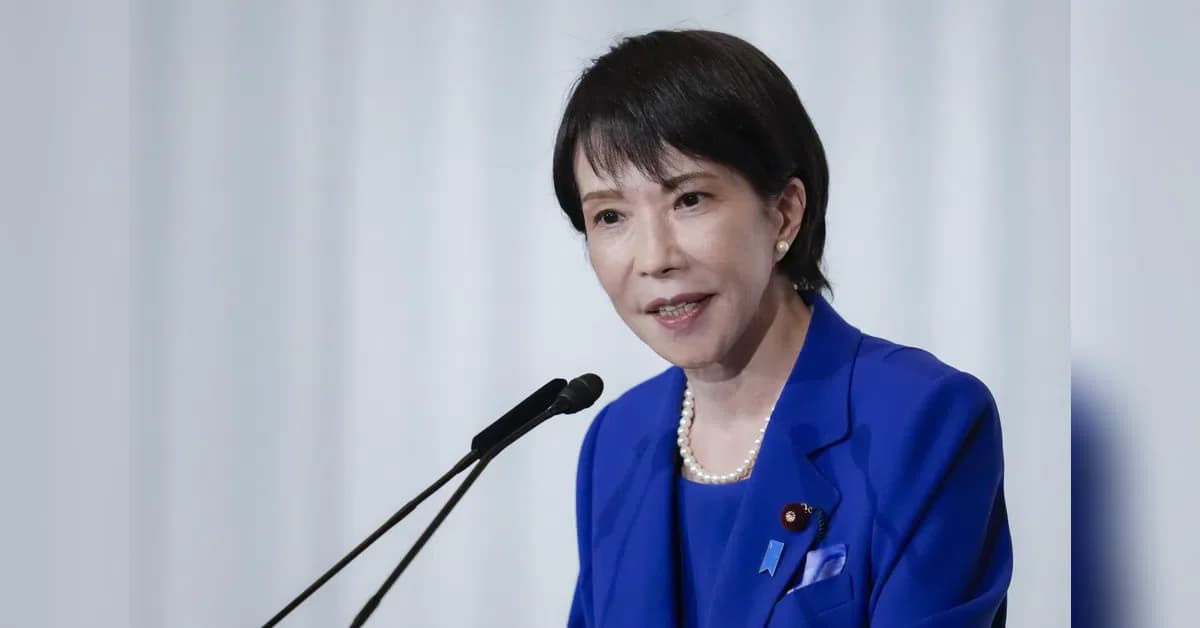
Japan's Prime Minister Sanae Takaichi is expected to visit Guwahati, Assam's capital, on July 1 with a delegation of executives from more than 50 Japanese companies and organisations, according to latest reports. The visit would mark Takaichi's first trip to India since taking office in October 2025. Prime Minister Narendra Modi and the Japanese prime minister will hold delegation-level talks in Assam's capital, possibly on July 1, as confirmed by sources in the Assam government and at the Centre. This marks a rare instance where a high-profile bilateral summit is not held in New Delhi but in a northeastern state, with Assam sharing a border with China amid continuing unease in Tokyo about Beijing's assertiveness in the Indo-Pacific region. The decision to hold the meeting in Assam highlights the growing strategic importance of India's Northeast and reflects the Special Strategic and Global Partnership framework between the two countries.
The Japanese delegation is expected to include executives from Suzuki Motor, Itochu Corporation, and Toyota Tsusho, along with other leading Japanese companies. The focus of the trip is likely to be on investment opportunities, industrial cooperation and supply chain partnerships in the region. During the visit, both sides are expected to discuss economic cooperation, infrastructure projects, technology partnerships, and regional connectivity. Several companies may sign agreements related to manufacturing, energy, and semiconductor development. Semiconductors, renewable energy and automobiles are among the sectors in which Japanese and Indian companies could sign agreements, with the summit aligning with Japan's 10 trillion yen private investment commitment over 10 years made during Modi's visit to Japan in August 2025. According to Business Standard, the two sides are likely to sign investment and supply chain deals, and also discuss Tokyo's financial assistance to India for setting up strategic oil reserves. According to Nikkei, the Japan-India Association will hold a meeting in Tokyo on the same day, with major corporate executives including Suzuki President Toshihiro Suzuki attending.
The proposed visit comes as India and Japan seek to expand cooperation in manufacturing, infrastructure, critical technologies and regional connectivity. Japan is already among the largest investors in India, with companies such as Suzuki playing a key role in the country's automobile sector. According to Business Standard, the summit in Assam aligns with former Japanese Prime Minister Fumio Kishida's strategic plan outlined in a 2023 speech at New Delhi's Indian Council for World Affairs, advocating building an industrial value chain connecting India's Northeast, the Bay of Bengal and the Indo-Pacific. Kishida advocated viewing Bangladesh and other areas to the south as a single economic zone, promoting the Bay of Bengal-Northeast India industrial value chain concept to foster regional growth. Both countries support a free, open, and rules-based Indo-Pacific region, and the summit could further strengthen strategic coordination between New Delhi and Tokyo.
Japan has emerged as a key development partner for the Northeast, with the India-Japan Act East Forum launched in 2017 to promote connectivity, infrastructure and socio-economic projects in the region. As reported by Business Standard, 59 Japanese corporate offices were in Assam as of 2024, primarily in finance and insurance sectors. According to Nikkei, more recently, large-scale investment has begun in earnest, centered on the semiconductor and energy sectors that the Indian government is fostering as strategic industries. Tata Group is investing about ₹270 billion (about 4 trillion won) to build a plant handling back-end processes such as semiconductor assembly and testing. Reliance Industries is pursuing investment in digital areas such as data centers, and Adani Group has also signaled large-scale investment in power businesses such as thermal power generation. The Japanese government expects that conditions for Japanese companies to enter the market will improve if infrastructure expands through investment by local conglomerates, with particular demand expected for Japanese logistics and transport technology needed to safely transport precision products manufactured at the semiconductor plant under construction in the Jagiroad area.
The upcoming summit carries historical significance as it follows the cancellation of a similar summit in December 2019 when former Japanese Prime Minister Shinzo Abe was scheduled to attend a summit with Modi in Guwahati but authorities canceled the event due to widespread protests against the Citizenship (Amendment) Act. Assam Chief Minister Himanta Biswa Sarma has stepped up preparations for the high-profile visit, reviewing facilities and security arrangements at the new terminal of Lokpriya Gopinath Bordoloi International Airport in Guwahati. The state government has also launched beautification efforts across the city ahead of the summit. Sarma has repeatedly said that such visits can open new doors for Assam's economy and has stressed the importance of connecting the state with global investment networks and international markets. The successful hosting of the upcoming summit would mark an important moment for the state and demonstrate its growing stability and international appeal.