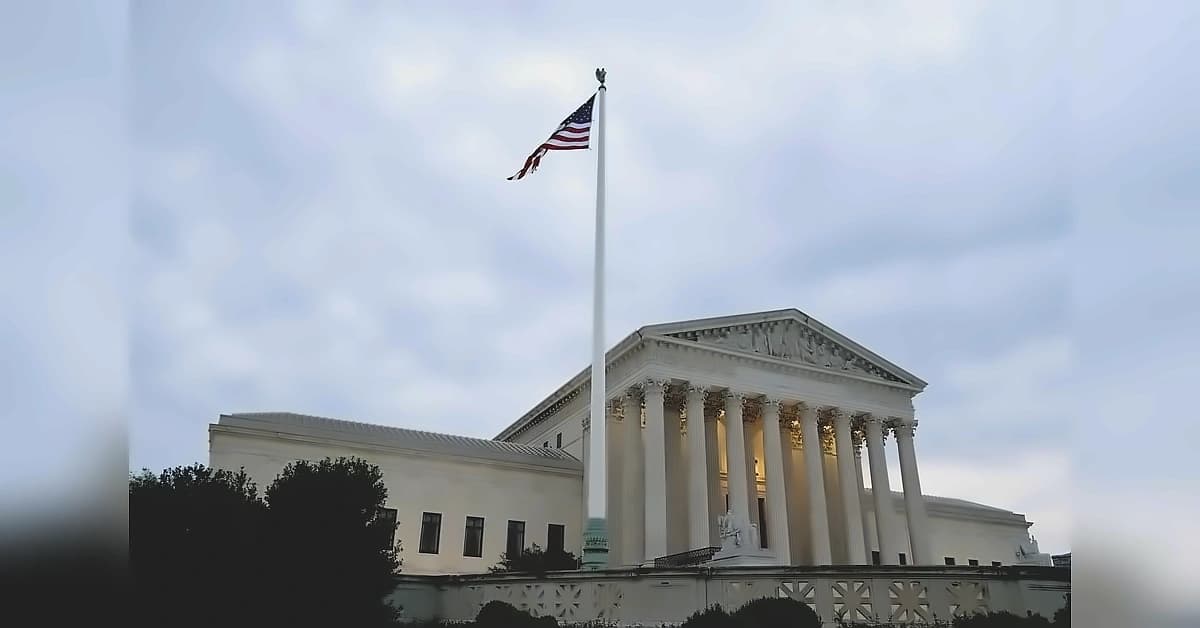
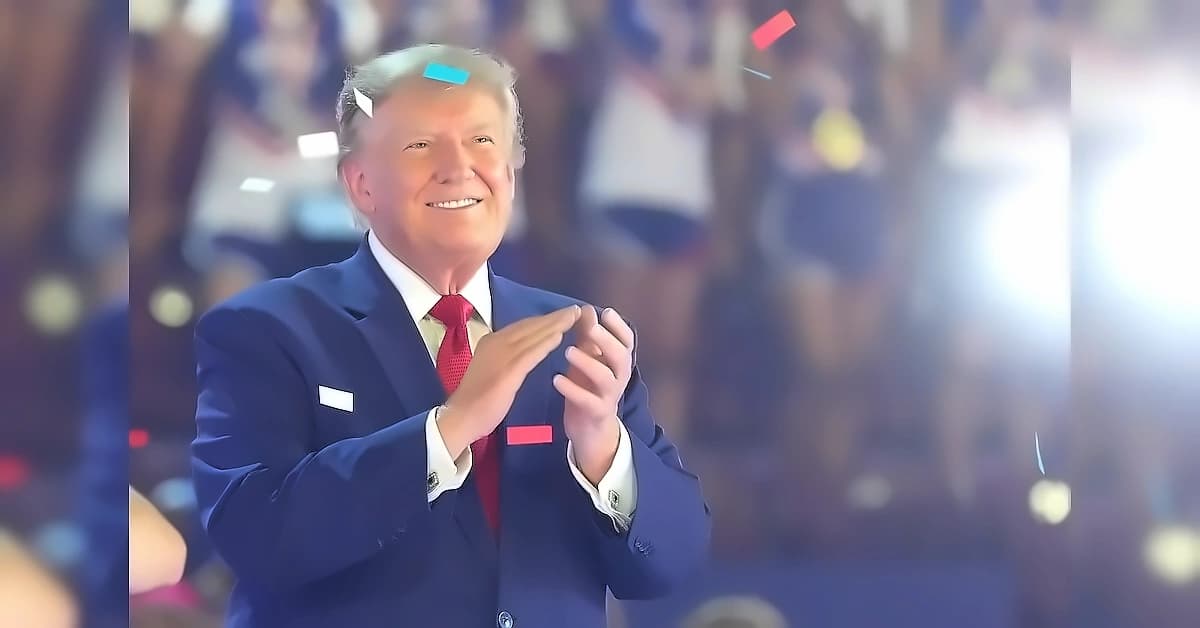
The US Supreme Court provided President Donald Trump a temporary victory by granting emergency relief on Monday, allowing key parts of his executive order to be implemented ahead of the midterm elections. In a 6-3 ruling, the justices over dissents from the court's three liberals granted the Trump administration's request to lift a lower court injunction that blocked parts of his order. The high court decision doesn't guarantee the program will be in place for this year's election, with the dispute potentially returning to the Supreme Court quickly. The court's unsigned decision stated that the states filed their lawsuit too soon, saying "the Order itself does not harm the States, so the District Court lacked jurisdiction to bar the Government from trying to implement it." The agencies have not yet taken concrete actions that impact the states and so any harm they allege is speculative, the court concluded.
The emergency request addressed whether a suit by a California-led group of states was premature, not whether Trump had authority to impose the rules. The dispute centers on Trump's executive order that tasks the Department of Homeland Security with sending 'citizenship lists' to states, which must then send their own rosters of eligible voters to the Postal Service. The Postal Service would then require states to use special bar-coded envelopes, while the Justice Department investigates and potentially prosecutes officials who send ballots to ineligible voters. The Trump administration had argued the lawsuit challenging the policy wasn't "ripe" because the government hadn't yet finished the process of deciding how the directives would be carried out, but that changed when the USPS issued its final rule on Friday. However, a second injunction barring the U.S. Postal Service from making changes to comply with Trump's directive remains in effect, with the judge issuing that order on August 11 in a separate lawsuit filed by voting-rights groups.
Dissenting Justice Sonia Sotomayor countered that the states face a sufficiently concrete and imminent injury to meet constitutional requirements. Sotomayor, joined by Justice Elena Kagan, sought to downplay the decision's effect, saying it merely postpones adjudication of the lawsuit pressed by 23 states and the District of Columbia. In a separate dissent, Justice Ketanji Brown Jackson used stronger language to bash how the ruling "needlessly injects chaos and uncertainty into the upcoming midterm elections." She described what she saw as an inconsistent approach by the conservative majority when it comes to the timing of challenges to election policies, describing the precedents as a "Kafkaesque nightmare." The court's conservative majority sided with Trump in concluding that when a federal judge blocked parts of Trump's order for the midterms, the states had not proved they were being harmed by his directives yet. California Governor Gavin Newsom, a Democrat, said on Monday: "The Supreme Court just let the Trump administration move ahead (for now) with its plan to disenfranchise voters across the country. California will be suing AGAIN to block these Orwellian rules from being implemented."
The ruling comes with the election only 71 days away, amid approaching deadlines for states to send ballots to voters. The Trump administration told the Supreme Court that implementation of a final Postal Service Rule will need to begin well before November - indeed, as soon as early to mid-August - to be effective for the 2026 election. However, the administration's new regulations from the Postal Service that would go into effect Tuesday if the legal pathway is fully cleared have already thrown uncertainty into the voting process. The new rule requires specific formatting for envelopes containing mail ballots and makes states use an electronic system to identify to the Postal Service who is voting by mail. If states don't comply with the rule, their mail ballots won't get sent. Initial ballots scheduled to be sent to North Carolina's overseas and military voters in just over a week, on September 4, have been thrown into chaos. Election officials across the country are reeling from the prospect of implementing such sweeping changes in mere days.
Legal experts warn that the Supreme Court's decision creates impossible implementation challenges for states. David Becker, executive director of the Center for Election Innovation & Research, said the majority "seemed to create complete chaos leading up to the midterm elections" and it'd be "impossible" for states to comply with the new rules at this late date. Tammy Patrick, chief program officer at the Elections Center, warned that it's impossible for any state to comply with the rule and that no one she talked to has tried. "There isn't a single state that does their elections in a way that this postal rule lays out," Patrick said. Cisco Aguilar, Democratic Secretary of State in Nevada, noted the post office had already misdelivered three dozen mail ballots from his state's June primary. "They're going to come in within seven days and build a massive database that has 100% accuracy?" Aguilar said in disbelief. "It is impossible to implement this system in that time frame."