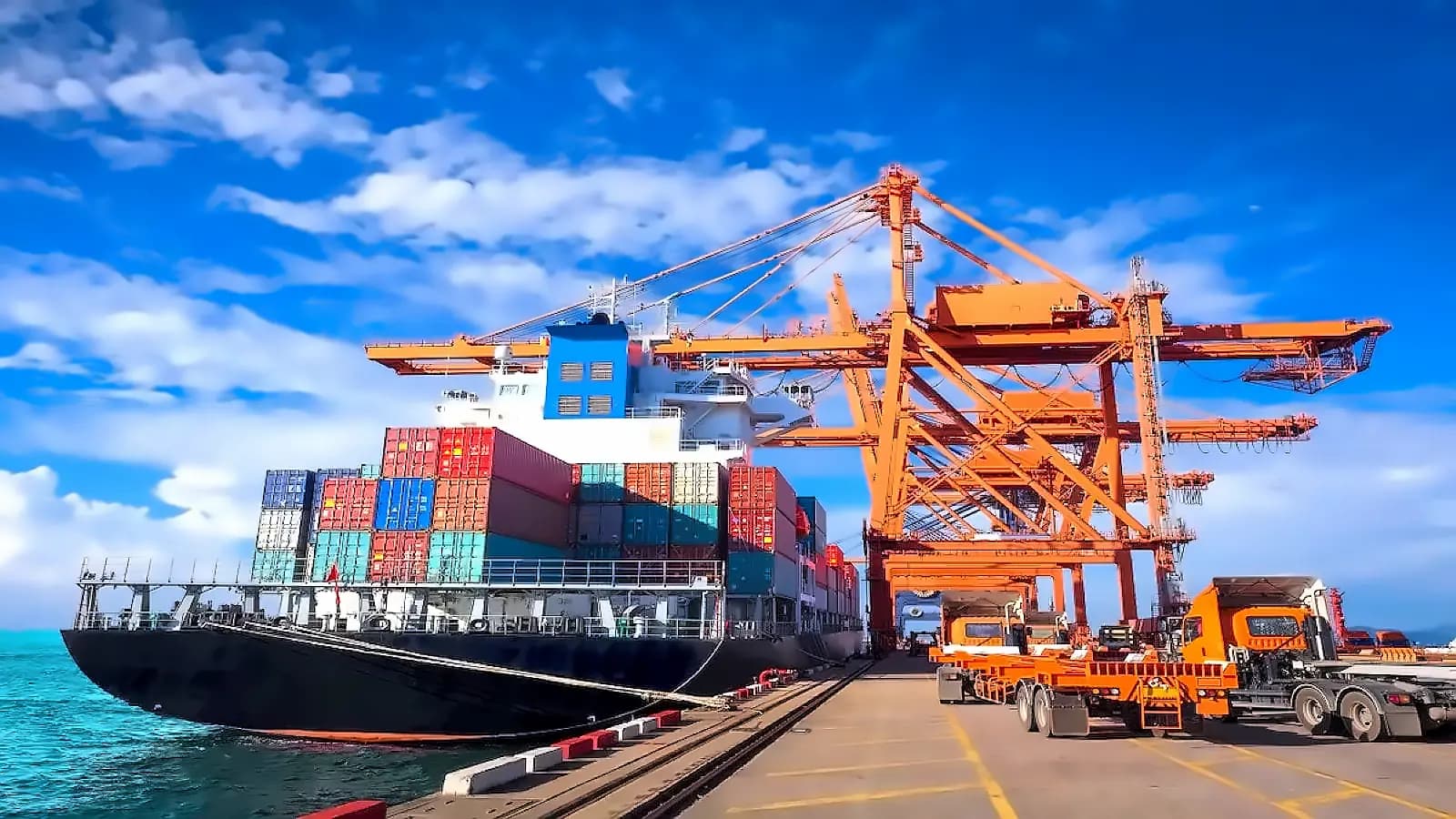
South Korea achieved a historic milestone in August with exports reaching $98.25 billion, marking the highest monthly figure on record according to the latest customs office data. The country's exports demonstrated robust growth with adjusted shipments climbing 72.5% compared to the same month last year, as reported by CNBC TV18. On an unadjusted basis, shipments rose 68.7%, compared with a revised 63% gain for the full month of July. The strong performance was primarily driven by artificial intelligence demand and semiconductor shipments, with imports increasing 22.5% to result in a trade surplus of $34.7 billion. Latest data from Reuters confirms this continued strength, highlighting the robust demand for semiconductors used in artificial intelligence applications that supported the export momentum.
South Korean shares gained on Tuesday, with the KOSPI rising 0.33% to 6,842.74 as stronger-than-expected exports and robust semiconductor demand linked to the AI boom supported technology stocks. According to The Economic Times, chip stocks led gains with Samsung Electronics, SK Hynix and LG Energy Solution posting significant increases. However, the broader market showed mixed performance as 306 stocks advanced and 540 declined out of 901 traded, indicating that gains in index-heavy shares masked weakness across individual stocks. Foreign investors were net sellers, offloading shares worth ₹116.5 billion, adding to the market's mixed sentiment despite the positive export data.
The stronger export performance had mixed implications for South Korean financial markets. In offshore trading, the won was quoted at 1,369.7 per dollar, down 0.2% on the day, while its one-month non-deliverable forward contract was quoted at 1,369.1. Despite Tuesday's decline, the won has strengthened 5.1% against the dollar so far this year. Government bond yields also moved higher, with the most liquid three-year Korean Treasury bond yield rising 4.1 basis points to 3.878%, while the benchmark 10-year yield climbed 5.8 basis points to 4.371%. As reported by The Economic Times, the rise in yields came alongside gains in equities as investors assessed the stronger export outlook and implications of resilient technology demand for South Korea's economy.

The Bank of Korea maintained its hawkish monetary policy stance following the strong export data, having raised the benchmark rate by a quarter percentage point for the second consecutive meeting last week. As reported by CNBC TV18, the central bank upgraded its 2026 growth forecast to 3.3% from 2.6%, providing policymakers with additional room to focus on inflation control. The bank left its price growth forecasts unchanged, expecting consumer inflation of 2.7% this year and 2.3% in 2027.