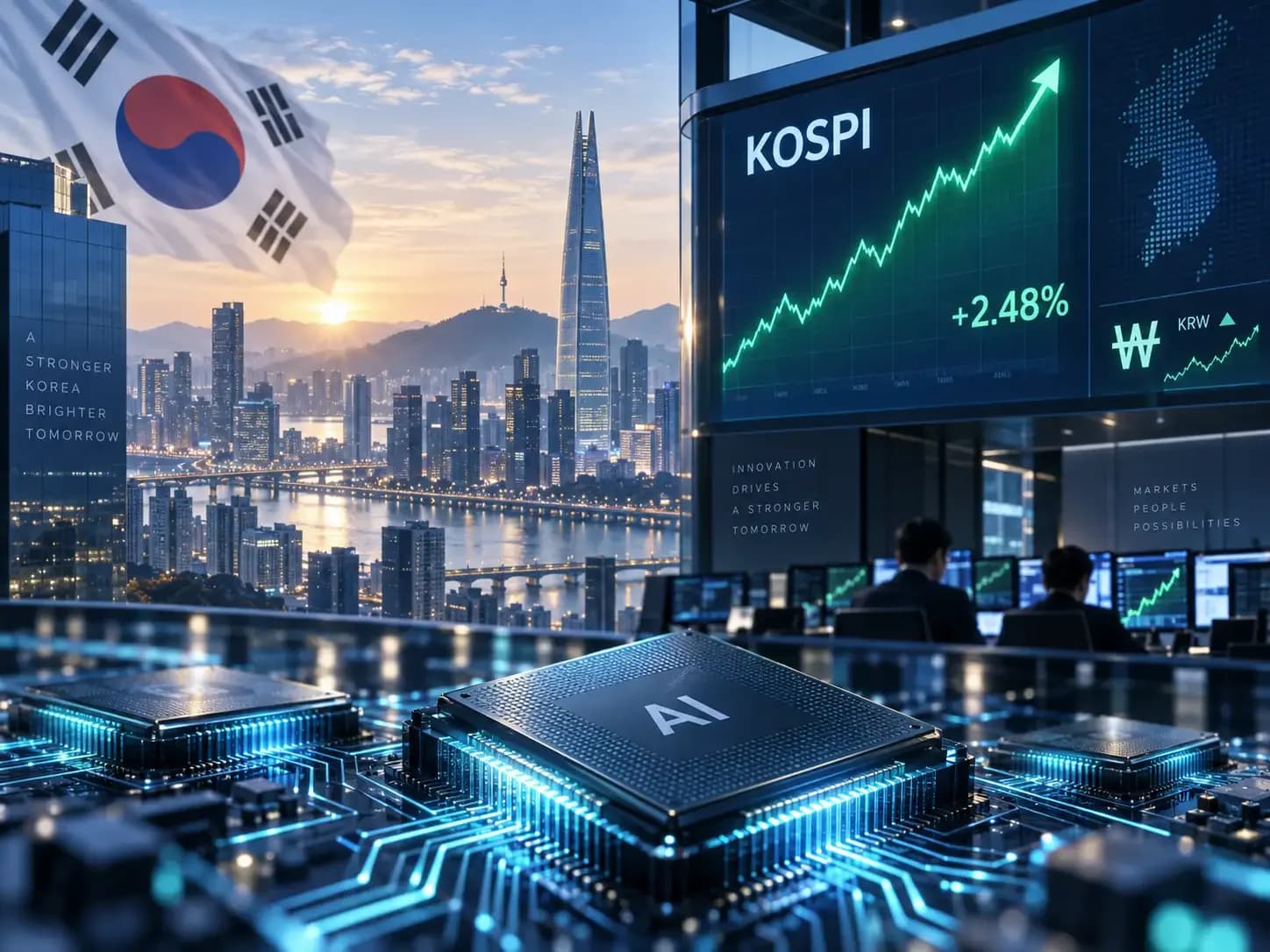
South Korean stocks rapidly erased losses Wednesday as local retail investors bought into a wave of selling by foreign funds. The Kospi rose 0.3%, reversing an early decline of as much as 3.2% during the session. According to latest reports, this recovery demonstrates the resilience of domestic investor sentiment despite continued foreign selling pressure. The market's ability to bounce back from significant intraday losses highlights the importance of local retail participation in offsetting foreign investor exits.
Samsung Electronics pared most of its drop after briefly plunging as much as 6.1% on its failure to reach a wage agreement with its biggest labor union. The semiconductor giant's recovery reflects the market's focus on AI-driven fundamentals over labor tensions. Meanwhile, SK Hynix Inc. reversed an early loss, shaking off investor concerns of overheating that dragged down AI-related stocks in New York on Tuesday. The Korean memory makers' shares are up more than 100% each so far in 2026, reinforcing their position as key beneficiaries of the AI hardware boom.
Foreign funds have sold more than $45 billion worth of Kospi stocks so far this year, highlighting the sustained pressure from overseas investors. However, buying by local institutional and retail investors has compensated for this outflow, with the index's 82% year-to-date gain the best in the world. As reported by Pepperstone Group Ltd research strategist Dilin Wu, the market's concentration risk remains a concern, noting that "the AI hardware thesis that drove the Kospi's record run is still intact — but execution risk on the supply side is now sitting right next to it."
Morgan Stanley analysts including Joon Seok raised their 12-month Kospi target to 8,500 from 6,500 in a Wednesday report, citing structural stories including reform. The brokerage expects further upside for the Kospi, noting that "the Kospi should be resilient" despite external uncertainties such as Middle East situation ripple effects. However, analysts acknowledge the market's vulnerability to concentration risk, with the index's performance heavily dependent on just two names - Samsung and SK Hynix each more than doubling in price this year.
The policy debate coincides with significant labor tensions at Samsung, where the company and its union entered final government-brokered wage talks to prevent a strike that could disrupt operations at the world's largest memory chip producer. The union is seeking 15% of operating profit for chip-division employees and has threatened an 18-day walkout beginning May 21. Workers point to rival SK Hynix, which last year pledged to channel 10% of annual operating profit into employee performance bonuses, as a benchmark for what they believe they deserve. Supply chain execution risks now sit alongside AI optimism as key concerns for investors.