The South Korean won surged 1.3% intraday to 1,334.70 per U.S. dollar, marking its strongest level since October 2024 and reaching a two-year high. According to CNBC TV18, the currency's relative strength index rose to the highest level since 2013, underscoring the pace of the currency's advance. However, experts are warning of potential overextension as the won has gained around 6% year-to-date, which looks increasingly stretched. As reported by Bank of New York Mellon strategist Geoffrey Yu, the strength could encourage domestic asset managers to unwind foreign-asset hedges or prompt renewed retail outbound equity investment. The currency trimmed its gains to 0.4% against the dollar in the afternoon after Yonhap Infomax reported that the National Pension Service had halted its foreign-exchange hedging and resumed dollar purchases, with the pension fund declining to comment when contacted by Bloomberg News.
A Goldman Sachs strategist is standing by his bullish target for South Korean stocks, maintaining his 12,000 Kospi target despite the market's recent volatility. Chief Asia Pacific equity strategist Timothy Moe says investors underestimate how long the AI boost for the nation's memory chipmakers will last, with his estimate implying upside of nearly 80% from current levels. As reported by NDTV Profit, Moe stated that "We're still holding to it — it's driven by what we think will be earnings delivery. The market is underpricing the duration of this earning cycle." The optimism comes despite the 27% plunge in the Kospi from its June record high on concerns over the sustainability of Big Tech's AI spending boom and increased Korean stock volatility.
South Korean shares surged nearly 3% on Monday, led by semiconductor giants Samsung Electronics and SK Hynix, as optimism over sustained artificial intelligence investment and strong semiconductor demand lifted investor sentiment. According to reports from The Economic Times and Reuters, the benchmark KOSPI gained 196.57 points, or 2.94%, to 6,883.78 as of 0123 GMT, with the index climbing as much as 3.5% earlier in the session and touching its highest intraday level since August 27. The rally was particularly driven by the OpenAI AI debut, which has powered the chip sector rally and reinforced optimism toward artificial general intelligence applications. Latest developments show the OpenAI unveiling of GPT-6 Astra has further reignited investor optimism about the artificial intelligence sector's outlook, fueling expectations for robust demand for high-bandwidth memory (HBM) and advanced-node chips.
Foreign investors continued their strong buying streak in South Korean equities, purchasing over a net 1.8 trillion won ($1.3 billion) of Korean stocks on the Kospi Index on Monday, extending inflows to a third consecutive session, according to exchange data. As reported by CNBC TV18, the sustained foreign investment has provided additional support for the currency and broader market rally. The Kosdaq also advanced, opening 1.16% higher and trading above the 820-point level, indicating broad-based strength across South Korean equity markets. The continued demand for Korean assets may provide further support for the won, though the speed of gains may be harder to sustain given the current momentum levels.
The chip rally has now spread to semiconductor materials, components and equipment stocks, with the "Astra effect" spreading from South Korea's large-cap chipmakers to the broader semiconductor ecosystem. As of 10:22 a.m. on Monday, Samsung Electronics traded at 265,000 won, up 3.82% from the previous session, while SK Hynix rose 5.89% to 1.745 million won. Shares tied to back-end processing and packaging have posted the strongest gains, driven by expectations that artificial intelligence demand will lift the memory chip market. Doosan Tesna jumped as much as 12.25% during the session to 83,500 won, while Psk Holdings gained more than 8%. Equipment and back-end names including DB HiTek (12.46%), TES (4.97%), and EO Technics (64.85%) also advanced significantly. The strength in large caps has extended to back-end processing, packaging and other suppliers, with Eugene Technology, Soulbrain, and Wonik IPS also stronger in early trading.
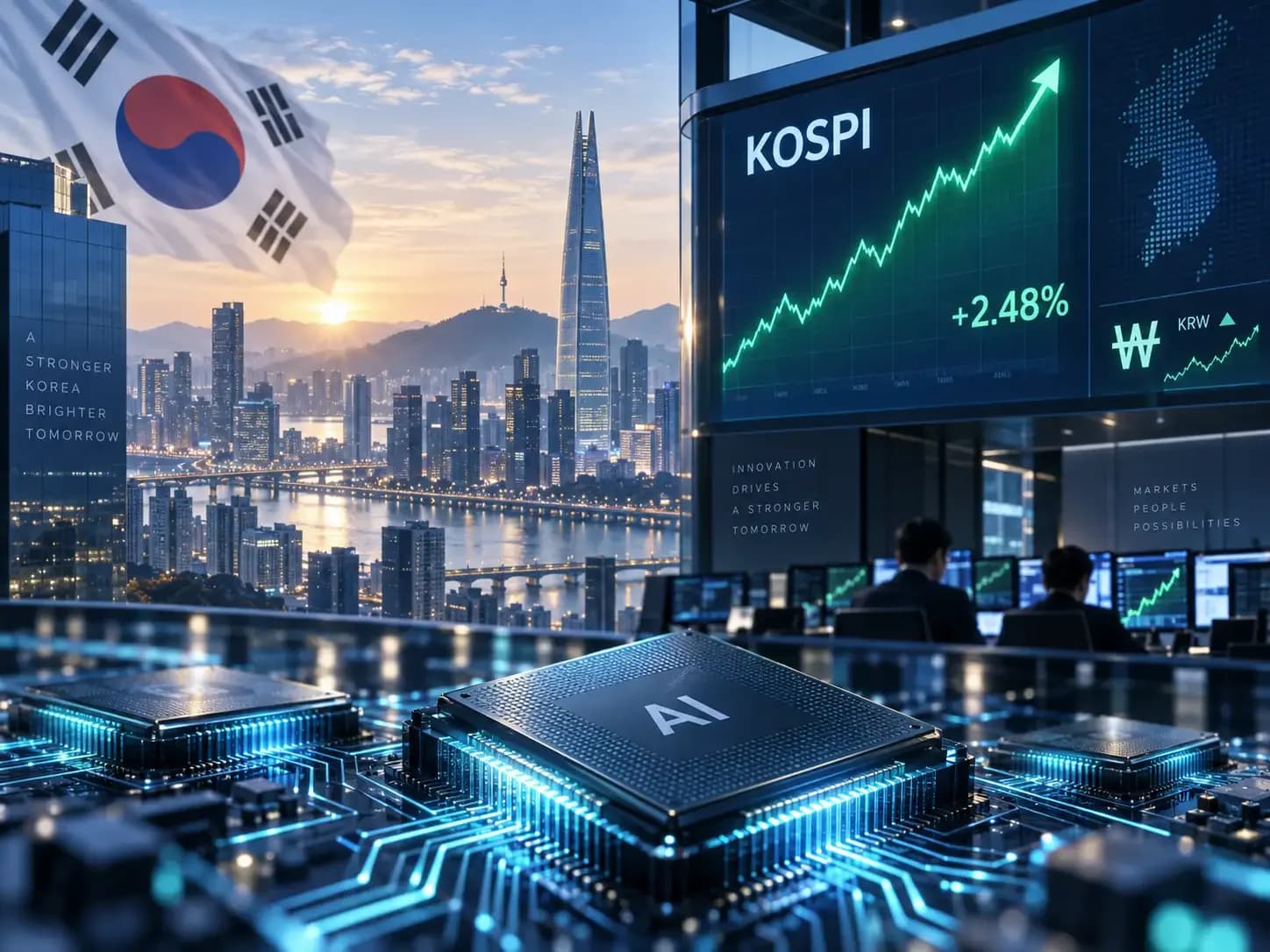
Goldman Sachs strategist Timothy Moe estimates earnings growth of roughly 360% this year for Kospi members, moderating to about 35% in 2027. According to NDTV Profit, his Kospi target is based on 7.5 times forward earnings estimates, with the index currently trading at 5.3 times, roughly half its seven-year average. Moe expects the global race to build data centers to drive massive shortages of memory and storage chips, lifting their prices. US Big Tech spending is estimated to top $1.2 trillion next year, up sharply from prior forecasts of $800 billion. The hyperscalers "have to continue to spend even if they don't make money," Moe said, noting that "it's great for memory because it's going to drive compute demand, which is very memory intensive." Moe acknowledges risks from Chinese competitors like CXMT Corp. and potential political pushback against the US data-center buildout, but says the fundamentals still favor advanced memory chipmakers for the next couple of years.