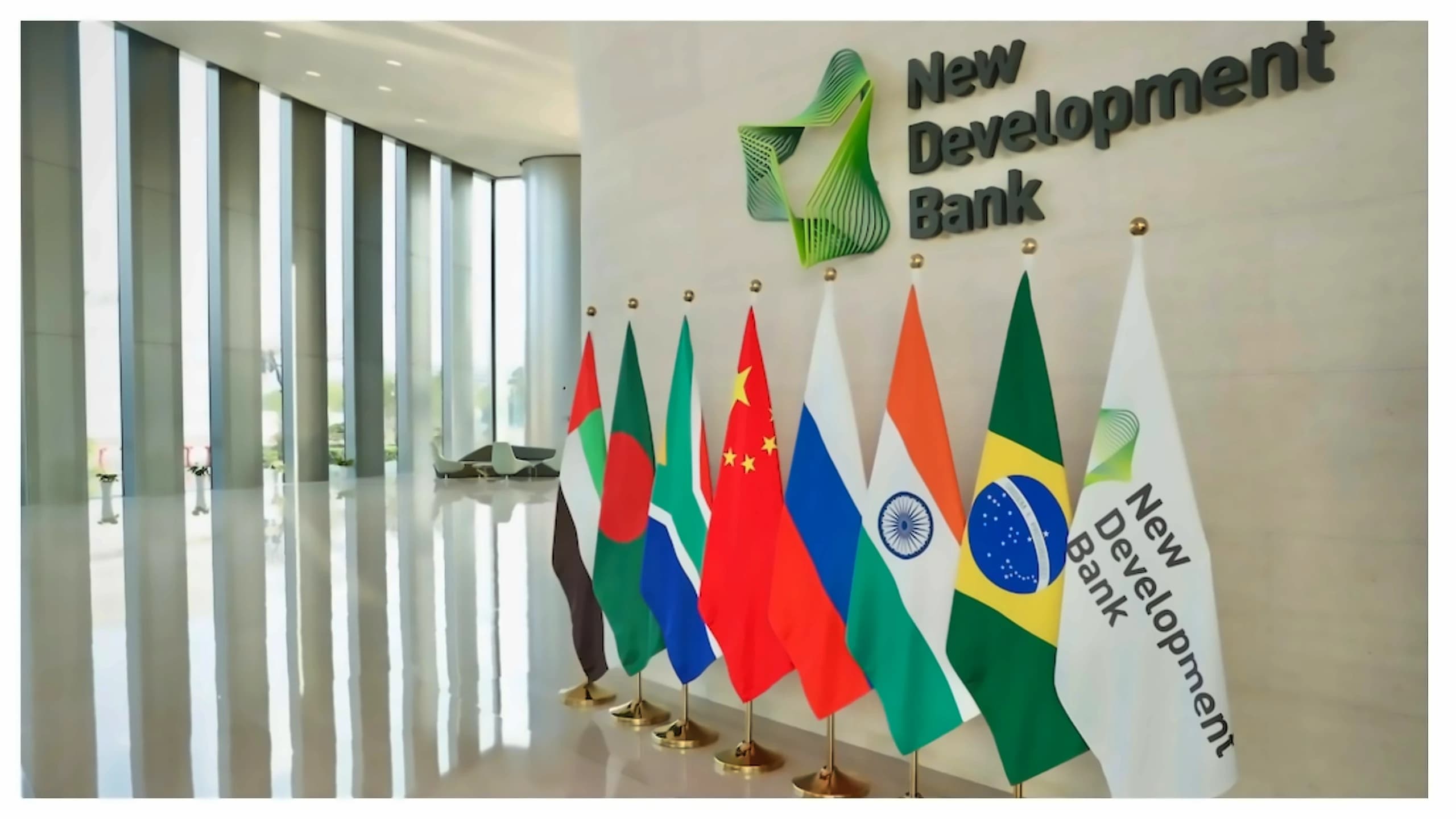
Iran is set to join the BRICS New Development Bank, enhancing its economic ties and reducing reliance on the US dollar, according to central bank governor Abdolnaser Hemmati in a state media report published on Wednesday ahead of the BRICS finance meeting in India. As reported by The Hindu BusinessLine, Iran joined BRICS in 2024 as the group expanded, in a move aimed at deepening economic ties among emerging economies, and it has since made clear its desire to become a member and shareholder of the NDB. Hemmati stated that "The most important result of cooperation among BRICS member countries is the establishment of the New Development Bank, and our country will soon become a member of this bank." The bank was established by Brazil, Russia, India, China and South Africa in 2015 to finance infrastructure and sustainable development projects, and has since expanded its membership to include the United Arab Emirates, Egypt and other emerging economies. The NDB's corporate communications division told Reuters it could not confirm information regarding Iran's membership, while Uzbekistan became its 10th member on June 5.
Iran's decision to seek NDB membership comes as it remains under sweeping US and international sanctions, and it has yet to reach a peace deal to end the current conflict with the US and Israel, giving Tehran added incentive to seek alternative financial channels outside the dollar system. According to The Hindu BusinessLine, BRICS members have sought to reduce reliance on the US dollar by promoting trade and financial transactions in national currencies. Hemmati emphasized that Iran believed BRICS members could conduct trade using their national currencies and was seeking bilateral and trilateral monetary cooperation with other members. The NDB membership is open to members of the United Nations, as well as to borrowing and non-borrowing member countries, according to the bank's statement. This development aligns with broader BRICS efforts to create alternative financial mechanisms that reduce dependence on traditional Western-dominated financial systems.
Finance Minister Nirmala Sitharaman emphasized that the future of development finance lies in partnerships between multilateral institutions, governments, and the private sector to mobilize private capital, de-risk investments, and strengthen infrastructure ecosystems. Speaking at the seminar on "The Role of the New Development Bank in Mobilising Private Capital in Member Countries" held on the sidelines of the BRICS Finance Ministers' and Central Bank Governors' Meeting in Jaipur, Sitharaman highlighted that multilateral development banks are critical to de-risking investments, improving project bankability and strengthening investor confidence. According to reports from Rediff Moneynews and ANI, she noted that BRICS economies are major growth engines of the global economy but face common structural constraints in mobilising private capital. The minister stressed that the challenge is not merely the availability of capital, but the creation of confidence, stability, predictability, and credible long-term frameworks essential for unlocking sustained private participation across member countries. The seminar was also addressed by New Development Bank President Dilma Rousseff, bringing together senior policymakers, representatives of multilateral institutions and private-sector leaders for comprehensive discussions.
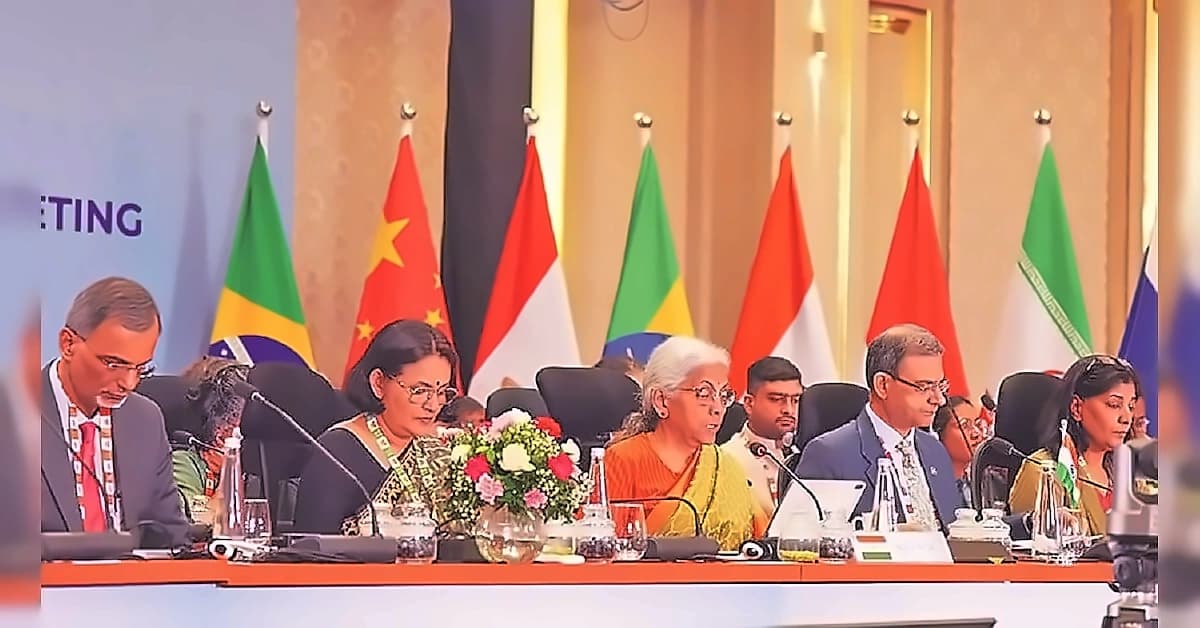
Sitharaman stated that the Government of India believes public capital must act as a catalyst and not a substitute for private investment. As reported by Rediff Moneynews and ANI, India has implemented multiple reforms including Viability Gap Funding (VGF), the Hybrid Annuity Model (HAM), credit-enhancement mechanisms, Infrastructure Investment Trusts (InvITs), the National Infrastructure Pipeline (NIP) and PM Gati Shakti. The Union Budget for the current financial year introduced targeted measures including new dedicated freight corridors, new high-speed rail corridors, operationalisation of new national waterways and the Coastal Cargo Promotion Scheme (CCPS). She highlighted that measures such as Viability Gap Funding, the Hybrid Annuity Model, credit enhancement mechanisms, Infrastructure Investment Trusts, the National Infrastructure Pipeline and PM Gati Shakti have been introduced to improve risk-sharing, project viability and long-term investor visibility. According to PTI, she noted that such frameworks are essential to unlock sustained private-sector participation across BRICS member countries. The Finance Minister noted that the Union Budget 2026-27 has also introduced targeted measures to facilitate private sector investment.
Economic Affairs Secretary Anuradha Thakur stated in her welcome address that development finance is entering a phase where scale must be matched with resilience. As reported by Rediff Moneynews and ANI, she noted that capital mobilisation cannot depend solely on favourable conditions and must be anchored in frameworks that endure. Thakur emphasised that strengthening such frameworks is where multilateral collaboration can add lasting value, highlighting the importance of stable policy frameworks and multilateral institutions in reducing investment risks. She stressed that capital mobilisation must rest on durable frameworks, where multilateral collaboration can create lasting value. The seminar brought together representatives from BRICS countries, financial institutions, think tanks and academia for comprehensive discussions, with a panel discussion featuring Irdai Chairman Ajay Seth, NDB Vice-President Roman Serov, Alessandro Teixeira of Sertrading, Tencent Senior Advisor Yongping Zhai and Pankaj Sindwani of the Tata Capital Decarbonisation Fund. Hemmati is attending the first meeting of BRICS finance ministers and central bank governors, hosted by India, which holds the rotating BRICS chairmanship this year.