US President Donald Trump has lashed out at the Senate after it passed a resolution seeking to limit his war powers over Iran, claiming the vote had undermined ongoing negotiations with Tehran. According to his Truth Social post, Trump wrote that "I have Iran on the 'ropes,' ready to go down for the fall, willing to give us practically anything, and for the first time in decades, respecting the hell out of the United States and its President, ME." He criticized the Senate for having "a poorly timed and meaningless War Powers Act Vote, telling the Number One Sponser of Terror in the World that the United States doesn't like what I am doing to them, and I must stop." Trump further claimed that "Four Republican Losers voted with the Dumocrats, and Iran asked my people, 'what does that all mean?'" He concluded by stating that "These Senators have just made my job more difficult, but I will get it done, one way or the other, because I always get it done!"
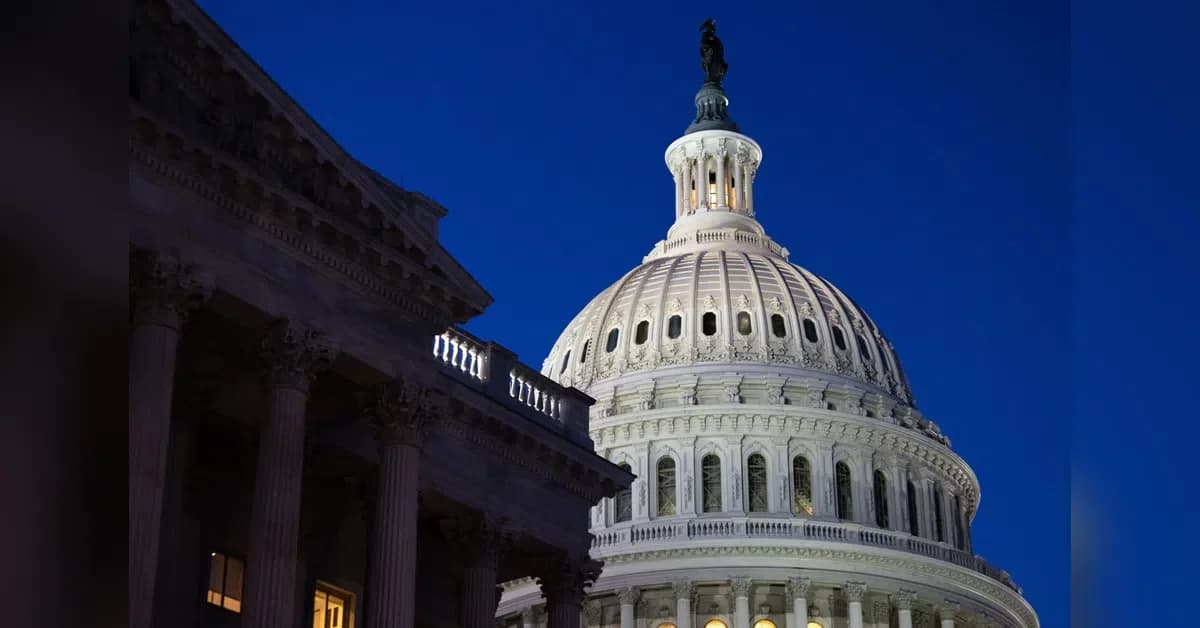
The US Senate has approved a war powers resolution aimed at halting American military involvement in the conflict with Iran, marking the first time such a measure has passed both chambers of Congress. According to reports from The Guardian, the Republican-led Senate voted 50-48 in favour of the resolution on Tuesday, with four Republican senators joining Democrats in a rare bipartisan challenge to President Donald Trump's war policy. The vote represents the 10th time the Senate has attempted to block the war, with this outcome marking a stunning turnaround from past efforts where the vast majority of Senate Republicans had sided with Trump and his war instead of the American people. As reported by The Wall Street Journal, the resolution is largely symbolic and does not fully carry the force of law, but it reflects growing bipartisan opposition to the administration's military actions. The vote also came with two Republican senators absent, including former Senate Republican leader Mitch McConnell of Kentucky, who was recently admitted to hospital for an undisclosed matter, leaving the GOP without a full majority to halt the effort.
The measure requires the administration to obtain explicit congressional authorisation before continuing military operations against Iran. As reported by The Guardian, it directs the president to withdraw US armed forces from hostilities unless Congress formally approves military action through a declaration of war or specific authorisation. The resolution had already cleared the House of Representatives on June 3 in a 215-208 vote, making it the first Iran-related war powers resolution to successfully pass both the House and Senate. While such resolutions do not go to the president for his signature or carry the force of law, passage would stand as a powerful, if symbolic, statement from Congress and a rebuke of the administration's military actions. The House resolution, introduced by Democratic Congressman Gregory Meeks, invokes Section 5(c) of the War Powers Resolution and directs the president to remove US armed forces from hostilities against Iran unless Congress explicitly authorises military action or declares war, allowing military action only in defence of the United States or its allies against an imminent attack.
Republican Senators Susan Collins of Maine, Lisa Murkowski of Alaska, Bill Cassidy of Louisiana and Rand Paul of Kentucky broke with their party to support the resolution. According to The Guardian, Democratic Senator John Fetterman of Pennsylvania was the only Democrat to oppose the measure, voting alongside most Republicans. The vote represents a significant bipartisan challenge to President Trump's military policy authority, with the absence of two Republicans, including Senator Mitch McConnell of Kentucky, who was admitted to the hospital recently for an undisclosed matter, leaving the GOP without a full majority to halt the effort. Senate Democratic Leader Chuck Schumer has criticized the war as "Trump's historic blunder in Iran," stating it will go down in history books as one of the worst foreign policy forays America has ever made. Schumer also said Americans had paid the price for what he called Trump's "historic blunder in Iran."
The vote comes as the Pentagon is seeking $80 billion from Congress mostly for the Iran war as it backfills munitions and stockpiles. According to Business Standard, the Pentagon early on had estimated the war cost $11.3 billion during its first week, and experts have put the overall price tag at close to $100 billion. The White House Office of Management and Budget has yet to make a formal request to Congress, but Defense Secretary Pete Hegseth has been making the rounds on Capitol Hill, including Monday evening, seeking this supplemental funding to shore up defense supplies in the aftermath of the Iran war. The Trump administration is seeking $1.5 trillion in defence funding this year -- a 50% increase -- including $350 billion that it wants in a so-called budget reconciliation package. The measure passed by Congress is a concurrent resolution, which means it must be approved by both chambers in identical form but does not go to the president for signature, generally not having the force of law and often used to express the sentiments of both chambers.
Supporters argue the legislation reasserts Congress's constitutional authority over decisions to enter or continue military conflicts, as reported by The Guardian. However, critics contend it could weaken the president's ability to respond to national security threats and conduct foreign policy. The resolution is expected to face a presidential veto, though it represents a significant legislative challenge to executive war powers in the current political environment. The push for billions of dollars in Iran war funding comes at a time when lawmakers are skeptical of the administration's ability to bring an end to the conflict and wary of next steps. The conflict with Iran has increasingly dominated Trump's foreign policy agenda and reopened debate in Washington over the limits of presidential war-making powers, despite Trump's campaign promises to reduce US involvement in overseas wars and focus on domestic priorities.