The US Senate on Tuesday voted 50-47 to advance a war-powers resolution that would require Congressional authorization before the administration can continue or expand military strikes against Iran, marking a historic victory for Senate Democrats after seven failed attempts. In a procedural vote that clears the path for a full Senate debate, the resolution represents the eighth such attempt by Senate Democrats to pass such legislation, demonstrating sustained congressional pressure on the administration's military actions. The vote represents a significant constitutional challenge to presidential war powers, with Democrats arguing for proper congressional authorization before military action. According to CBS News, Louisiana Senator Bill Cassidy switched sides after his primary election loss last week, when Trump endorsed his opponent, while Senator John Fetterman of Pennsylvania remained the only Democrat to vote against the resolution. The procedural advancement signals that Congressional tolerance for an open-ended military campaign is not unlimited.
US President Donald Trump cautioned on Wednesday that the US may take 'nasty' actions if Iran fails to reach a deal, speaking to reporters at Joint Base Andrews while traveling to Groton, Connecticut. As reported by Business Standard, Trump said, 'We're in the final stages with Iran. We'll see what happens. Either they have a deal or we're going to do some things that are a little bit nasty, but hopefully that won't happen.' Trump further noted that the US was involved in various wars earlier, but the war on Iran has been on for only three months, contrasting this with longer conflicts in Vietnam (19 years), Afghanistan (10 years), and Iraq (12 years). He emphasized that 'We've been in for three months, and much of it has been a ceasefire. And you know what? We've lost 13 people. In other wars, you lost hundreds of thousands of people.'
The most closely watched element of the vote was the composition of the 50-strong majority, with four Republican senators breaking with their party to support advancing the measure: Rand Paul of Kentucky, Lisa Murkowski of Alaska, Susan Collins of Maine, and Bill Cassidy of Louisiana. Paul's position is entirely consistent with his decade-long record of opposing what he regards as unconstitutional executive war-making, while the three others carry greater political weight. Murkowski and Collins are the Senate's most prominent moderate Republicans, and both have been willing to defy their party leadership on questions of principle before. Cassidy's support is perhaps the most striking, given Louisiana's deep ties to the defence industry and the state's traditionally hawkish political culture. The four Republican defections suggest the political appetite for a prolonged campaign is not unconditional, which could complicate the White House's room for manoeuvre if the conflict extends further.
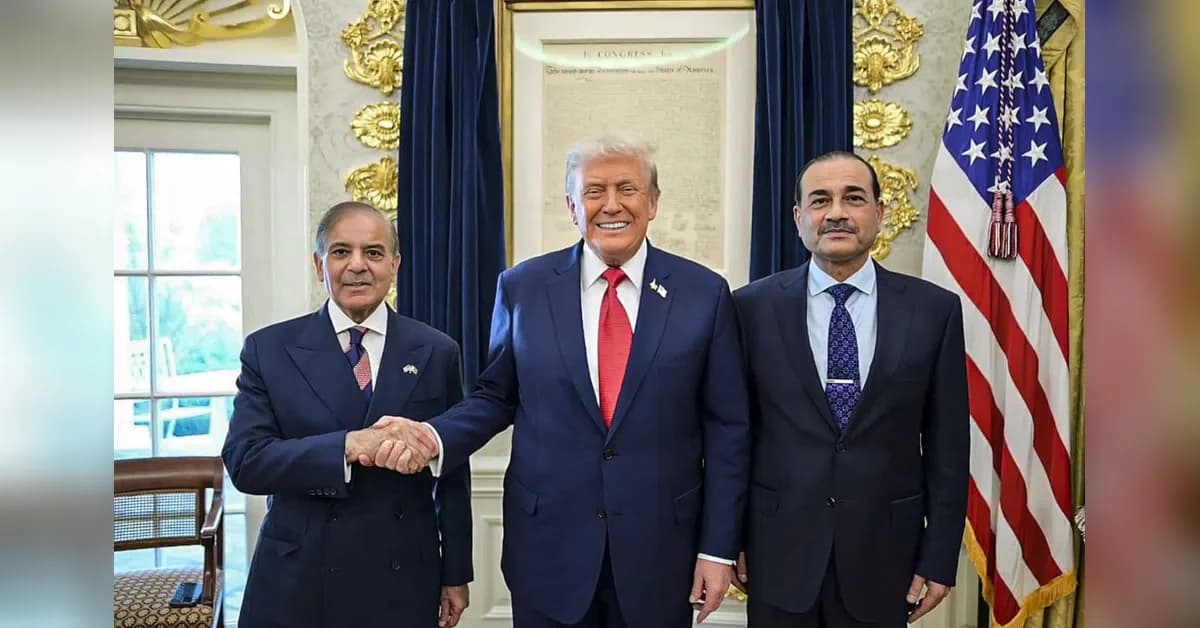
US President Donald Trump confirmed on Wednesday that the US is in the final stages of talks with Iran, according to media reports. As reported by Al Arabiya, efforts are underway to finalise the draft agreement between the two countries, with Pakistan's army chief potentially visiting Iran on Thursday to announce that the final draft agreement has been completed. The next round of negotiations will be held in Islamabad after the Hajj season, which is expected to end on May 30. This confirmation comes after an Iranian Foreign Ministry spokesperson claimed that Iran-US truce talks are still underway via Pakistani mediators. The ongoing diplomatic efforts represent a significant shift from the previous military tensions that erupted on February 28 when the US and Israel jointly launched attacks on Iran. Iranian President Masoud Pezeshkian responded on X, stating that 'Iran has consistently honored its commitments and explored every avenue to avert war; all paths remain open from our side. Forcing Iran to surrender through coercion is nothing but an illusion. Mutual respect in diplomacy is far wiser, safer, and more sustainable than war.'
The resolution, introduced by Democratic Senator Tim Kaine, would direct the President to "remove the United States Armed Forces from hostilities within or against Iran, unless explicitly authorised by a declaration of war or a specific authorisation for use of military force." The measure draws its authority from the 1973 War Powers Act, which was designed to reassert Congressional oversight over presidential use of military force. Under the War Powers Act of 1973, Congress has the authority to compel a president to cease military operations that have not been formally authorised by the legislature. The resolution seeks to reaffirm Congress's constitutional authority to declare war, limiting unilateral military action by the President unless lawmakers formally approve it. While the resolution does not automatically block military action, it increases political pressure on the White House and signals growing bipartisan concern over the possibility of another prolonged conflict in the Middle East.
The development follows President Trump's dramatic announcement that he had postponed a planned military strike on Iran while negotiations continue. In a lengthy Truth Social post, Trump revealed that Qatar Emir Sheikh Tamim bin Hamad Al Thani, Saudi Crown Prince Mohammed bin Salman and UAE President Mohamed bin Zayed Al Nahyan personally requested that Washington pause military action to allow diplomacy to continue. As Trump wrote, 'I have been asked by the Emir of Qatar, Tamim bin Hamad Al Thani, the Crown Prince of Saudi Arabia, Mohammed bin Salman Al Saud, and the president of the United Arab Emirates, Mohamed bin Zayed Al Nahyan, to hold off on our planned military attack of the Islamic Republic of Iran, which was scheduled for tomorrow, in that serious negotiations are now taking place.' Trump stressed that any future agreement must ensure that Iran does not acquire nuclear weapons, stating 'This Deal will include, importantly, NO NUCLEAR WEAPONS FOR IRAN!' Despite pausing the planned strike, Trump made clear that the US military remains on high alert and prepared for immediate action if negotiations collapse. The confirmation of final-stage talks comes after Trump warned that Washington could launch fresh strikes on Iran if a long-term settlement is not reached within days.