According to latest reports, SK Hynix has achieved a landmark $26.5 billion initial public offering in the United States, marking the largest-ever debut by a foreign company on American exchanges. The transaction involved the sale of 177.9 million American depositary shares at $149 each, surpassing the previous record set by Alibaba in 2014. The offering was more than seven times oversubscribed, with shares opening at $168.01 and gaining approximately 13% on debut day. This success demonstrates how specialized technology leaders can command premium valuations when aligned with high-growth sectors, contrasting with the traditional "Korea Discount" applied to many South Korean equities.
The premium for SK Hynix American depositary receipts over their Korean-listed shares has soared to more than 51%, just three days after making their US trading debut. As per Bloomberg data, the ADRs gained 27% on Tuesday, more than recovering from a 9.3% drop a day earlier when a record selloff in South Korea bled into the US session. Each SK Hynix ADR is equivalent to a 10th of a common share, according to a filing with the US Securities and Exchange Commission. The premium reflects strong demand for the chipmaker's US-listed shares, with options trading and optimism over tightening AI memory supply driving the gap. The ADRs had been expected to trade above the equivalent share price in Seoul, due to restrictions on exchanging common stock for the US instruments. However, the extent to which the Seoul-listed shares can be converted into ADRs has been a key uncertainty, inhibiting flows that typically keep prices closer, according to traders cited by Bloomberg.
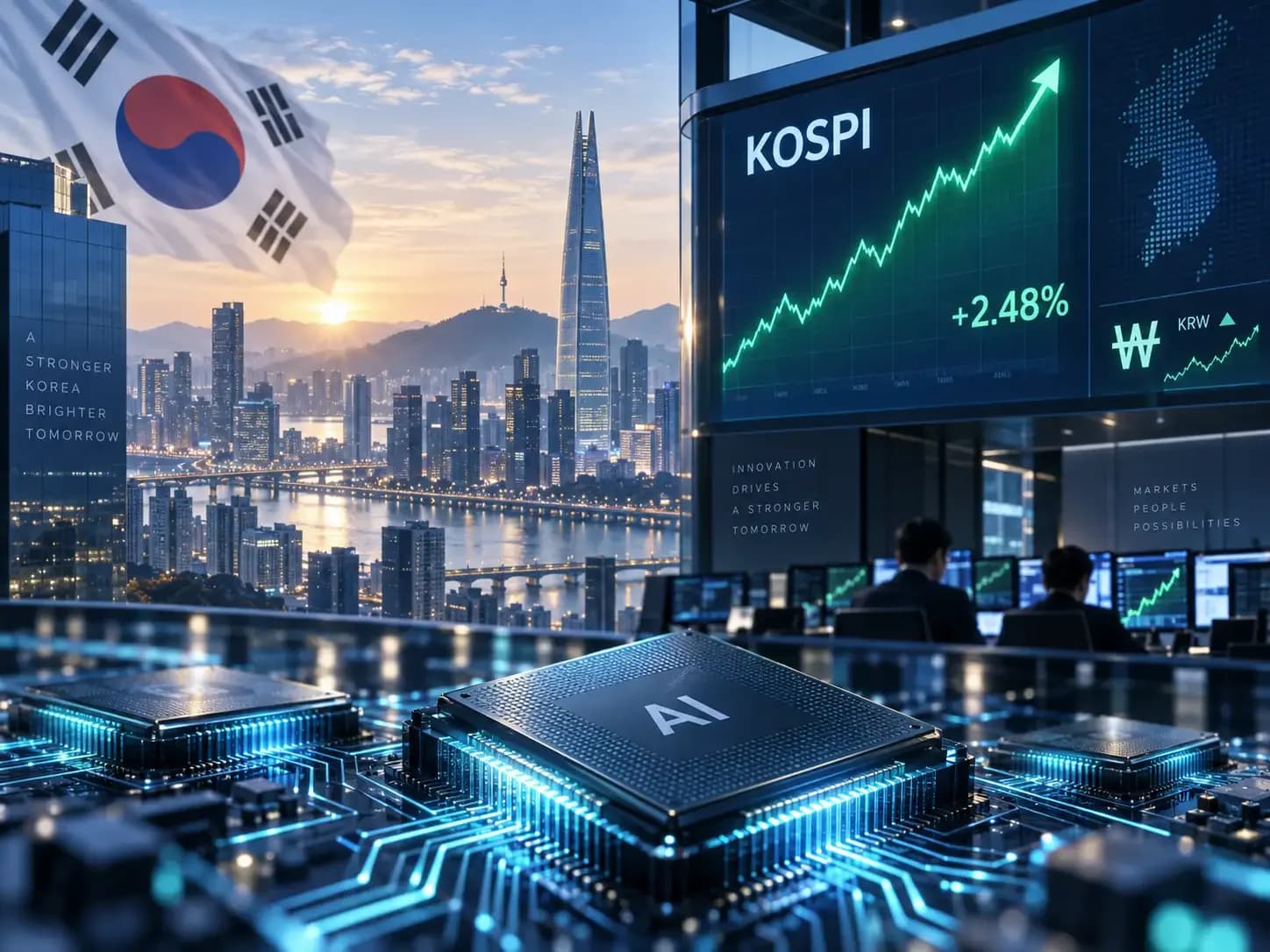
The current ADR premium surge draws comparisons with TSMC's ADR premium, which soared to nearly 100% during the dot-com bubble in the early 2000s. As per The Economic Times, analysts attribute the divergence to restricted arbitrage, strong AI-driven demand, and easier access for global investors through US markets. "Actual arbitrage is completely frozen because the underlying new common shares do not list in Korea until July 29, the regulatory conversion pipeline is locked tight, sourcing shares to borrow in order to short the ADR is nearly impossible," the report quoted Sanghyun Park, founder of Clepsydra Capital, a firm specializing in special-situations analysis. The Kospi's performance is closely tied to two chip giants Samsung Electronics and SK Hynix, which together account for nearly half of the index's weight and have contributed roughly two-thirds of its gains this year. South Korea's Finance Minister Koo Yun-cheol last week said authorities would closely monitor risks that could further increase stock market volatility, with the ministry noting that increasing concentration in the semiconductor sector has become a factor raising financial market volatility.
South Korea's ruling party is seeking to make it easier for SK Hynix to set up ventures to build factories with outside investors, following a government push to position the country as an AI powerhouse. Members of President Lee Jae Myung's Democratic Party of Korea have proposed amending a law pertaining to "strategic industries with cutting-edge technologies" that currently forbids a subsidiary of a subsidiary from such moves. If passed, SK Hynix — which is a unit of SK Square which is in turn a unit of SK Inc — will be able to attract outside capital for its new fabs if it retains a stake of at least 50% in such a joint venture. The law primarily affects SK Hynix, the leading developer of high-bandwidth memory used in Nvidia's AI processors, as other major South Korean conglomerates maintain less direct control over their prized units through complicated cross-shareholdings.
SK Hynix's US listing has become a closely watched gauge of demand for overseas offerings, with Nasdaq Inc. President Nelson Griggs stating that its success is spurring other international companies to consider the US for either initial public offerings or similar ADR sales. Market analysts are projecting continued strength in memory prices and earnings, with Barclays initiating coverage with an overweight rating and $330 price target. Kim Sunwoo, senior analyst at Meritz Securities, reports that DRAM suppliers are meeting only 75% to 80% of demand, with the shortfall expected to deepen through 2027. SK Hynix CEO Kwak Noh-jung has forecast the global memory industry's worst-ever supply shortage in 2027, expecting demand to outstrip the company's production capacity well beyond 2030. A 51% gap between two share classes of the same company rarely holds, with traders likely to move to close it in coming sessions.