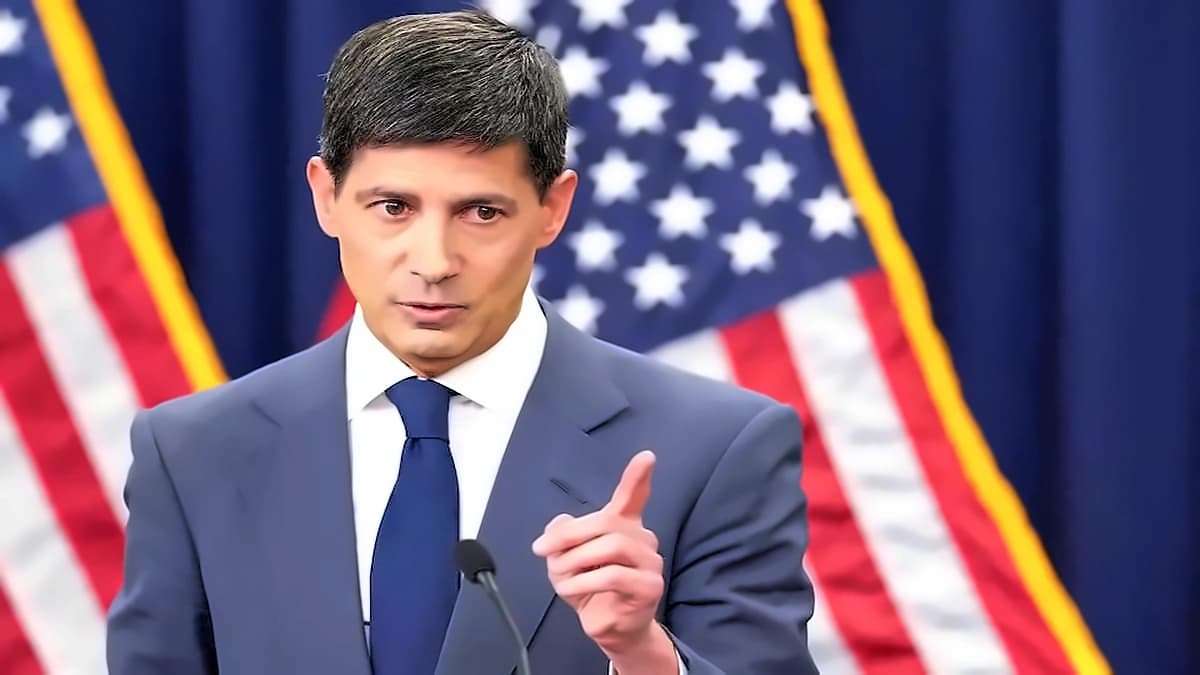
Bank of America has reversed course to forecast three Fed rate hikes in 2026, marking a significant shift from its forecast as recently as last week of no change this year. According to Bank of America economist Aditya Bhave, the bank projects 75 basis points of tightening across September, October, and December, lifting the benchmark rate toward a 4.25% to 4.50% range. This reversal follows the first meeting led by new Chairman Kevin Warsh, where policymakers decided to leave benchmark interest rates unchanged but nine of the 18 FOMC members now expect at least one rate increase in 2026. Bhave noted that Warsh's press conference also leaned hawkish, repeatedly stressing the need to restore price stability and indicating that monetary policy may not be especially restrictive. The analyst added that a July rate hike is in play, with the Fed more likely to wait for additional economic data over the summer before deciding on its next policy move.
The market's initial reaction to the Fed's hawkish pivot was swift and negative, with S&P 500 performance in the three months following an initial rate hike typically weak or negative, reflecting investor uncertainty about tighter liquidity conditions. However, historical data suggests a more nuanced picture, as reported by Investing.com India. In four of the six major hiking cycles since 1994, equities performed well, sustaining positive performance even as rates rose, including the 1994 cycle when the Fed doubled rates from 3% to 6% and ultimately sparked one of the great bull runs from 1995 to 2000. The recent 2022 cycle provides a cautionary counterpoint, with Fed Funds rate hikes resulting in negative returns that worsened across three, six, and twelve-month forward periods due to extreme valuations and highly speculative trading confronting rapidly rising rates and inflation.
The yield curve has shown significant compression following the Fed's hawkish stance, with the yield curve falling by nearly 10 basis points after the Fed meeting and dropping from 72 basis points to 29 basis points since the start of the year. As reported by Investing.com India, the curve is steepening because shorter rates are rising faster than long rates, as markets priced out rate cuts and are now pricing in Fed Funds rate hikes. This bear flattener pattern tends to coincide with hawkish policy, with interest rate-sensitive equities such as small caps and financials typically the most affected as the spread between borrowing costs and lending rates compresses. The flattening curve does not guarantee a recession, but combined with the Fed's open discussion of rate hikes, consumer pressure, significant IPO supply, mid-term elections, and equity valuations near historic highs, this adds another headwind for stock investors.
Newly appointed Fed Chair Kevin Warsh delivered a hawkish performance in his first policy meeting, with his communication style marking a clear departure from previous Fed leadership. As reported by Investing.com India, Warsh's statement came in at roughly 130 words, stripped back from the more expansive Powell-era language, representing a deliberate shift toward more concise and blunt messaging. This shorter format can be interpreted as a signal itself: less room for interpretation, fewer cushions for markets to lean against and a clearer attempt to restore the hierarchy between policymakers and investors. Warsh reaffirmed the central bank's commitment to its long-standing 2% inflation goal, saying he sees no reason to revisit the target until it has been achieved. According to Reuters, Warsh noted economic activity is expanding at a solid pace and said the change in Fed leadership presents a timely opportunity to review practices and reaffirm the central bank's core mission.
Warsh's hawkishness is not arbitrary; it is a response to an inflation problem that has worsened significantly. According to CoinDesk, consumer prices rose 4.2% in May from a year earlier, the largest annual increase since April 2023, driven substantially by higher energy costs tied to the conflict in the Middle East that began earlier in the year. Bank of America expects core personal consumption expenditures prices, the Fed's main inflation gauge, to show a 3.5% annual rate, reflecting tariffs and one-off increases. Bhave noted that the Fed's inflation problem has gotten unambiguously worse, as the central bank was willing to look through the tariffs but is losing patience after the latest round of supply shocks. Housing-driven disinflation has now mostly run its course, while other core services remain very sticky, leaving the Fed with little room to cut even if it wanted to, as cutting rates into rising inflation risks letting that inflation accelerate.