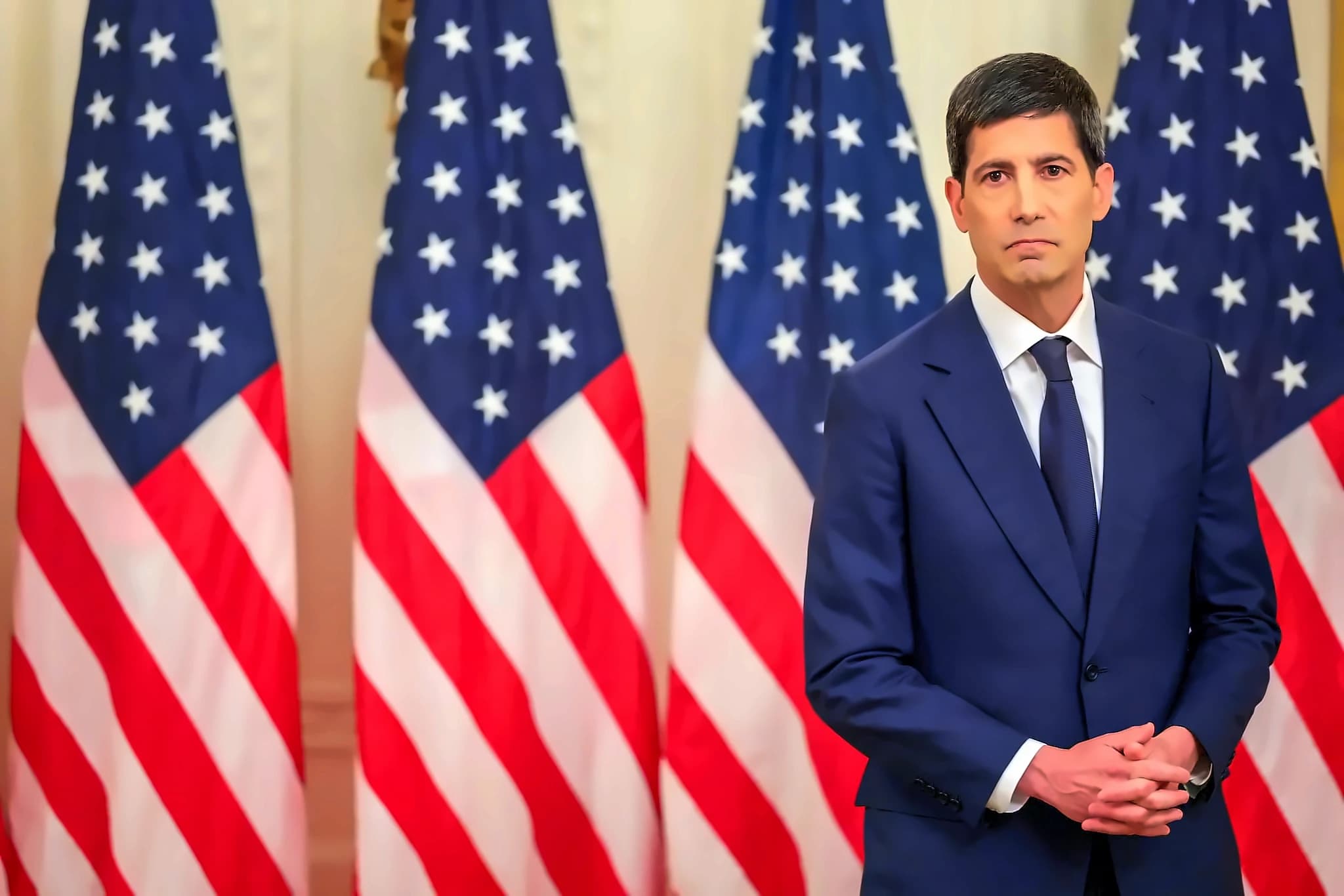
The US Federal Reserve's two-day monetary policy meeting began on July 28, with the rate-setting Federal Open Market Committee (FOMC) reviewing key economic indicators including inflation, economic growth, and labor market conditions. The policy statement will be released at 2 p.m. ET on July 29, followed by a press conference addressed by Chair Kevin Warsh. For Indian investors, the announcement is scheduled for 11:30 pm IST on July 29, with Warsh's remarks available at 12:00 am IST on July 30. Investors can watch the proceedings via the official live stream on the US Federal Reserve's website or on the Federal Reserve's YouTube channel. As per CNBC TV18, this marks Warsh's second Federal Reserve policy meeting, with the central bank widely expected to hold interest rates at the current level. However, markets believe the statement may not be the biggest event, with traders across equities, bonds and currencies expected to focus on Warsh's comments for clues on where US interest rates are headed over the rest of 2026.
The S&P 500 declined more than 1.2% on Thursday, with losses concentrated in megacap technology stocks and Tesla (NASDAQ:TSLA). According to reports from Investing.com India, the market could have experienced worse performance without a roughly 30-basis-point rally in the final 10 minutes of trading. These late-day rallies often reverse the following morning, raising the possibility that the market could gap lower at the open. The losses were particularly pronounced in the technology sector, reflecting broader concerns about valuations and growth prospects. Looking ahead, Wall Street futures are climbing as oil tumbles on a U.S.-Iran pause, with earnings and the Fed meeting in focus. The Fed meets on Wednesday, with Fed funds futures and overnight index swaps expecting no change in policy, though swaps price about a 42% chance of a hike. However, as per The Economic Times, financial markets are currently pricing in only about a one-in-three probability of a rate hike at Wednesday's meeting, making a so-called hawkish hold the most likely outcome. The benchmark federal funds rate currently stands at 3.50%-3.75%, where it has remained since late last year.
The latest consumer price index (CPI) report showed inflation slowed to 3.5% in June, helped by lower gasoline prices, with core inflation also cooling. However, recent rise in oil prices after tensions in the Middle East has raised fresh concerns that inflation could remain stubborn. According to Business Standard, Warsh reiterated last week his focus was bringing inflation back to the 2 per cent target, a goal the Fed has failed to achieve for more than five years. Boston-based fund manager Nachiketa Sawrikar of the ₹900 crore Artha Bharat Global Multiplier Fund expects the Fed to leave rates unchanged at this week's meeting, noting that the central bank remains committed to bringing inflation back to its target while keeping future decisions dependent on incoming economic data. Wilmington Trust chief economist Luke Tilley said the recent decline in core inflation suggests price pressures could continue easing in the coming months, though higher oil prices remain a risk. New York Fed President John Williams has also expressed confidence that inflation has peaked and is likely to move lower in the coming quarters, supporting the case for keeping rates steady. However, recent inflation readings have moderated, but policymakers remain cautious that higher energy costs could reverse the progress made over the past few months, prompting investors to reassess whether another rate increase could still be on the table later this year.
Financial markets have changed their expectations significantly, with CME Group's FedWatch tool showing traders now see little chance of a rate increase at this meeting and believe September is a more likely time for any policy change. As per The Financial Express, some experts believe the Fed has room to wait because inflation has shown signs of cooling, with Wilmington Trust's Tilley suggesting the Fed's next move will likely be a rate cut rather than a hike. If the Fed keeps interest rates unchanged, borrowing costs are also expected to remain high, with credit card interest rates currently at 23.79% and likely to stay elevated. At the same time, savings accounts and certificates of deposit (CDs) are expected to continue offering relatively attractive returns, according to LendingTree's analysis. Even if the Fed leaves rates unchanged this week, investors will closely watch Chair Kevin Warsh's comments for clues about the path ahead. The consensus still favours no change in interest rates, but after weeks of mixed signals, the bigger market-moving event may not be the policy statement itself, it could be the 30 minutes that follow when Kevin Warsh takes questions from reporters and offers his clearest assessment yet of the US economy and the inflation outlook. The probability of a hike implied by federal funds futures reached as high as 40% in the run-up to the meeting, with investors seeing about a 35% chance as of Tuesday afternoon, representing a rare level of uncertainty on the eve of a Fed meeting.
While most economists expect the Fed to stay on hold, some prominent economists are advocating for a rate hike today. Joe Lavorgna, chief economist for the Americas at SMBC Nikko Securities America, argues the Fed should reverse part of last year's easing now that the labor market has stabilized. He points to core Personal Consumption Expenditures (PCE) inflation, the Fed's preferred gauge, which has held more than a percentage point above the 2% target for years. Lavorgna argues policy isn't tight anywhere except housing, and that sector makes up only about 3% of the economy. He also expects the neutral rate, or r-star, to climb due to artificial intelligence-driven capital spending lifting demand for credit. Dallas Fed President Lorie Logan has echoed this hawkish tilt, stating "Modestly higher interest rates would better balance the outlook." As per CNBC, traders on the CME FedWatch tool priced hike odds near 38% heading into the decision, which is well below a coin flip and matches what most economists still expect: a hold. Warsh himself predicted this meeting could bring open dissent among policymakers, and a hike would make that prediction look prescient, marking his most consequential test yet. Governor Christopher Waller, who earlier this year was more concerned about weakness in the labor market, has said in recent months that price pressures are broadening now, floating the possibility of a rate increase in the near future. A hike would bolster Warsh's credibility, said Derek Tang, an economist at Monetary Policy Analytics, showing he's serious about his repeated pledge to restore price stability, while leaving rates unchanged risks cementing an "all hat and no cattle" reputation.
The uncertainty surrounding Warsh's approach is driving unprecedented market activity, with open interest in the August federal funds futures contract reaching a record 967,136 on Monday, topping the previous record held by the October 2024 contract. As per Bloomberg, swap-market pricing implied a roughly one-in-three chance that policymakers raise the key benchmark rate by 25 basis points, even as Treasuries headed for their longest gaining streak in a month. Mark Cabana, head of US rates strategy at Bank of America Corp, said investors are "still trying to understand how the Fed will function under a Warsh chair." Jonathan Pingle, chief US economist at UBS, said he hasn't felt this uncertain about an imminent Fed rate decision in 20 years, back when Ben Bernanke became Fed chair. Since taking the helm, Warsh has vowed to both revamp the Fed's communications by steering it away from telegraphing its intentions and restoring price stability after inflation has held above the central bank's target for several years. In his debut press conference last month, he declined to provide specific insight into where he sees rates heading in the coming months, establishing himself as a "wildcard" according to market participants. The rates repricing in recent sessions largely reflects a resurgence in energy prices after the conflict between the US and Iran re-escalated, combined with a resilient labor market, with traders fully pricing a quarter-point hike by September and nearly half a point by March. If the Fed keeps interest rates unchanged, the rising anxiety about inflation could also mean that some Fed officials dissent, with top candidates including Dallas Fed President Lorie Logan and Cleveland Fed President Beth Hammack.