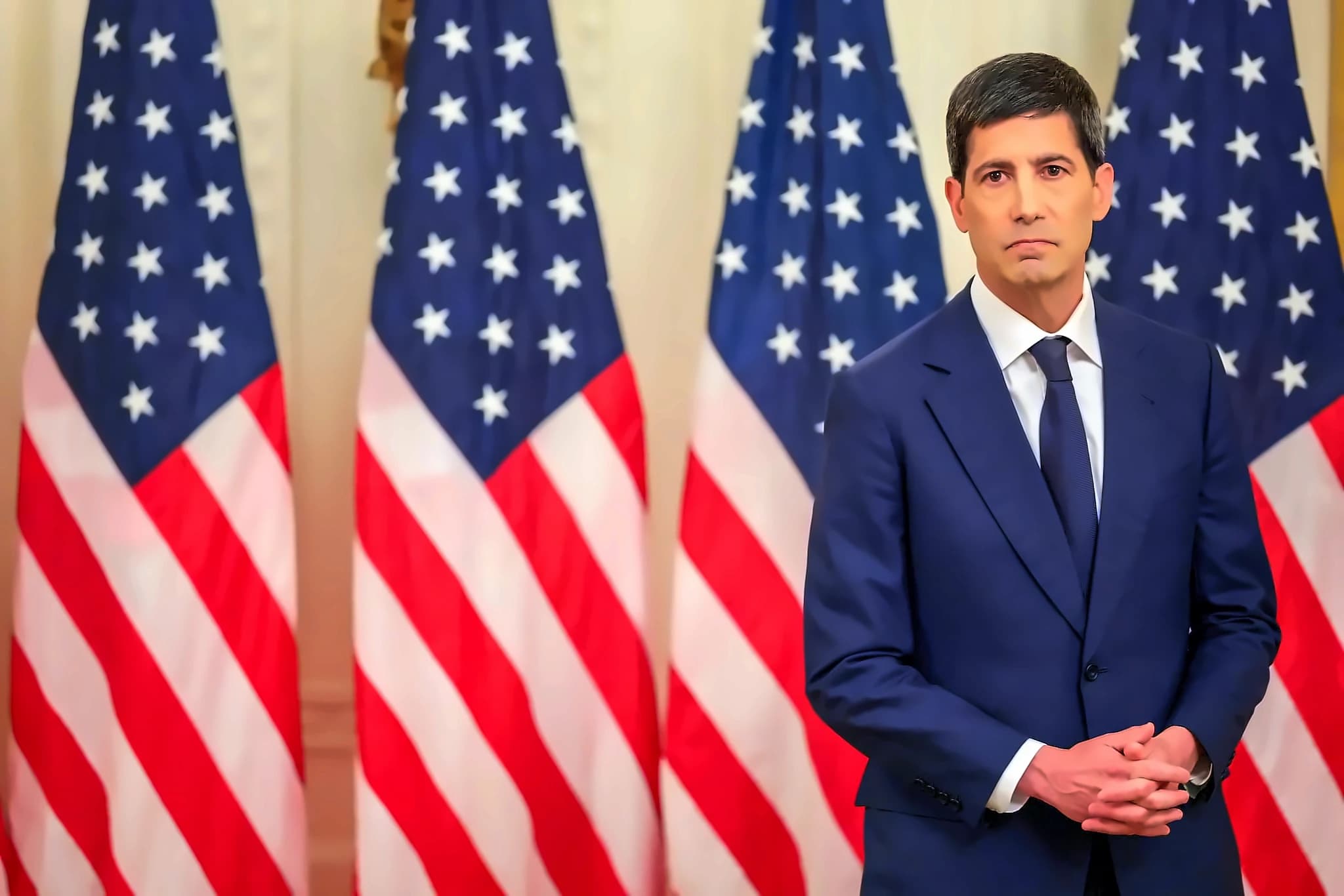
Kevin Warsh is set to make his historic debut as Federal Reserve Chair today at 2 p.m. ET, marking the beginning of a new era at the world's most important financial institution. As reported by The Globe and Mail, Warsh, the 56-year-old banker whom President Trump dubbed his 'central casting' pick, will take the podium for the first time to explain the Fed's decision to markets. The Federal Open Market Committee meeting is expected to result in a hold on interest rates, but this will be the first opportunity to see Warsh in action as he balances the demands of President Trump with the need to address persistent inflation pressures. Warsh, who served on the Fed's board of governors from 2006 to 2011, was previously regarded as an inflation hawk but has recast himself as an advocate for cheaper borrowing to curry favor with Trump.
President Trump has escalated tensions surrounding the proposed 60-day Iran ceasefire agreement by threatening to resume military action if Tehran fails to comply. Speaking on the sidelines of the G7 summit in France, Trump declared that 'It's a memorandum of understanding. And if I don't like it, we'll go back to shooting at them, dropping bombs on their head. If I don't like it, if they don't behave, we'll go right back to dropping bombs right smack in the middle of their head, OK?' According to Reuters, Trump emphasized that 'There's nothing so smart as the market, and the market loves it beyond anything that I've actually seen.' However, he also clarified that the Iran memorandum of understanding did not include immediate sanctions relief for Iran, creating ongoing uncertainty about the deal's operational scope and duration.
The G7 summit concluded with leaders issuing a joint statement calling for safe and toll-free shipping through the Strait of Hormuz, a vital maritime corridor that has been disrupted during the Iran conflict. As reported by multiple sources, leaders stated 'We reaffirm that the right of transit passage without restrictions or tolls is the bedrock of international trade.' Beyond Iran, leaders also focused on Russia's war in Ukraine, which remains a top security priority for the G7 more than four years after Moscow's full-scale invasion. Officials discussed additional military assistance for Kyiv, including expanded air defense capabilities and new measures designed to strengthen Ukraine's long-term defense industry. The group is also considering tougher sanctions targeting Russia's energy sector as Western allies seek to increase economic pressure on Moscow.
Global oil price shocks from the Middle East war and strong economic data have intensified inflation concerns, creating a challenging backdrop for Warsh's Fed debut. According to The Globe and Mail, headline inflation in the US came in at scorching 4.2% in May, though the numbers were less hot under the hood. Several members of the Federal Open Market Committee have already said they want to drop language suggesting the Fed has an easing bias, and markets have swung from pricing in rate cuts later this year to pricing in a possible hike in December. This puts Warsh in a tricky position as he needs to balance the turn in data and among his colleagues while avoiding overly hawkish performance that could rile Trump.
Oil prices have experienced a dramatic decline, with Trump predicting further decreases as markets respond positively to the Iran deal framework. According to Reuters, oil prices were near a three-month low on Wednesday, with Trump stating 'I think oil prices might get lower than where they were before the war.' The Dubai market has flipped into a shallow contango structure, while European gas markets have similarly round-tripped from over 60 Euros per megawatt hour to 42 Euros, up 10 Euros from the start of the crisis. This market optimism reflects investor confidence in the potential for normalized energy flows through the Strait of Hormuz, though the actual operational future remains dangerously opaque with hundreds of vessels still trapped and mine clearing operations potentially taking months.
US markets displayed mixed performance ahead of Warsh's Fed debut, with global stocks remaining muted as sinking crude prices heralded inflation relief and pushed bond yields lower. As reported by The Globe and Mail, Wall Street futures were mixed, with S&P 500 and Nasdaq futures pointing higher while TSX futures were in negative territory. In the previous session, the Nasdaq and S&P 500 finished lower, while the Dow and TSX marked their second straight record closes. Japan's Nikkei closed 0.72% higher and Hong Kong's Hang Seng finished 0.74% lower, while the pan-European STOXX 600 was up 0.30% in morning trading. Trump also highlighted positive economic indicators, stating 'Great Numbers in all categories for the United States Economy with more people working today than have ever worked before' and noting 'Over 19.1 Trillion being invested in the U.S.A.'