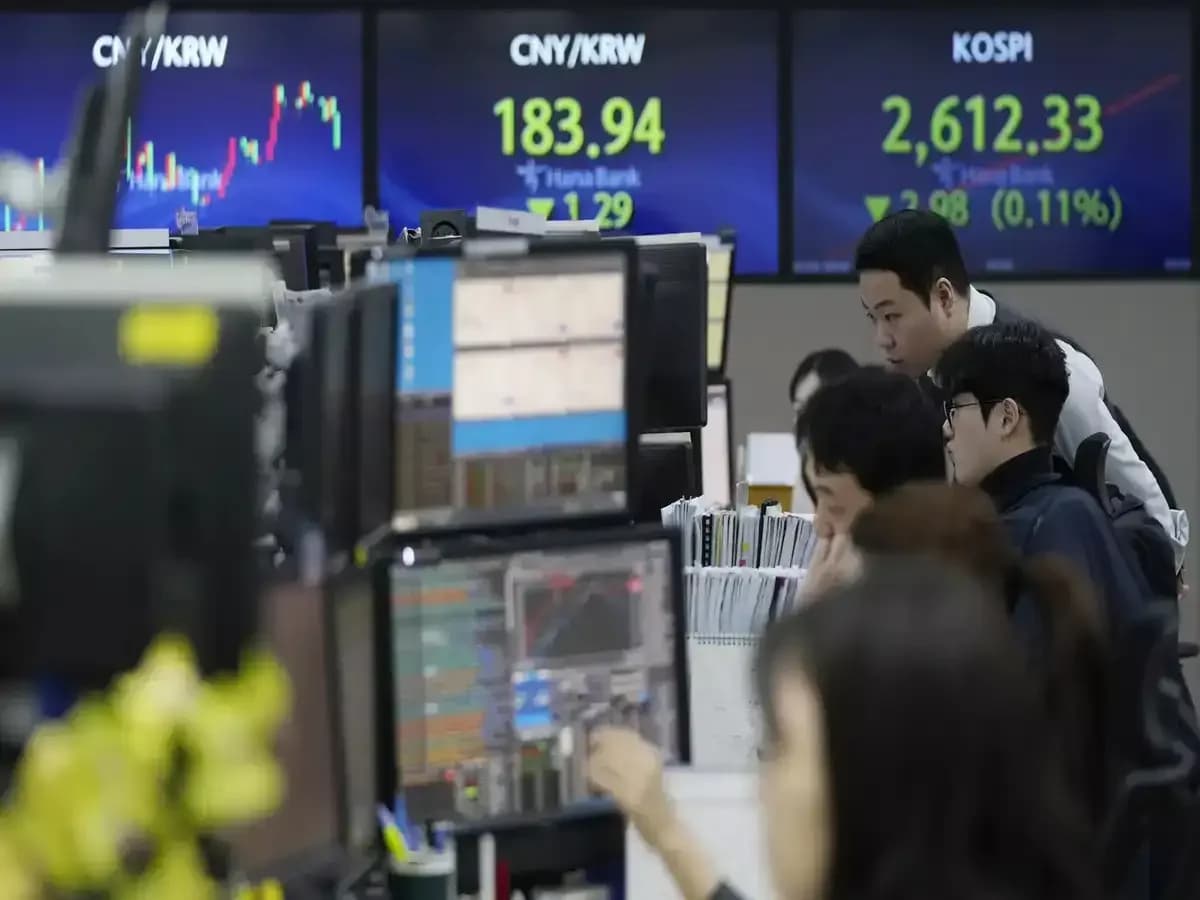
South Korean stocks have climbed 22% in just over 10 days, putting the benchmark index firmly in bull market territory as a global rebound in the AI trade fueled a rapid reversal from last month's historic rout. The Kospi gained 4% on Thursday, taking the benchmark 22% above its July 30 closing level, according to The Financial Express. The index has gained more than 60% so far this year, though it remains about 24% below its late-June peak. The rally was primarily driven by semiconductor stocks, with heavyweight memory chipmakers Samsung Electronics and SK Hynix contributing roughly two-thirds of the index's gains this year. The gains came after US stocks provided a positive backdrop after the S&P 500 and Nasdaq ended higher on Wednesday, supported by upbeat quarterly results from CoreWeave and other AI infrastructure companies.
Investors increasingly favored semiconductor and domestic AI-related stocks amid expectations of sustained AI infrastructure demand, with recent developments involving CoreWeave and Supermicro adding to optimism, as reported by Reuters. The rally reflects growing confidence in the long-term prospects of artificial intelligence-related technology sectors. Sentiment towards the chip sector was further boosted by a report that Singapore state investor Temasek plans to invest in the two memory-chip manufacturers, according to The Economic Times. Among other major stocks, battery maker LG Energy Solution advanced 1.95%, while Hyundai Motor and Kia gained 2.93% and 1.62% respectively. Samsung Electronics and SK Hynix led Thursday's gains, rising more than 5% each, with Samsung gaining 6.7% and SK Hynix rising 5.5%, as reported by Bloomberg. Samsung Electronics gained nearly 5% on Thursday, while SK Hynix surged 9.8%, as reported by The Financial Express.
There are signs that the recovery is more than a simple bounce after a crash, with the iShares MSCI South Korea ETF moving above an important technical level following gains in Samsung Electronics and SK Hynix. Fundstrat Global Advisors' Mark Newton believes this move has created a more favourable technical setup for Korean equities, with the ETF's latest move confirming a reversal pattern that looks attractive for further near-term gains. The concentration of the July losses tells an important part of the story, as Samsung Electronics and SK Hynix alone were responsible for 71% of the Kospi's decline during the month, falling 48% together compared with less than 10% across the rest of the market. Analysts at Macquarie Capital argue that the sell-off was driven largely by positioning, fund flows and forced selling rather than a dramatic change in corporate fundamentals, with foreign and institutional selling easing since the end of July while margin financing remains at manageable levels.
Of the 900 stocks traded, 397 advanced and 453 declined, indicating that gains were relatively broad-based despite weakness in several large companies, according to The Economic Times. Foreign investors were net buyers of South Korean shares worth 1.1 trillion won ($778.53 million), marking a significant shift from their previous selling stance. Foreign investors had withdrawn more than $100 billion from Korean shares this year as the market grew crowded and overheated. However, some overseas funds have started to return as the selloff drove valuations down to more attractive levels. The South Korean won strengthened 0.38% against the dollar to 1,413.1 on the onshore settlement platform, compared with its previous close of 1,418.5, as reported by The Economic Times.
In the bond market, September futures on three-year Korean Treasury bonds rose 0.04 point to 103.35, while the most liquid three-year Treasury yield fell 0.2 basis point to 3.778%, as reported by The Economic Times. The benchmark 10-year yield edged up 0.2 basis point to 4.293%. A subdued US inflation report on Wednesday provided fresh tailwinds, as eased concerns about imminent interest-rate hikes by the Federal Reserve supported US-listed chip peers. US inflation data also supported market sentiment, with consumer prices rising 0.2% in July from the previous month, in line with economists' expectations, and a key measure of underlying inflation recording its slowest pace since March 2021. Expectations that Samsung and SK Hynix will soon announce shareholder return plans have also lifted sentiment in recent sessions. Macquarie expects both companies to remain among the main drivers of the near-term recovery, particularly as demand for memory chips used in AI infrastructure continues to expand, with the bank noting "We are facing the worst memory crunch in history and see no signs of supply constraints easing within the next three years."