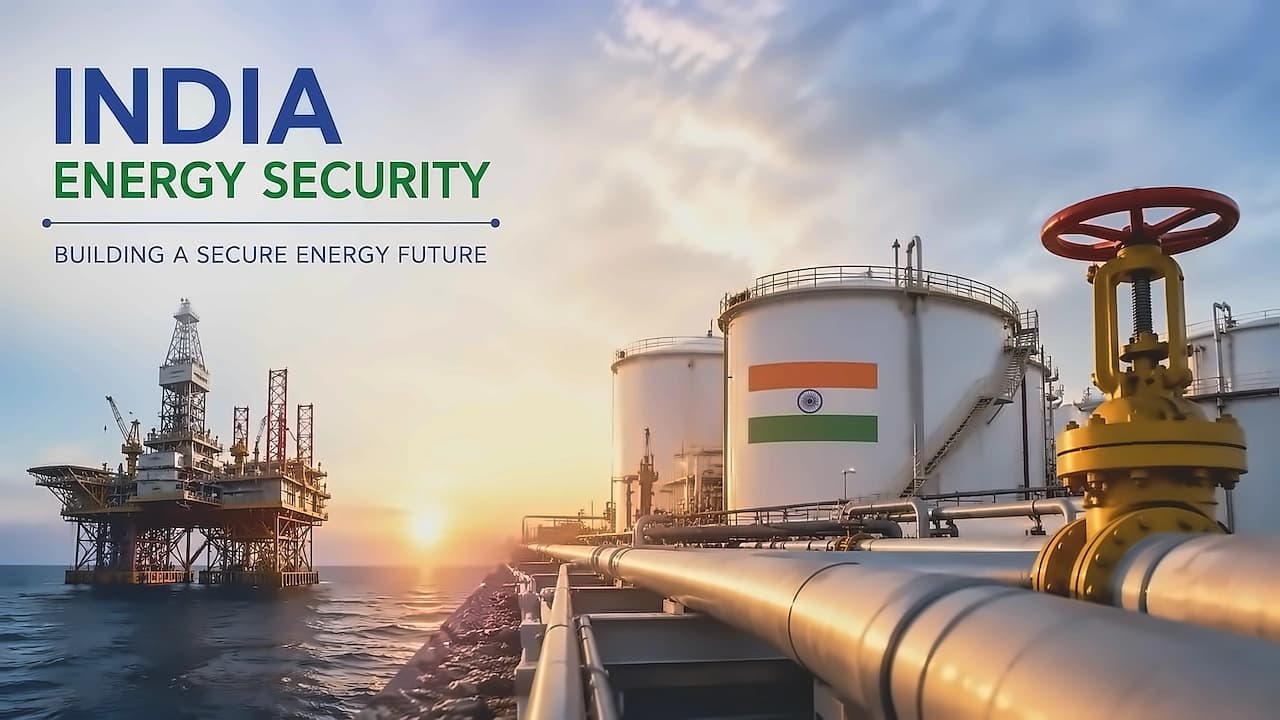
The government is implementing a comprehensive energy security strategy that extends beyond traditional emergency measures, according to reports from Citi. ONGC has been directed to develop a 1.75 million tonne strategic oil reserve with an estimated cost of ₹150 billion. This development represents a significant expansion of India's strategic petroleum reserves, which currently include existing 45-day oil stock capacity. The government is also examining a third strategic petroleum reserve alongside the existing reserves, as reported by Citi. The policy package now goes beyond crisis response, describing it as a 'multi-pronged energy security agenda' spanning strategic oil reserves, import substitution, domestic production, gas adoption and upstream exploration.
India faces significant financial challenges in its energy subsidy program, with cumulative LPG under-recoveries crossing ₹590 billion as of July 2026, making inventory policy a key monitor for oil marketing companies, according to Citi. This substantial subsidy burden highlights the financial strain on the government's energy sector support programs. The government's approach could increase capital spending by state-run oil companies, particularly ONGC, while supporting India's push to raise domestic production and reduce import dependence.
India and Mauritius are set to deepen their energy partnership beyond conventional petroleum products, with greater emphasis on clean and sustainable fuels. Union Petroleum Minister Hardeep Singh Puri announced that the bilateral energy relationship is evolving from meeting immediate fuel requirements to addressing long-term energy security and cleaner alternatives. Mauritius has set a target of achieving 60% renewable energy by 2030, with its transition supported by a newly launched Biofuels Country Landscape Policy Framework developed in collaboration with the Global Biofuels Alliance. Today, biomass, particularly sugarcane bagasse, remains an important component of the country's renewable energy mix, supporting around 195 MW of thermal biomass-based cogeneration capacity.
India's expanding refining capacity is strengthening its role as a global energy partner and net exporter. The country currently operates 23 refineries with a combined crude processing capacity of around 270 million metric tonnes annually, according to Puri. With capacity continuing to expand, India is increasingly positioned as a net exporter of refined petroleum products. Puri described India's refining capabilities as both an asset and a responsibility, stating that "India's refining power is now not just our strength, but also our responsibility and our global credibility." Citi reports that ONGC could see higher incremental capital deployment, while IOC, BPCL and GAIL could benefit from gas infrastructure and pipeline expansion.