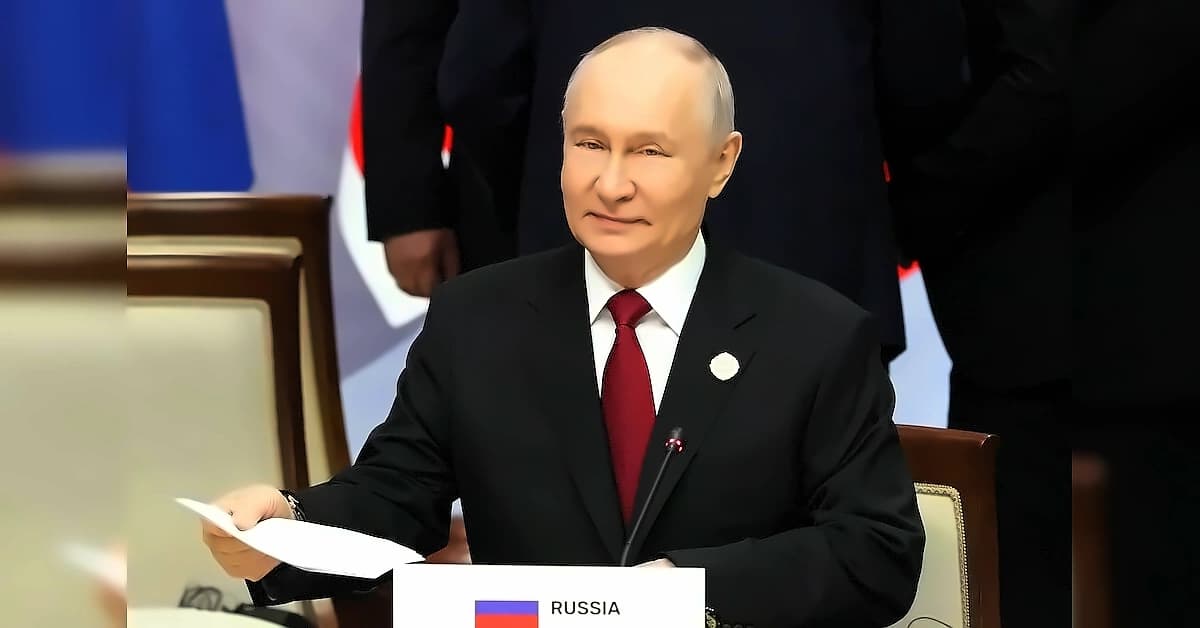
Russian President Vladimir Putin is scheduled to visit China on Tuesday and Wednesday following US President Donald Trump's recent trip to Beijing. According to reports from Associated Press, this diplomatic sequence is being closely watched as Beijing seeks to maintain stable relations with the United States while preserving strong ties with Russia. The Kremlin has confirmed that Putin and Chinese leader Xi Jinping plan to discuss economic cooperation between the two countries, along with 'key international and regional issues' during their meeting. As reported by The Times of India, Putin will seek reassurance that any improvement in China's ties with Washington will not alter the 'strategic triangle' that keeps China and Russia closer than either is with the U.S., according to Dennis Wilder, a former U.S. intelligence official and professor at Georgetown University. Presidential aide Yuri Ushakov told reporters Monday that there is 'no connection' between Trump's visit to China and Putin's, noting the trip by the Russian leader was agreed in advance, several days after Putin and Xi spoke via videoconference on February 4.
The visit coincides with the 25th anniversary of the Sino-Russian Treaty of Friendship signed in 2001, as reported by Associated Press. Wang Zichen, deputy secretary-general for the Beijing-based think tank Centre for China & Globalisation, explained that "The Trump visit was about stabilising the world's most important bilateral relationship; the Putin visit is about reassuring a long-standing strategic partner." According to DW, the timing underscores China's growing role in a fractured geopolitical landscape where both the United States and Russia need China, albeit in opposing ways. Claus Soong of the Mercator Institute for China Studies (MERICS) told DW that "Both the United States and Russia need China right now, albeit in opposing ways: Washington seeks a strategic rival while Moscow wants a partner with overlapping geopolitical and energy interests. Beijing, meanwhile, does not need to lean towards balancing the US or distancing itself from tensions between Russia and the West." The summit, scheduled for May 19-20, marks the second time the Chinese and Russian leaders have met in the past year, as Beijing seeks to manage ties with Washington and Moscow while positioning itself as a pivotal power in global diplomacy.
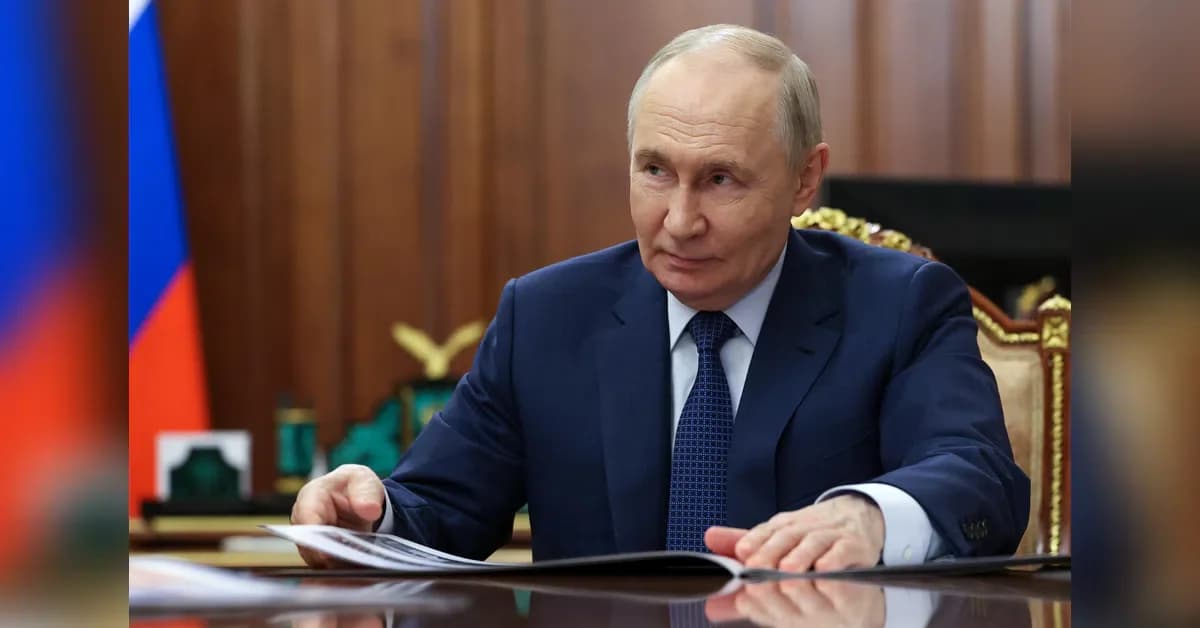
According to Associated Press, Putin last visited China in September 2025 to attend the annual summit of the Shanghai Cooperation Organisation in Tianjin, watch a military parade honouring the 80th anniversary of the end of World War II and hold talks with Xi. During that visit, Xi called his counterpart an 'old friend' while Putin addressed Xi as 'dear friend'. In April, Russian Foreign Minister Sergey Lavrov visited Beijing and met Xi, who described the bilateral relationship as 'precious' in the current international context. Kremlin spokesman Dmitry Peskov indicated that Putin's current trip would allow Russia to receive direct updates and exchange views with China concerning its talks with the US. As reported by The Times of India, Beijing walks into the summit with the stronger hand while Moscow seeks reassurance that China has not drifted toward Washington after Trump's visit.
As reported by Associated Press, Putin noted earlier this month that Moscow and Beijing have reached 'a very substantial step forward in our cooperation in the oil and gas sector'. He stated that 'practically all the key issues have been agreed upon' and expressed hope that if they succeed in finalising these details during the current visit, he would be 'extremely pleased'. Presidential aide Yuri Ushakov revealed that Russia's oil exports to China grew by 35% in the first quarter of 2026 and that Russia is one of the biggest exporters of natural gas to China. Putin also hailed their bilateral relationship as a crucial, balancing force in international relations, stating that 'Interaction between such nations as China and Russia undoubtedly serves as a factor of deterrence and stability'. China has become Russia's top trading partner, with Beijing now the top customer for Russian oil and gas supplies and Moscow expecting the war in Iran to increase demand. Bilateral trade has surged to record levels since 2022, with China absorbing more than a quarter of Russia's exports. According to DW, Russia accounted for nearly 18% of China's oil imports in 2025, compared with around 13% from Iran and roughly 42% from other Gulf countries, with Russia needing the Chinese market while China can secure Russian energy at a discount.
According to Associated Press, during Trump's visit, Xi described the bilateral relationship between the US and China as the world's most important and said they should see each other as partners rather than rivals. By the end of the two-day summit, the countries said they would work on a new framework to manage 'a constructive China-US relationship of strategic stability'. China has maintained its neutral stance in the Ukraine conflict while maintaining Russian trade ties despite economic and financial sanctions by the US and Europe. China has ignored demands from the West to stop providing high-tech components for Russia's weapons industries and has become Russia's top trading partner. Claus Soong of MERICS noted that "If China is weighing its options between Europe and Russia, Russia still has more to offer," describing China and Russia as "like a couple in the same bed with different dreams." Ding Shufan, a professor of East Asia Studies at Taiwan's National Chengchi University, explained that facing mounting pressure in Ukraine, Putin continues to depend on China in several ways, including China's continued imports of Russian energy, access to dual-use goods and supply chains. Soong cautioned that there could be signs of a possible cooling in the relationship, with signed agreements often being the beginning rather than the end of a process for countries like China and Russia.