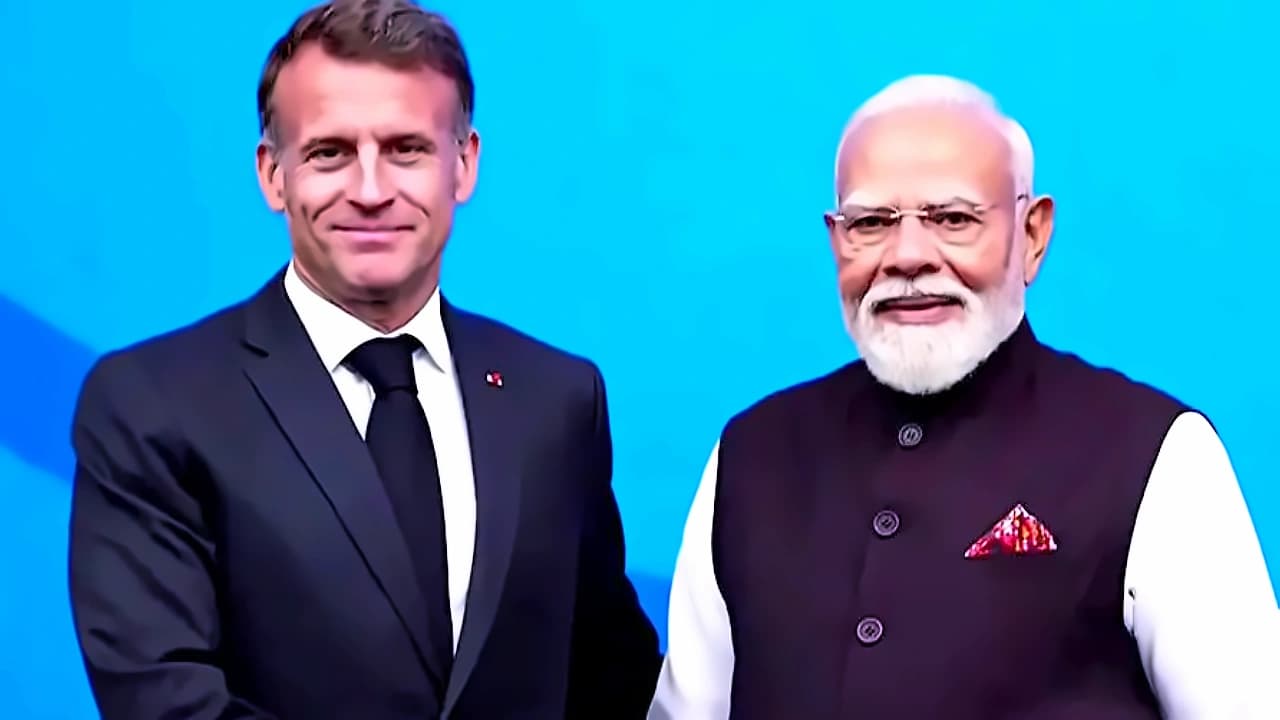
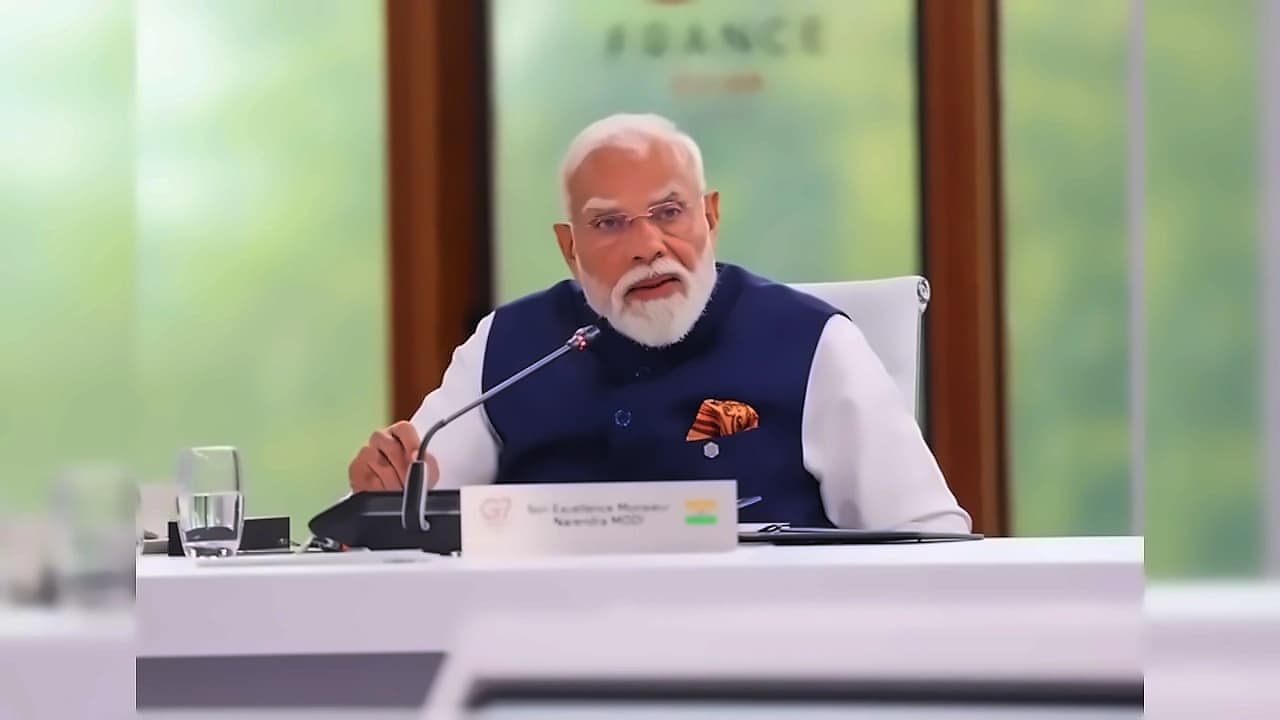
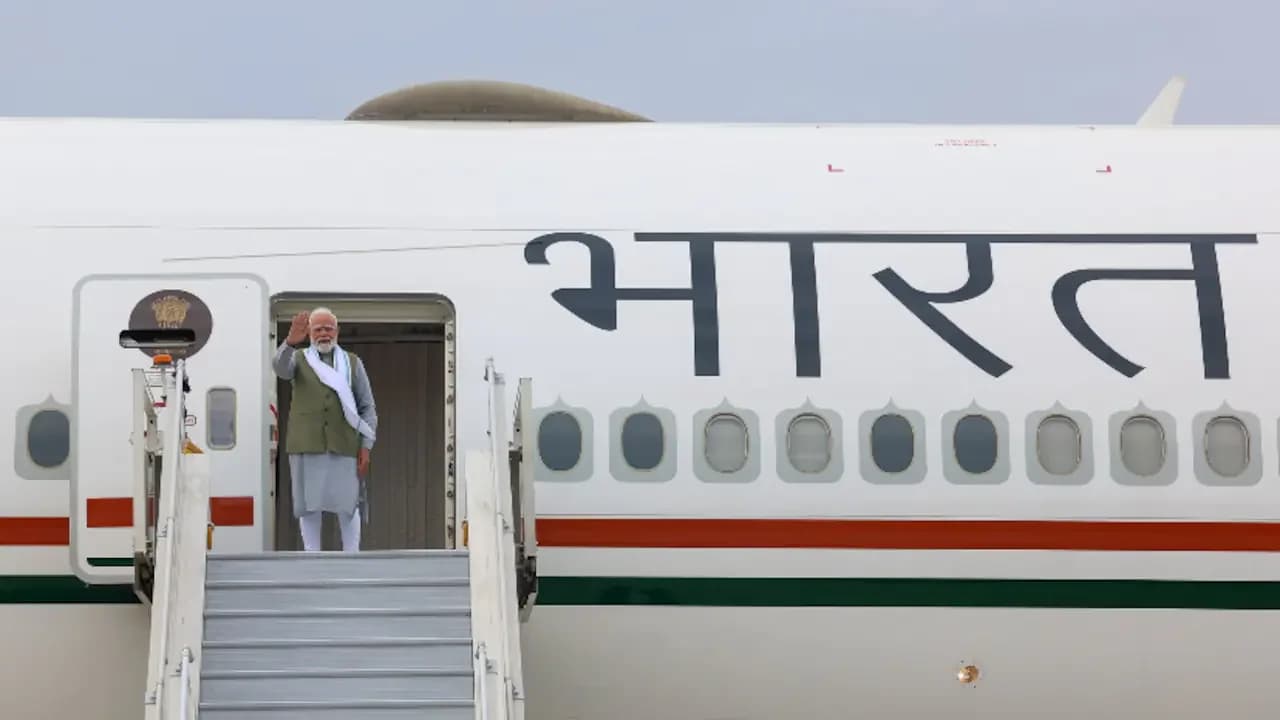
Prime Minister Narendra Modi arrived in Paris on Wednesday local time for the final leg of his visit to France, following his participation in the G7 Summit in Evian-Les-Bains. According to reports from Business Standard, Modi received a warm welcome from members of the Indian community upon his arrival at his hotel in the French capital. "Reached Paris a short while ago to a warm welcome by the Indian diaspora. I am proud of their efforts in bringing India and France closer. The India-France partnership is vital for the progress of our planet," Modi posted on social media. The prime minister described the India-France partnership as "essential to the progress of our planet."
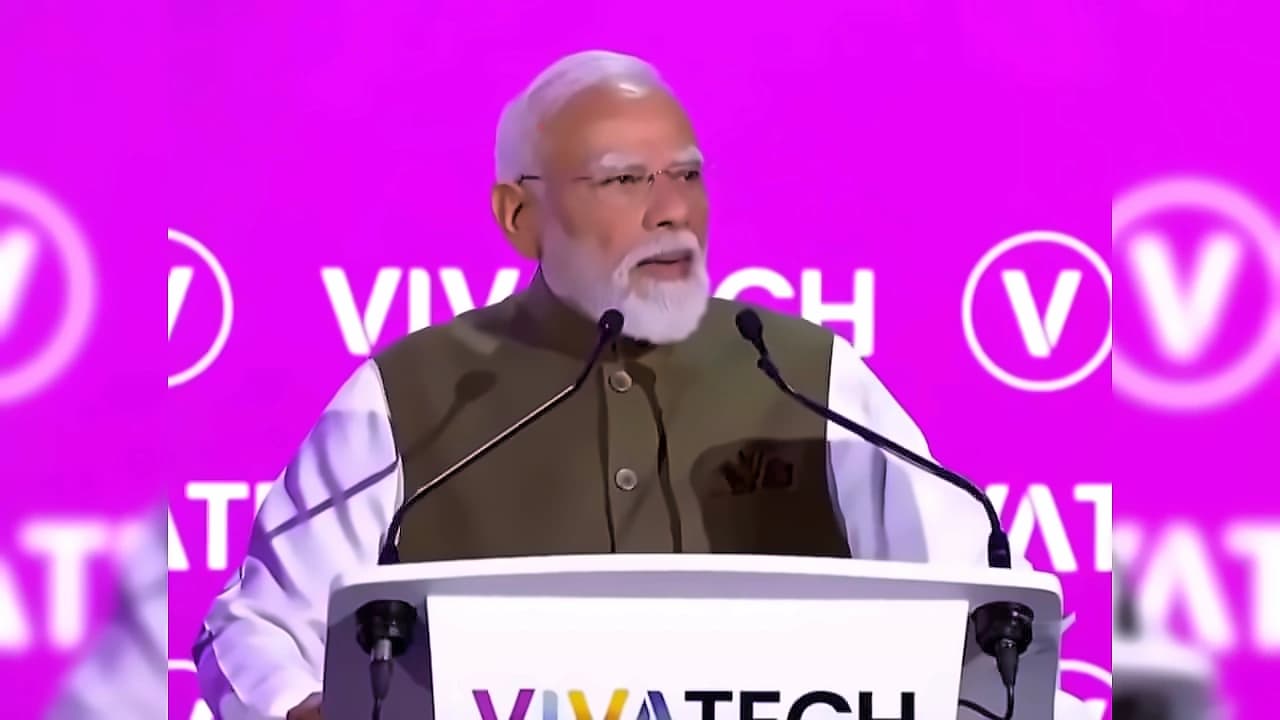
In Paris, Modi addressed the VivaTech Summit 2026 alongside French President Emmanuel Macron, where he outlined India's comprehensive vision for artificial intelligence. As reported by NDTV Profit, Modi emphasized that "AI must improve lives, widen access, drive growth and also help us sustain a healthy planet. For India, AI means 'All-Inclusive'" - highlighting India's approach to democratizing technology. The Prime Minister showcased several practical examples of AI transformation in India, including "Sarala Ben," an AI-powered application that speaks to millions of women farmers daily in local languages, providing expert guidance on livestock health and management. He also highlighted how Indian women are being trained as drone pilots for fertilizer spraying and crop monitoring, while satellite technology helps hundreds of thousands of fishermen identify optimal fishing zones. Modi noted that "Our technology solutions are delivering prosperity at the grassroots level," demonstrating how India's digital transformation is creating meaningful impact across sectors.
Modi highlighted India's rapid digital transformation over the past decade, emphasizing that technology has become the backbone of financial inclusion, healthcare, education and agriculture. As reported by NDTV Profit, he showcased India's digital public infrastructure, including DigiLocker serving over 700 million users and the PM Gati Shakti platform integrating more than 1,600 geographic data layers. The Prime Minister also cited the Swamitva scheme, which has prepared more than 31 million property cards across nearly two lakh villages, enabling rural households to use their property as financial assets. Modi highlighted India's startup ecosystem, which now comprises more than 200,000 startups, and invited global investors to visit the India Pavilion at VivaTech, where startups are showcasing innovations including the world's first single-piece 3D-printed rocket engine and AI-powered cancer detection solutions. He noted that India offers some of the world's most affordable data services and low-cost green energy, creating a favorable environment for innovation.
Before leaving for Paris, Modi had described his engagements at the G7 Summit as "productive," saying he had the opportunity to present India's views and efforts on key areas of governance and policy-making. According to Business Standard, at an outreach session of the G7 on Wednesday, Modi proposed a framework to boost connectivity and trade by combining the strengths of the G7 nations, India and the Global South. He also flagged concerns over the long-term impact of the West Asia crisis on developing countries. During the summit, Modi participated in discussions on key global issues, including governance, artificial intelligence and cooperation with the Global South. On Tuesday, the prime minister urged world leaders to move from a donor-recipient approach to partnerships based on solidarity and equality.
On the sidelines of the summit, Modi held bilateral meetings with several world leaders, including US President Donald Trump, UK Prime Minister Keir Starmer, Ukrainian President Volodymyr Zelenskyy, European Commission President Ursula von der Leyen, German Chancellor Friedrich Merz, UAE President Sheikh Mohamed bin Zayed Al Nahyan and Canadian Prime Minister Mark Carney. As reported by Business Standard, India and France share a strategic partnership spanning defence, security, space, civil nuclear energy, climate action and emerging technologies. Both countries are increasingly working together on issues relating to the Indo-Pacific, innovation and global governance.