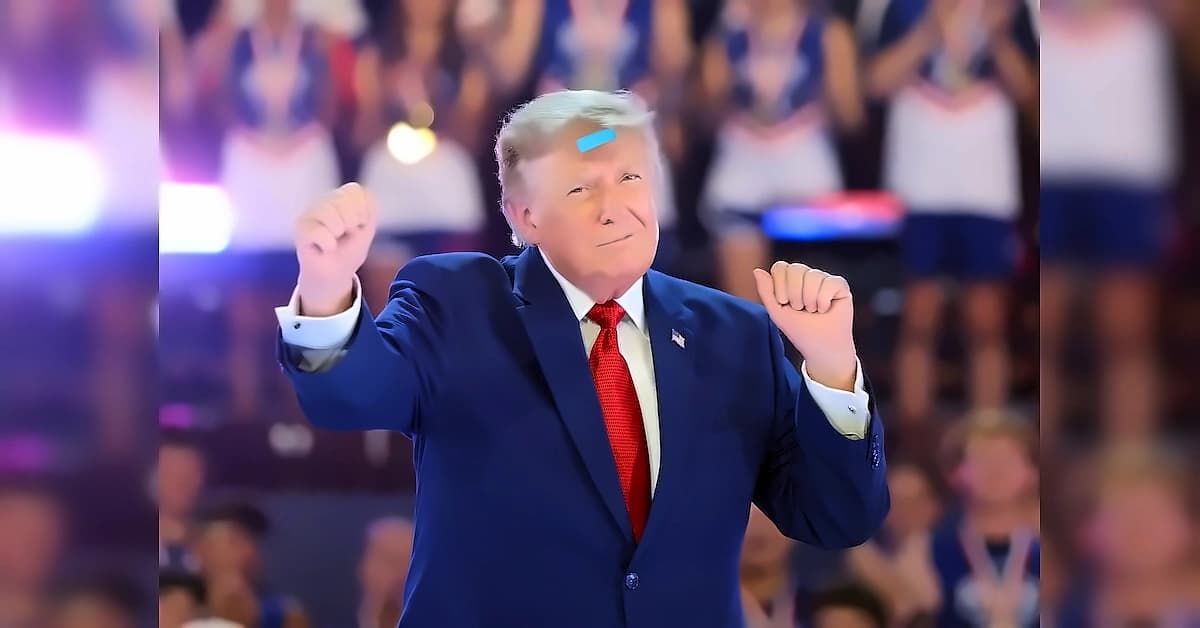
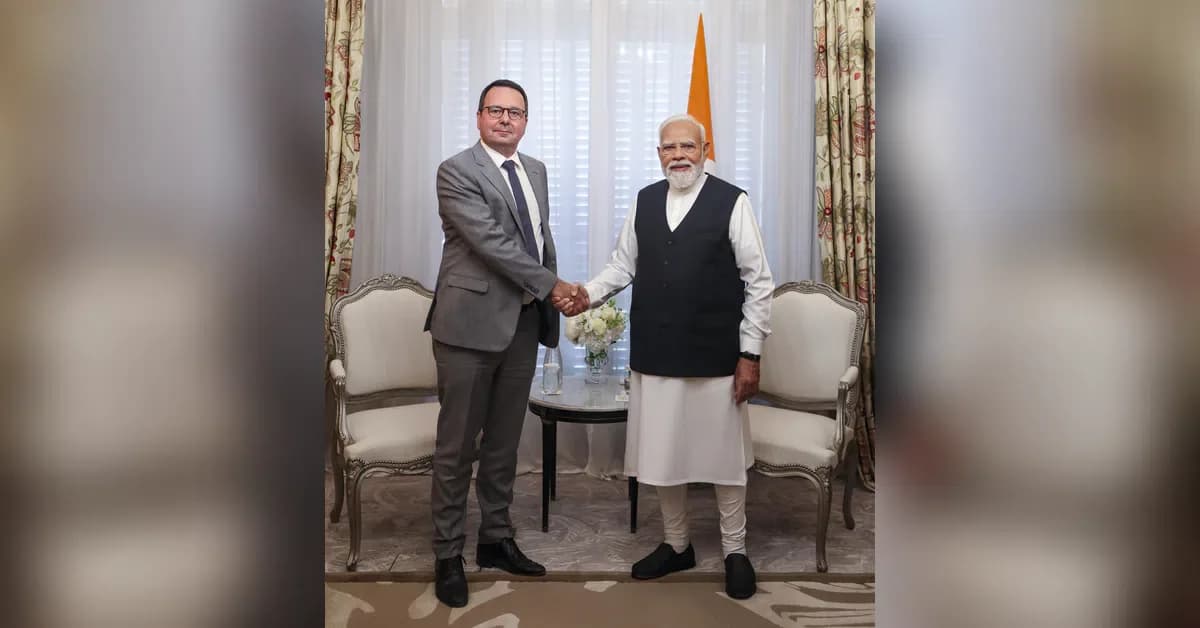
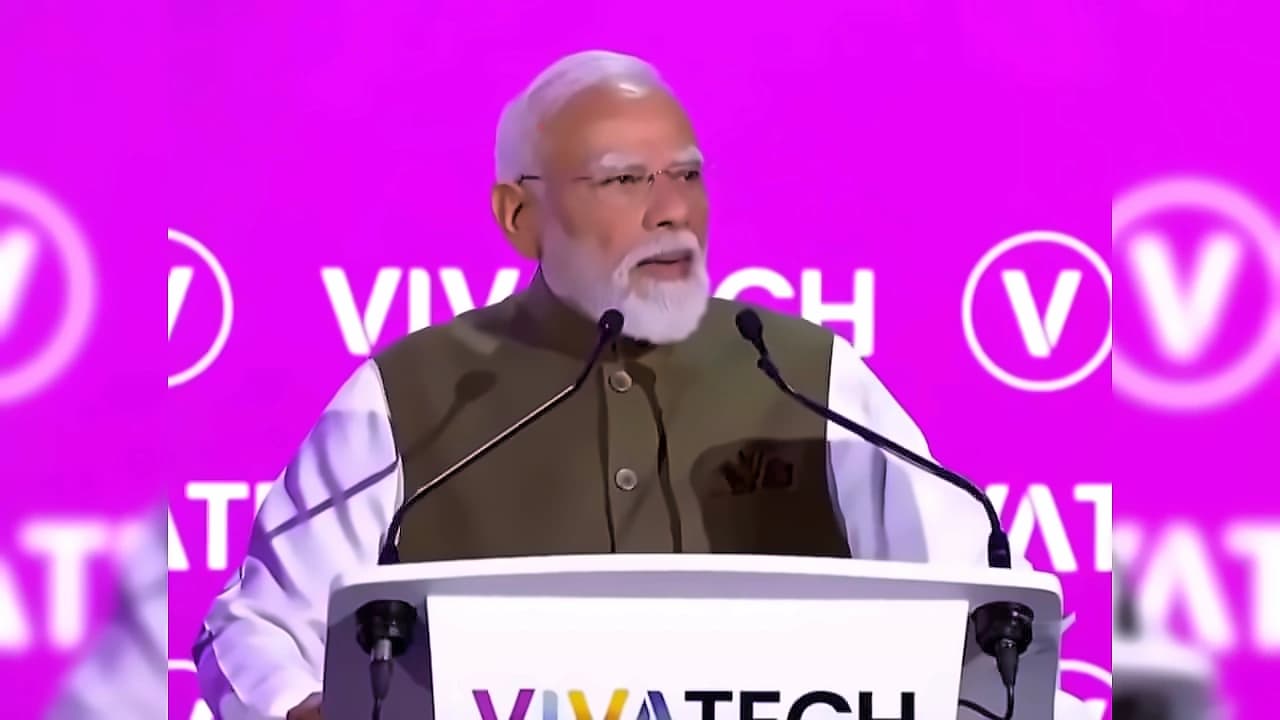
Prime Minister Narendra Modi and US President Donald Trump held a brief interaction following the traditional family photograph on Tuesday at the 52nd G7 Summit in Evian, France. As per Press Trust of India, the leaders exchanged pleasantries and held a brief conversation marking their first in-person encounter in 16 months amid continuing strain in bilateral ties. The meeting comes just a week after US attacks on commercial ships left three Indian sailors dead in the Gulf of Oman, further straining ties between the countries. The attacks set off a firestorm in India, where people criticized US forces for endangering the lives of Indian seafarers aboard the tankers. The Indian government said it lodged 'a strong protest' with a top diplomat at the US Embassy in Delhi, with External Affairs Minister S Jaishankar also raising the issue with US Secretary of State Marco Rubio. The US Central Command said it initiated action to disable three vessels – Marivex on June 8, Settebello on June 9 and MT Jalveer on June 11 – saying they were trying to violate the US blockade of Iranian ports. As per Business Standard, Modi may be seeking to stabilize ties, but his task is tough as any grievances he lodges will be from a country weakened by the Iran war to one that started the conflict.
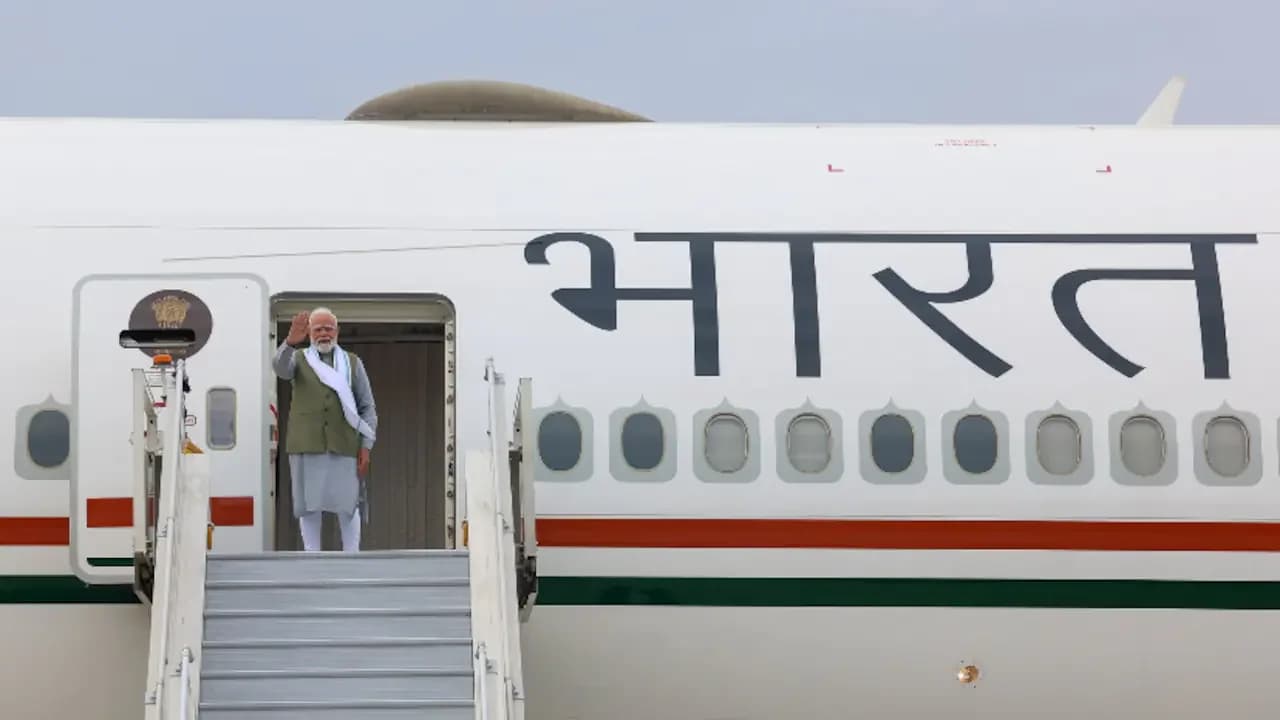
Prime Minister Narendra Modi has officially arrived in France on Tuesday, June 16, 2026, marking the beginning of his week-long official visit to France and Slovakia. In the first leg of his visit, Modi held wide-ranging bilateral talks with French President Emmanuel Macron on Sunday in Nice, where they jointly inaugurated the 'Bharat Innovates' event aimed at strengthening technology and startup collaboration. The event brings together 120 startups across 13 critical technology pillars and features over 350 top investors and venture capitalists from across the world. Both leaders reviewed the full spectrum of the India-France bilateral relationship, which was elevated to the level of a 'Special Global Strategic Partnership' earlier this year. Modi stated that 'Over the next few days, I will be in France and Slovakia to attend various programmes, including bilateral talks, multilateral engagements and interaction with the Indian diaspora. The focus will be on boosting economic as well as cultural linkages.'
Modi and Macron unveiled a comprehensive India-France Innovation Roadmap 2030 and agreed to create a Joint India-France AI Working Group focused on AI governance. According to the Prime Minister's Office, the bilateral talks resulted in significant agreements including the establishment of a National Centre of Excellence for Skilling in Aeronautics at NSTI Kanpur, expanded possibilities for the use of India's Unified Payments Interface (UPI) in France, and incubation support for 10 additional Indian startups at Station F. The partnership also includes the setting up of a Centre of Digital Sciences between India's DST and France's INRIA. As per Ministry of External Affairs spokesperson Randhir Jaiswal, the meeting marked 'A further step to strengthen India-France partnership'. Macron called for deeper cooperation with India on artificial intelligence to build a cooperative AI, particularly amid concerns over US restrictions on foreign access to AI technologies.
The two countries announced 13 outcomes, including setting up a high-level mechanism to double bilateral trade over the next five years and instituted an Economic Security Dialogue. According to the Prime Minister's Office, they also announced a declaration of intent on cooperation in railway and high-speed railway development. Bilateral trade between India and France has more than doubled in the last decade to $15.81 billion in 2025-26, with Indian exports to France amounting to $7.1 billion. In defence, the partnership includes strategic cooperation with a General Security Agreement on the exchange and protection of classified information and a Letter of Intent between ISRO and CNES on microgravity research and human space exploration. A Trump administration official told local media that the two leaders will have an opportunity to discuss trade during their meeting, with the US planning a trip to India to make progress on a bilateral trade deal. However, Business Standard reports that India has been stubborn in negotiating a new trade deal with the United States after Trump slapped a bevy of tariffs on countries last year, frustrating US officials with long drawn-out discussions. The trade pact is expected to be an important step towards a comprehensive bilateral trade agreement, as envisaged during PM Modi's visit to Washington DC in February last year.
From June 16-17, Modi will travel to Evian, France, to participate in the G7 Summit. Modi said that 'At the G7, India will not only speak for itself, but it will also give voice to the aspirations of the Global South'. This marks the eighth consecutive time India has been invited to the elite forum, highlighting India's growing international influence and its role as a voice for developing nations in global economic discussions. As reported by NDTV Profit, Modi stated that the two leaders will also address pressing global issues of mutual interest during their bilateral discussions. India is among the invitees to the France-hosted summit, along with Brazil, South Korea and Kenya, as Paris seeks broader engagement with major non-G7 economies. However, Business Standard notes that India's foreign policy had begun to center on the idea that the United States considered it an important ally, but the setbacks of the past year-and-a-half have sent India back into its defensive crouch of a so-called strategic autonomy. Modi also exchanged pleasantries with Italian Prime Minister Giorgia Meloni, President of the European Commission Ursula von der Leyen and UK Prime Minister Keir Starmer during the G7 family photo session.
Addressing questions on Rafale-related engagements, Foreign Secretary Vikram Misri clarified that 'Regarding the indigenisation of the Rafale, it has always been our stance and the Prime Minister has emphasized this in all his meetings that India's perspective in the defence sector is to increasingly advance the 'Make in India' concept.' Modi is also scheduled to attend the G7 Summit and hold meetings with several world leaders, including US President Donald Trump. The bilateral discussions also covered strategic cooperation with a Letter of Intent between ISRO and CNES on microgravity research and human space exploration. In civil nuclear energy, the leaders noted that India's SHANTI Act creates new opportunities for collaboration, including on small and advanced modular reactors. The defence partnership has an increasing 'Atmanirbharata' element, with France having supplied the P-75 Scorpenes submarines and the two sides agreeing on 26 Rafale-M aircraft for the Indian Navy with technology transfer for indigenous weapons integration. However, Business Standard reports that Trump's insistence that he mediated a cease-fire between India and Pakistan after the two enemies fought a four-day conflict in May 2025, and Modi's repeated refusal to acknowledge it, has also created friction. Following US Secretary of State Marco Rubio's visit to India last month, both sides were now looking at rebuilding the bilateral ties, with Rubio describing India as the 'cornerstone' of Washington's approach towards the Indo-Pacific.