Oil prices experienced mixed movements as US military strikes on Iranian targets created new uncertainty around ongoing peace negotiations. According to Business Standard, the attacks came even as President Donald Trump said on social media that negotiations on ending the war were 'proceeding nicely'. The US military conducted what it called 'self-defence' strikes in southern Iran, including on missile launch sites and boats placing mines to protect troops from threats posed by Iranian forces. However, the strikes came even as Trump had previously posted on Truth Social that the naval blockade on Iranian vessels would remain in place until any deal is certified and signed, creating a mixed signal that has given pause to markets. Secretary of State Marco Rubio added Tuesday that a deal would likely take a few days to finalise, highlighting the ongoing complexity of negotiations.
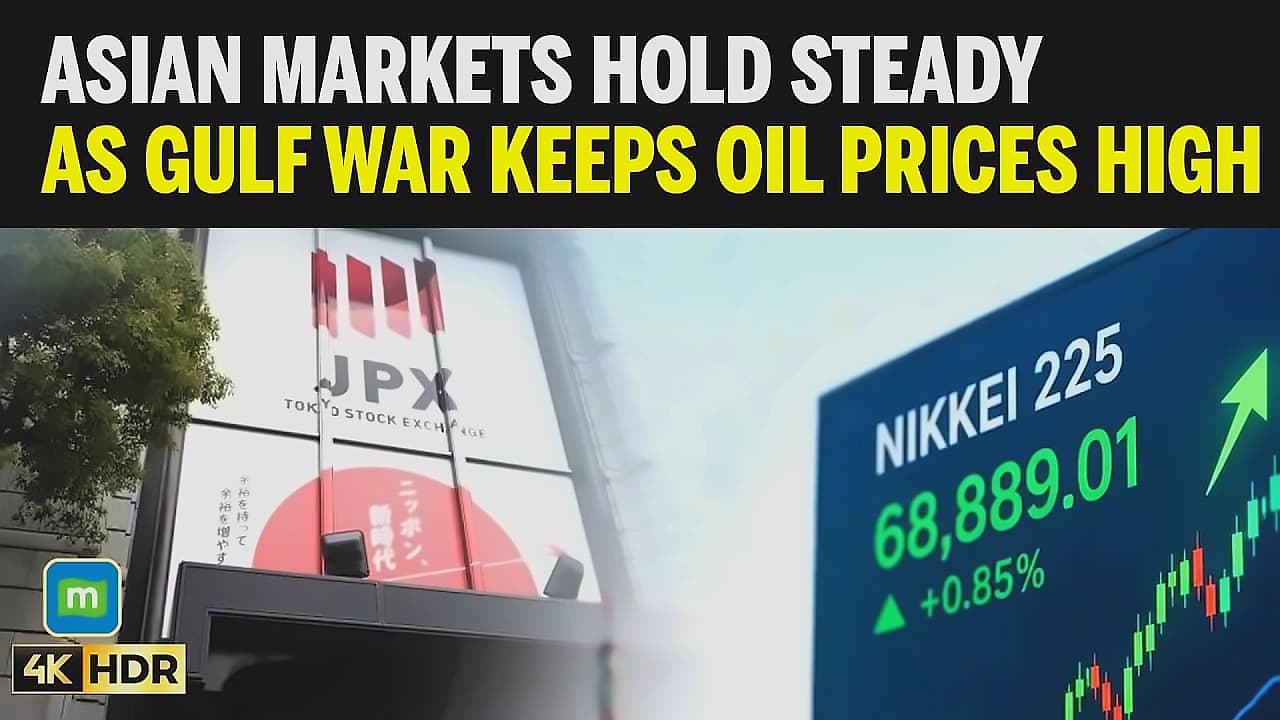
Asian markets showed mixed performance Tuesday following the military developments, with Tokyo's Nikkei 225 losing 0.4% to 64,897.64, falling back from an all-time high close on Monday. According to Business Standard, South Korea's Kospi jumped 2.9% to 8,075.71, catching up after markets were closed Monday for a holiday. In Hong Kong, the Hang Seng index gained 0.3% to 25,668.55, while the Shanghai Composite index shed 0.7% to 4,122.87. The S&P/ASX 200 in Australia lost 0.4% to 8,653.80. US futures for the S&P 500 and Dow Jones Industrial Average surged 0.6% early Tuesday, with European shares advancing as France's CAC 40 gained 1.1% and Germany's DAX rose 1.0%. South Korea's Kospi index jumped about 2.6% to a record on Tuesday, while Hong Kong stocks advanced as markets reopened after Monday's holiday, demonstrating continued strength despite geopolitical uncertainties.

Emerging-market currencies weakened on Tuesday after clashes near the Strait of Hormuz renewed geopolitical concerns despite ongoing US-Iran ceasefire negotiations. According to CNBC TV18, South Africa's rand, seen as a benchmark for risk appetite due to its strong liquidity, was among the worst performers. MSCI's gauge traded little changed overall, though most developing world currencies fell, reflecting the ongoing uncertainty around geopolitical developments. The People's Bank of China added a policy signal of its own, fixing the USD/CNY reference rate at its strongest level for the yuan since February 2023, a move read as a quiet endorsement of Chinese currency strength in the current environment.
Oil prices showed mixed movements with benchmark US crude oil declining $5.01 or more than 4% to $91.59 a barrel, while Brent crude gained $1.57 to $94.99 a barrel after falling nearly $5 on Monday. As reported by Business Standard, this volatility reflects the ongoing uncertainty around Hormuz reopening and the complex dynamics of military strikes occurring alongside diplomatic negotiations. Oil rebounded after falling on Monday, showing some recovery from earlier declines. The closure of the Strait of Hormuz has prevented oil tankers from exiting the Persian Gulf and delivering crude to customers worldwide, with Japan importing almost all its oil, most of it through the strait, making reopening a critical factor for global energy markets.
Despite geopolitical tensions, emerging-market stocks gained on artificial intelligence optimism, with an index for emerging-market stocks climbing for a fourth day, rising about 0.5%. According to CNBC TV18, Taiwan overtook India in stock market value, driven by a rally in the world's largest chipmaker, Taiwan Semiconductor Manufacturing Co. and growing AI optimism. Karen Ward, JPMorgan Asset Management's EMEA chief market strategist, told Bloomberg that global investors are focused beyond the current geopolitical concerns on the investment opportunities that may come from increased public, military and corporate spending across the world. As Ward explained, "The more chaotic the world becomes, the more that's creating spending." This optimism comes even as the Federation of Bosnia and Herzegovina mandated banks for a roadshow with a potential benchmark 5-year euro-denominated bond sale and Senegal's dollar-denominated bonds fell as investors weighed the appointment of an ex-central banker as prime minister.