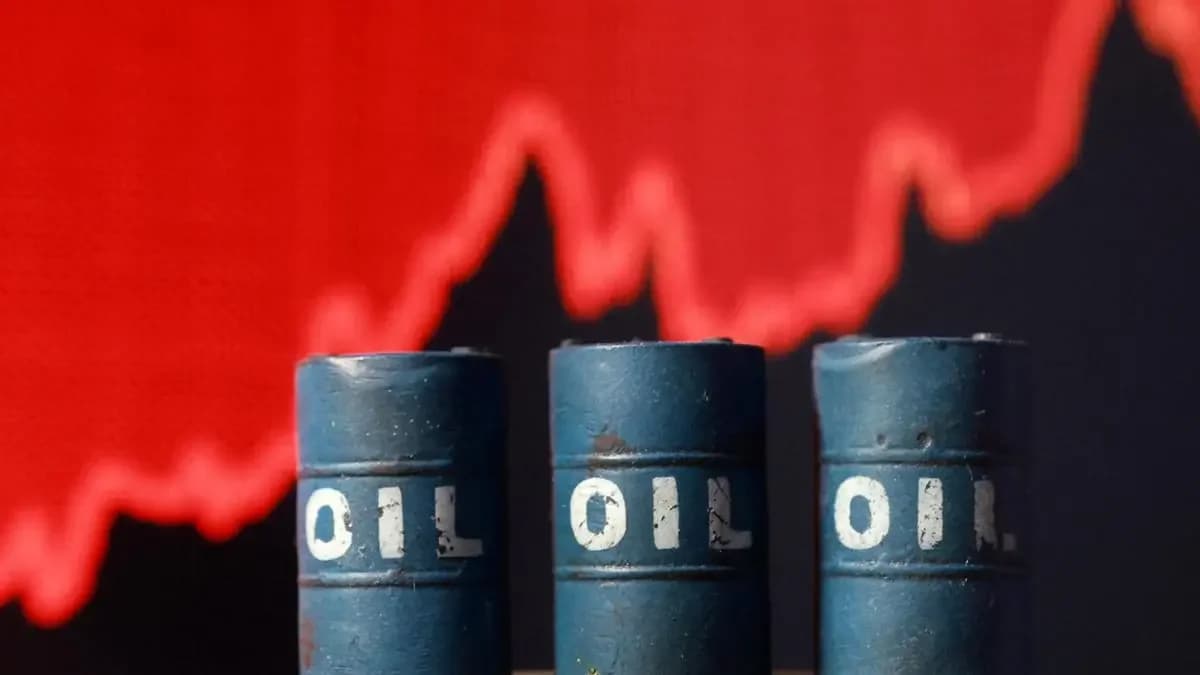
Brent crude prices slumped 5.7% to $94.6 per barrel, falling below the $100-per-barrel mark for the first time in over two weeks, after US President Donald Trump announced that Washington and Tehran had largely negotiated a memorandum of understanding for a peace deal. Trump indicated that the Strait of Hormuz — through which nearly a fifth of global oil supplies transit — would be reopened as part of the proposed arrangement. The decline represents a significant shift from earlier optimism, with oil prices having risen over 3% in previous sessions on diplomatic progress reports. According to Business Standard, the sharp decline in oil prices improved global risk appetite and offered relief to import-dependent economies such as India, where elevated crude prices had recently stoked concerns around inflation, fiscal pressures and corporate margins.
The United States and Iran have reached an agreement in principle aimed at winding down the conflict in the Middle East and reopening the strategically vital Strait of Hormuz, according to a senior US official cited by the New York Times. US President Donald Trump announced on Saturday that a memorandum of understanding on a peace deal with Iran is 'largely negotiated,' as both countries and mediators in Pakistan reported significant progress. The official said Tehran had also agreed to dispose of its highly enriched uranium stockpile as part of the proposed arrangement, although the deal has not yet been formally signed. However, the agreement remains subject to final approval from US President Donald Trump and Iran's Supreme Leader Mojtaba Khamenei, a process that could take several days. There was no immediate confirmation from Tehran on the reported breakthrough, with Iranian officials over the past 24 hours offering differing accounts of what any potential agreement with Washington may include.
Indian equities rallied strongly with the Sensex ending at 76,489, up 1,074 points or 1.4%, while the Nifty closed at 24,032, gaining 312 points or 1.3%. According to Business Standard, this marked the strongest daily advance since April 15 and their highest closing levels since May 8. Banking stocks witnessed a relief rally amid hopes of de-escalation, with the Nifty Bank index rising 2.3%, as HDFC Bank and ICICI Bank were the top contributors to Sensex gains. All NSE sectoral indices, barring one, ended higher, with market breadth remaining strong as 2,703 stocks advanced against 1,607 declines. The total market capitalisation of BSE-listed firms increased by ₹5.86 trillion to ₹468.7 trillion. However, officials from both the US and Iran cautioned that a final agreement may still take time, with the rupee appreciating 0.5% against the dollar to close at 95.23 despite Monday's recovery.

The war and supply curtailment have created unprecedented market conditions, with global stockpiles of crude oil and products being drawn down at a record pace. Around 20% of global energy supplies transited the strait before the war, which has removed 14 million barrels per day of oil - or 14% of global supply - from the market, including exports from Saudi Arabia, Iraq, the UAE and Kuwait. The UAE's state oil firm ADNOC head indicated that full oil flows through the Strait of Hormuz will not return before the first or second quarter of 2027, even if the conflict ended now. Commerzbank AG analysts noted that 'should no agreement emerge between the parties to the conflict, and should passage through the Strait of Hormuz therefore remain severely restricted for the time being, stock levels will come under increased scrutiny.' PVM Oil Associates analyst Tamas Varga observed that 'The optimism of a relatively imminent truce and bearish rhetoric whenever Brent approaches $110 prevents oil prices from rallying significantly higher.'
The Reserve Bank of India's May Bulletin warns that crude oil prices remain a significant risk to the external sector outlook amid the ongoing West Asia conflict. The central bank notes that financial conditions, crude oil prices, and capital flows continue to pose challenges to the external sector outlook as the global economy remains shadowed by uncertainties in West Asia. Despite domestic economic activity exhibiting resilience in April with industrial and services sectors maintaining strength, the RBI acknowledges that the near-term outlook is somewhat clouded by supply side pressures. However, the central bank emphasizes that robust services exports, positive net FDI flows, foreign exchange reserve buffers and proactive policy measures undertaken by the government and RBI are likely to cushion the Indian economy against external headwinds.
The ongoing conflict continues to impact US consumers through elevated energy costs, with gasoline prices standing at $4.55 a gallon as of Thursday, according to the American Automobile Association — the highest ahead of Memorial Day in four years. This energy inflation has contributed to consumer sentiment falling to a record low as long-term inflation expectations worsened. The International Energy Agency remains prepared to release additional stockpiles if needed, with Executive Director Fatih Birol stating Thursday that the agency remains ready to free further stockpiles if needed, after a first release in March. The combination of supply disruptions and geopolitical uncertainty has created a challenging environment for global energy markets and consumer affordability. BMI, a unit of Fitch Solutions, has raised its average 2026 dated Brent price forecast to $90 from $81.50 to reflect the supply deficit and time required to repair damaged Gulf energy infrastructure.