Japanese stocks extended their rally on Wednesday, with the Nikkei 225 rising 1.49% to 68,751 and the Topix Index gaining 1.22% to 4,088. According to reports, this continued recovery comes after the market had lost ¥82 trillion in value over three weeks, with the index having dropped 7.7% since its June 22 record of 72,831.73. The latest gains were driven by broad-based buying across major chip-related companies, including Kioxia Holdings, Advantest, Tokyo Electron, Taiyo Yuden, and Lasertec. The recovery suggests a sustained sector rotation from the AI semiconductor selloff that had previously dominated market sentiment, with investors largely looking past rising tensions in the Middle East even after the US carried out fresh strikes on Iran and reinstated its naval blockade near the Strait of Hormuz.
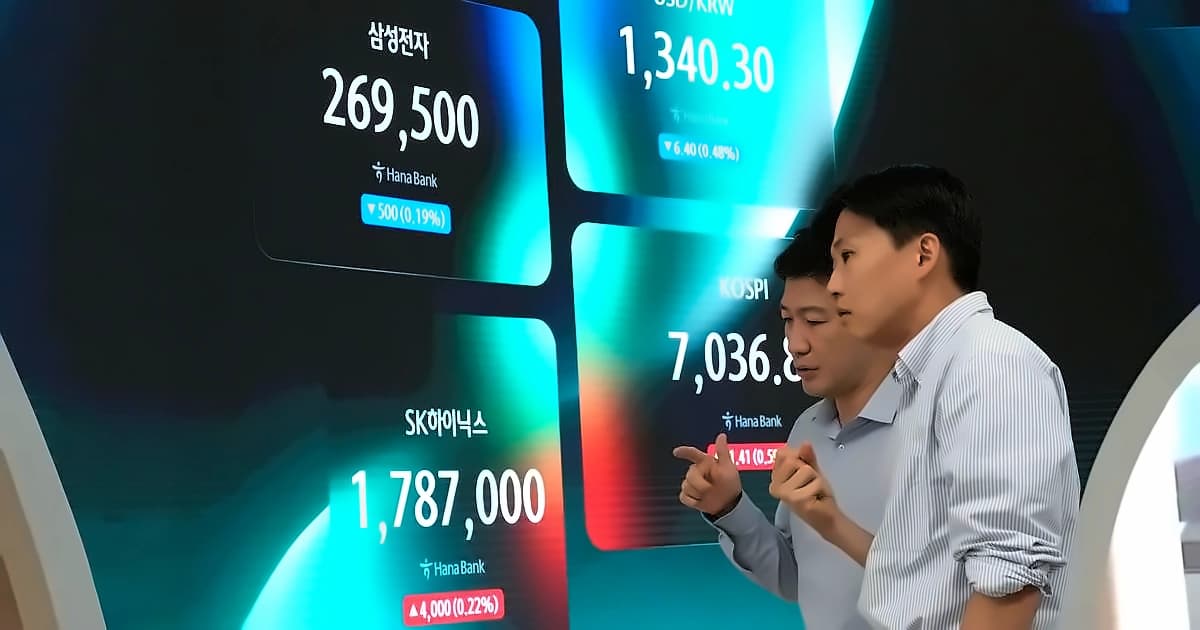
The selling pressure that had previously driven the market decline was primarily concentrated in Japan's AI semiconductor sector, with Kioxia Holdings collapsing 12.9%, Murata falling 8.1%, and Renesas losing 6.2%. As reported, Kioxia and Advantest alone had dragged the Nikkei down roughly 272 points during the previous selloff. The decline was triggered by the Korean chip crash, with Seoul's KOSPI plunging more than 8% intraday, forcing the Korea Exchange to trigger a marketwide halt. SK Hynix shares fell more than 15% in its biggest one-day decline on record to send Kospi down 669 points, or 8.95% to 6,806, triggering a 20-minute trading halt in the process. Tech shares had also given back some of their major gains, with the CSI AI index dropping three percent and the CSI Semiconductors Index down nearly four percent.
Despite the positive market performance, Japan's machinery orders fell more than expected in May, pointing to weaker business investment. However, technology and AI-related stocks continued to lead the rally, demonstrating the market's resilience and selective focus on technology opportunities. The CSI AI index had dropped three percent and the CSI Semiconductors Index was down nearly four percent during the previous decline, but the latest rebound indicates renewed confidence in the sector. This selective buying pattern suggests that investors are rotating back into technology stocks after reassessing the impact of AI sector volatility and focusing on other technology opportunities.
Mainland Chinese stocks slid across the board on Monday, dragging the country's benchmark indexes to three-month lows. The Shanghai Composite Index closed down 82 points, or 2.06% at 3,913, its lowest level since April 7, on turnover of 1.335 trillion yuan. The blue-chip CSI300 index fell 1.8%, also hovering near a three-month low. The Shenzhen Component Index was down 523 points, or 3.48% at 14,522 on turnover of 1.48 trillion yuan while the ChiNext Index closed down 119 points, or 3.1% at 3,723 on turnover of 693 billion yuan. Losses were broad-based, with the defence sector index down 6.9%, the rare earth sector down 6.7%, and the satellite sector down 7.6%. In contrast, defensive sectors such as banks, energy and consumer staples rose between 0.2% and 1.7%.

Oil price movements continue to add pressure to markets, with crude jumping 4% after Iran moved to re-blockade the Strait of Hormuz and exchanged strikes with US forces. As reported by Daiwa Securities senior analyst Daisuke Hashizume, the market remains concerned about increasing costs due to the rise in oil prices, coinciding with the earnings season for Japanese firms. The analyst noted that this combination of factors creates additional uncertainty for investors. Investors are awaiting trade data and second-quarter mainland GDP this week, which will provide more clues on the health of the world's second-largest economy. China's exports for June are forecast to have risen 18.2% from a year earlier in dollar terms, cooling from 19.4% in May.