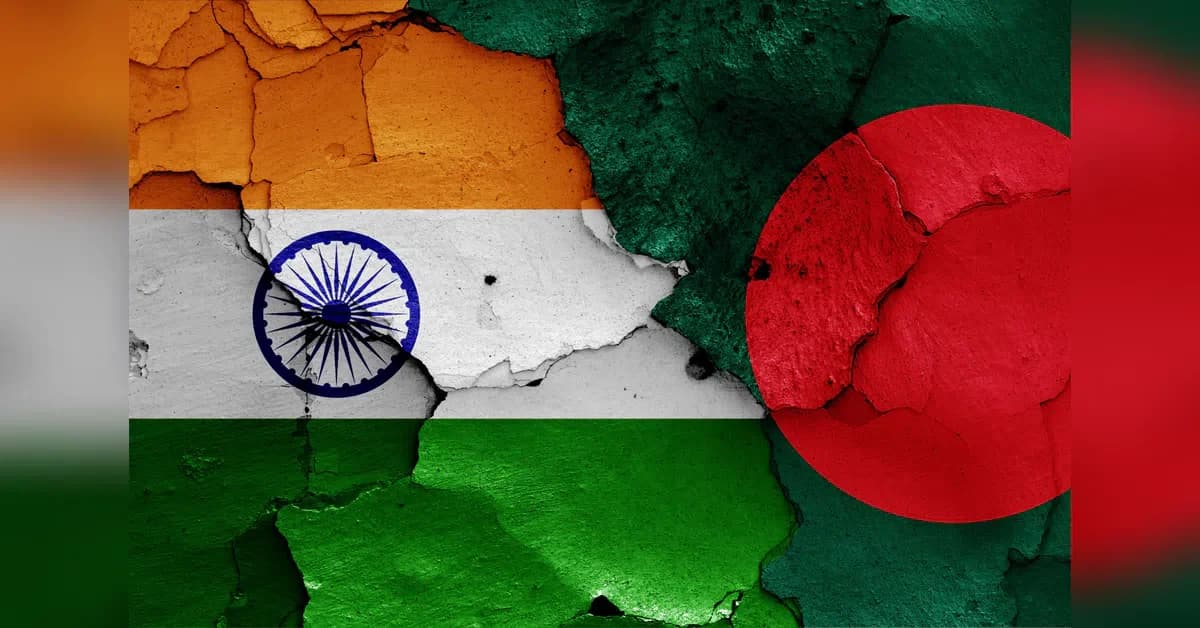
Bangladesh has termed India's explanation regarding the airport incident involving Prime Minister's Adviser Dr Zahed Ur Rahman as 'unsatisfactory'. According to the state-run BSS news agency, a foreign ministry spokesperson described the incident as 'unfortunate and regrettable' on Wednesday. The Bangladeshi official stated that Indian authorities were informed beforehand through diplomatic channels that Rahman would lead the Bangladesh delegation at the Indian Ocean Rim Association (IORA) meeting. As per BSS, Dhaka's reaction came after responding to questions on the remarks made by the spokesperson of India's Ministry of External Affairs. 'The explanation provided by the Indian side over the incident was not satisfactory,' the spokesperson stated, highlighting Dhaka's dissatisfaction with New Delhi's response to the diplomatic incident. Bangladesh had earlier lodged a formal protest with India over the incident, maintaining that the adviser's visit had been communicated in advance through official channels.
Rahman was scheduled to lead the Bangladesh delegation before being prevented from proceeding through Delhi airport earlier this month. According to MEA spokesperson Randhir Jaiswal, Rahman arrived in India on June 14 on a private passport holding a SAARC visa to attend the 28th Meeting of the Committee of Senior Officials of the Indian Ocean Rim Association. The external affairs ministry hosted this meeting on June 15-16 in New Delhi. As reported by BSS, Rahman was stopped by immigration officials at Delhi airport after his name allegedly appeared on a security-related blacklist. Following questioning, he was permitted entry after officials reconfirmed the purpose of his visit. However, Rahman chose to return to Dhaka of his own volition despite being cleared for entry.
According to MEA spokesperson Randhir Jaiswal, Rahman was queried by immigration officials at Delhi airport and was subsequently permitted entry after re-confirming that the purpose of his visit was to attend the said multilateral meeting. However, as reported by BSS, Rahman chose to return to Dhaka of his own volition despite being cleared for entry. The incident occurred over a week ago when his name apparently figured in a security-related blacklist. At his weekly media briefing, Jaiswal explained that 'Advisor to the prime minister of Bangladesh arrived in India on June 14 on a private passport holding a SAARC visa, to attend the 28th Meeting of the Committee of Senior Officials of the Indian Ocean Rim Association.'
On June 16, Dr Zahed addressed the media in Dhaka, explaining his decision to return as an 'immediate protest' against what he described as inappropriate treatment. According to BSS, Rahman stated that 'I did not go there as an individual; I went as a representative of the government. Therefore, what happened to me there required an immediate protest ... just to send a message that I was maltreated and was not treated appropriately.' He added that 'after a certain point, the Indian authorities made repeated and sincere efforts to persuade him to enter the country and continue with his scheduled engagements.' As the PM's adviser, Rahman felt there should be 'a clear position or signal from the state or the government regarding the incident.'
The diplomatic incident occurred during the 28th Meeting of the Committee of Senior Officials (CSO) of the Indian Ocean Rim Association (IORA), which was hosted by India's Ministry of External Affairs in New Delhi on June 15-16. According to BSS, the meeting assessed progress on IORA's institutional initiatives and priority sectors, while advancing deliberations on the forthcoming IORA Action Plan (2028–2032). The discussions underscored a shared commitment to strengthening cooperation in support of a peaceful, stable, and prosperous Indian Ocean Region. The diplomatic incident has also drawn attention to broader minority issues between the two countries, with Bangladesh's foreign ministry spokesperson emphasizing 'Bangladesh believes that every state bears an equal responsibility to protect and ensure the rights and security of all citizens, including minorities, residing within its territory.'