US President Donald Trump announced on Monday that he would hold off on a scheduled attack against Iran on Tuesday at the request of Gulf leaders and to give more time for negotiations. According to Axios, the request, made by the leaders of the UAE, Qatar and Saudi Arabia, was a result of concerns about having their infrastructure targeted by Iranian retaliation. A source with knowledge of the matter said Trump told allies that the Gulf leaders said they didn't "want their oil and energy facilities blown up" by Iranian retaliation. Trump stated in a social media publication on Monday that he was calling off attacks scheduled for Tuesday as "serious negotiations" were taking place. In the opinion of the Gulf leaders, Trump added, "a Deal will be made, which will be very acceptable to the United States of America, as well as all Countries in the Middle East, and beyond." However, another report detailed that Iran's latest demands to end the war appear to be largely unchanged from previous ones, including ending hostilities on all fronts, the exit of US forces from the region and reparations for damages sustained, as well as the lifting of sanctions, the release of frozen funds and an end to the blockade of the Strait of Hormuz.
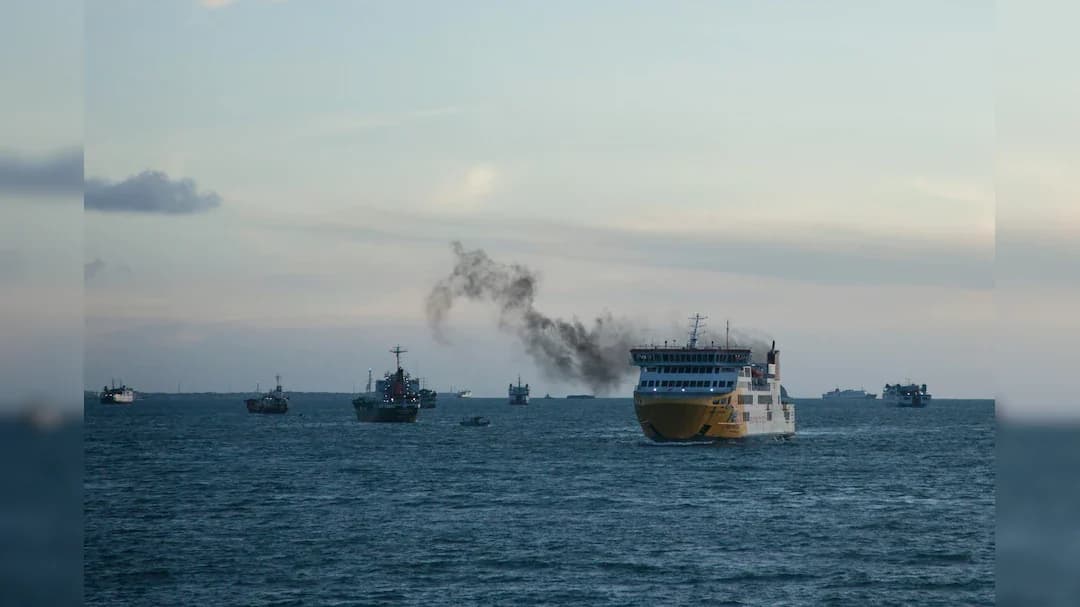
The North Atlantic Treaty Organization (NATO) is actively considering a potential naval deployment to help ensure safe passage for commercial vessels through the Strait of Hormuz if the US-Iran standoff continues to block the key shipping route into early July. According to reports from Bloomberg, the discussions come amid growing concern within NATO capitals over the economic fallout from prolonged disruption in one of the world's most critical energy corridors. The Strait of Hormuz, which handles roughly a fifth of global oil and liquefied natural gas flows, has effectively become a flashpoint following escalating conflict between the United States and Israel against Iran, which initially restricted passage through the waterway after hostilities intensified in late February. As reported by Bloomberg, NATO officials are now discussing a potential escort mission to help commercial ships pass through the virtually blocked waterway if the critical passageway remains closed beyond early July. Commander Alexus Grynkewich, NATO's supreme allied commander Europe, has confirmed that the alliance is actively considering deployment options, stating "Am I thinking about it? Absolutely." He emphasized that "the political direction comes first, and then the formal planning happens after that," noting that a potential military alliance mission in the Strait of Hormuz would be a political decision.
As reported by Bloomberg, several NATO members support the idea of assisting maritime traffic through the strait, but the proposal has not yet secured unanimous backing, which is required for formal alliance action. A diplomat from a NATO member country told Bloomberg the plan remains under discussion ahead of a leaders' meeting scheduled in Turkey on July 7–8, where the issue is expected to be further assessed. If pursued, the move would mark a notable shift in NATO's posture toward the ongoing crisis, which has so far been defined by caution and restraint. According to the latest reports, NATO officials are actively discussing the potential military operation, representing a significant escalation in the alliance's consideration of direct involvement in the maritime security crisis. The senior NATO official noted that while some allies still oppose authorising an alliance mission for the strait, they would rally around the idea if the blockage persists. Alliance members have previously maintained that any operational involvement in securing the strait would only be considered once active fighting ends and a broader international coalition, potentially including non-NATO states, is formed to stabilise maritime security. If approved, such a move would represent a significant change in NATO's current approach to the crisis, as until now alliance members have largely adopted a cautious stance and avoided direct operational involvement.
According to Bloomberg reports, the economic impact of the closure is increasingly weighing on policy discussions. Energy prices have surged sharply in recent months, supply chains have been disrupted, and global growth forecasts have been revised lower as shipping routes remain constrained and insurance costs for tankers operating in the region have spiked. The current tensions trace back to Iran's move to restrict passage through the Strait of Hormuz following US and Israeli military strikes earlier this year, with the development intensifying friction between Washington and its European allies in NATO. The passageway has since become a source of tension between the US and its European allies that refused to heed President Donald Trump's demands that they help reopen the strait. The escalating situation has prompted NATO officials to consider direct military intervention to address the mounting economic and security concerns. S&P has warned that "a recession becomes more likely the longer the Strait (of Hormuz, ed.) remains effectively closed" and expects "disrupted energy flows, weaker economic prospects and worsening market sentiment" to push "the European default rate on speculative-grade debt to 3.75% by March 2027, up from 3.3% in March 2026."
As reported by Bloomberg, the US has been pushing NATO partners to take a more active role in reopening the corridor, a demand that has so far faced resistance from several member states. US President Donald Trump has repeatedly criticised NATO allies for what he described as a lack of decisive action, while Washington's recent decision to withdraw 5,000 troops from Germany has further underscored growing transatlantic strains linked to the broader geopolitical dispute. Alliance members have previously maintained that any operational involvement in securing the strait would only be considered once active fighting ends and a broader international coalition, potentially including non-NATO states, is formed to stabilise maritime security. The senior NATO official confirmed that while the US has made no formal request for NATO involvement in the strait, Trump's anger has been specifically targeted at Germany, with most allies quietly granting access to their bases to provide logistical support. US Treasury Secretary Scott Bessent has called on US allies to step up actions against Iran's financial networks, urging European partners to "join the United States in taking action against Iran, naming its financiers, exposing its shell and shell companies, shutting down its banking subsidiaries, and dismantling its proxy networks."
The latest developments show US forces are preparing for potential military action while Iran prepares for a possible resumption of hostilities. According to Reuters, the Trump administration will inform NATO allies that it will reduce the US forces available to the Alliance during crises, with the announcement expected on Friday. The US has seized an Iranian-linked oil tanker in the Indian Ocean overnight, as reported by The Wall Street Journal, citing three Washington officials. The tanker, called Skywave, had been sanctioned by the US in March for its role in transporting Iranian oil and allegedly loaded more than one million barrels of crude oil on the Iranian island of Kharg Island in February. Donald Trump summoned his national security advisers on Iran on Monday evening, just hours after announcing he had suspended the planned attack on Tuesday. According to Axios, the meeting included a briefing on military options, with Trump explaining that he was called to cancel the attack because it was close to a deal. Iran's Defence Ministry spokesman has dismissed Trump's claims about the destruction of Iran's defence capabilities, stating that "a considerable part of Iran's defensive capabilities has not yet been deployed" and that "the axis of resistance is now more united and stronger than ever."