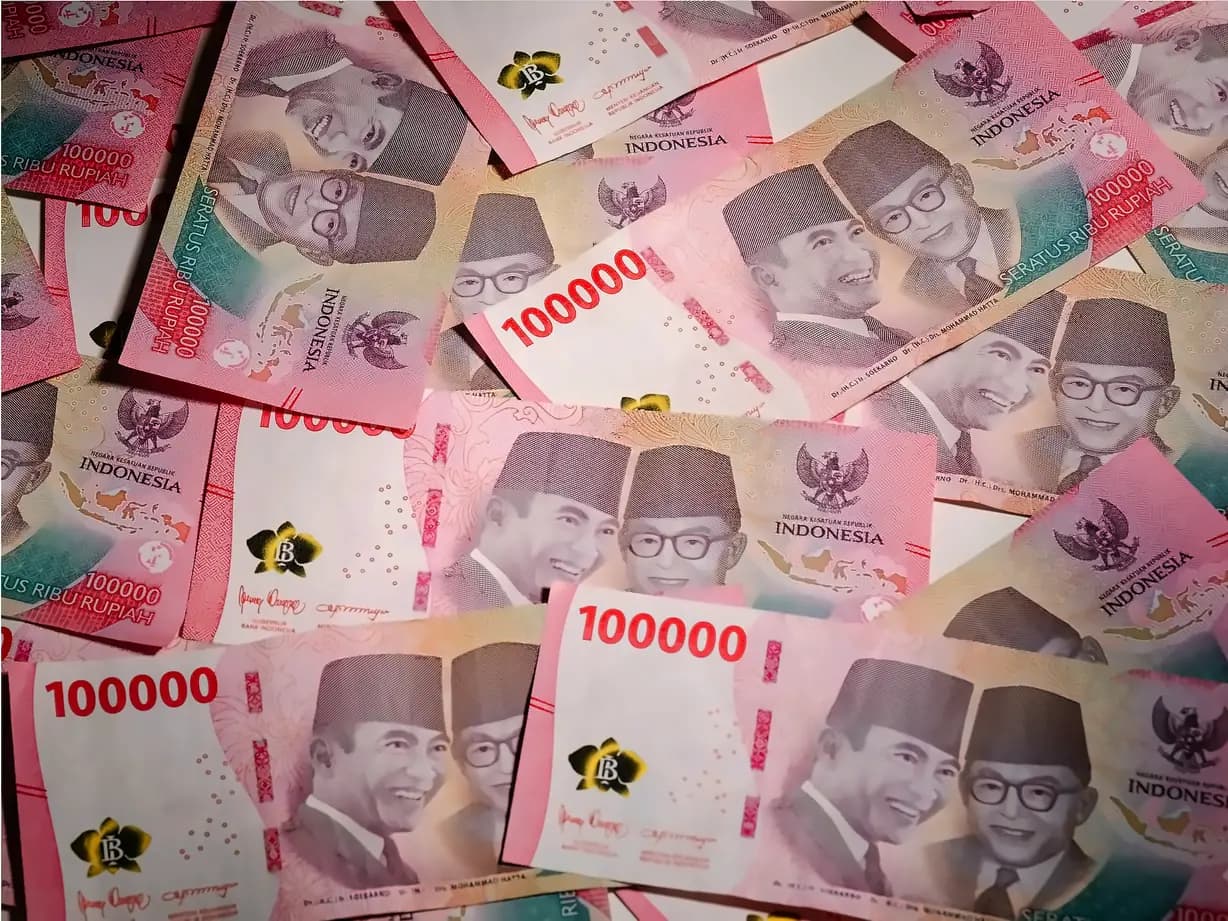
Indonesian stocks experienced their worst decline in nearly three decades, with the Jakarta Composite Index plunging 11.57% on Friday, marking its largest single-day drop since January 1998. According to Reuters, the market opened almost 8% lower, triggering a 30-minute trading halt as investors rushed to exit positions. The fall represents the steepest decline since the 1998 Asian Financial Crisis, with the sell-off extending across the country's biggest banks where Bank Central Asia, Bank Rakyat Indonesia and Bank Mandiri each fell nearly 15%. The rupiah also weakened by as much as 0.8% to 18,070 against the dollar, close to its record low of 18,190, before recovering some losses. With Friday's losses, Indonesian equities are down nearly 40% this year, making them the worst-performing major market globally. The latest crash has revived comparisons with other major markets that endured prolonged recoveries, including Japan's 34-year journey to reclaim its 1989 record and China's 19-year struggle to recover from the 2007 peak.

MSCI Inc. has officially confirmed the launch of a consultation on a proposal to reclassify Indonesia as a standalone market, removing it from both emerging-market and frontier-market indexes. According to Reuters, MSCI stated that persistent concerns over market transparency, concentrated share ownership and trading practices made Indonesia's emerging-market status increasingly difficult to justify, which it said undermined the market's investability. The existing freeze on certain index-related changes for Indonesian securities from index reviews or corporate events will continue until further notice. As reported by The Economic Times, UBS estimates the move could trigger approximately $4 billion in passive outflows and $15 billion in active fund outflows, highlighting the massive capital exodus expected from the reclassification. The standalone classification would force passive funds tracking MSCI's emerging-market indexes to sell Indonesian holdings, while active managers may also reduce exposure. Indonesia's equity market has lost more than $350 billion in capitalisation since MSCI froze certain index changes in January, with around $60 billion wiped out on Friday alone. According to NDTV Profit, MSCI data showed Indonesia's Index delivering an annualised price return of minus 0.6% between May 1994 and April 2026, before the latest crash and excluding dividends.
The announcement prompted Indonesia's Financial Services Authority to disclose penalties against market participants linked to alleged trading violations involving Dian Swastatika Sentosa, Barito Renewables Energy and Petrindo Jaya Kreasi. According to Reuters, regulators alleged that Dian Swastatika shares were subject to coordinated price manipulation, while in the other two cases, shares allocated through initial public offerings were allegedly intended for parties connected to controlling shareholders, contributing to concentrated ownership. Senior economic minister Airlangga Hartarto questioned why MSCI had not raised the proposed standalone classification during a meeting earlier this week, highlighting the government's surprise at the decision. The Indonesia Stock Exchange has responded by stating it plans to seek clarification from MSCI on the rationale and assessment criteria behind the reclassification plan, adding that the country has implemented significant progress and reform measures. As Reuters reports, MSCI has raised concerns over opaque shareholding structures and suspected coordinated trading in Indonesia's stock market, with the index provider stating 'Significant concerns remain around market dysfunction'.
MSCI will consult market participants until April 2027 before proceeding with the proposed downgrade, unless it sees clear evidence of improvements in market governance and functioning. As reported by Reuters, the decision adds pressure on President Prabowo Subianto's government, following negative sovereign-rating outlook revisions by Moody's and Fitch earlier this year. For Indonesia, restoring investor confidence and demonstrating meaningful market reforms will be critical to avoiding a potentially costly index exclusion. The proposed reclassification goes beyond the previously threatened downgrade to frontier-market classification, with Indonesia joining Argentina, Lebanon, Palestine and Ukraine in the standalone category, becoming the only Asia-Pacific market with that classification. At $1.5 trillion, it would also be the largest economy in the group, more than twice the size of Argentina which is the next largest economy. According to Reuters, the final decision is expected by the end of June 2027, with the coming months being crucial for Indonesia as it attempts to restore investor confidence and avoid exclusion from global indexes.