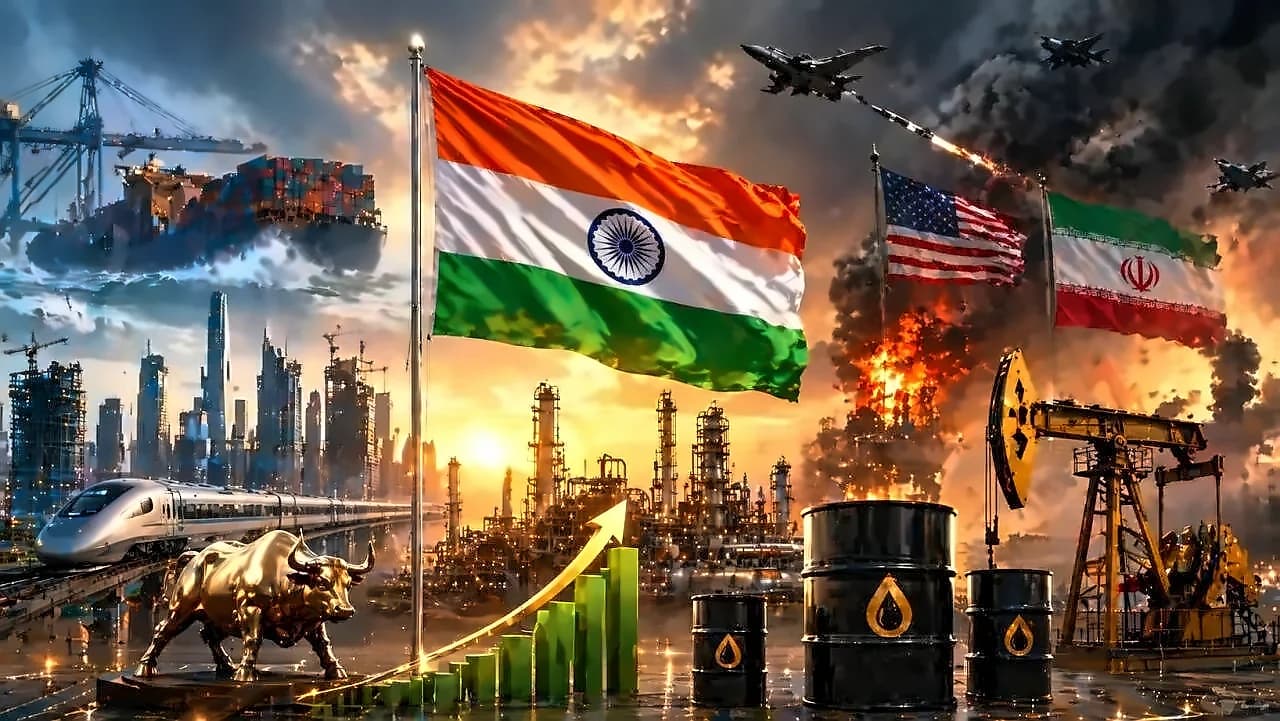
In response to the escalating Iran war impact, India's federal cabinet approved a ₹181 billion ($1.9 billion) credit guarantee plan on Tuesday to support businesses and airlines affected by the conflict. The government will provide sovereign guarantees to lenders that extend additional loans to eligible borrowers, according to official statements. The program is designed to help businesses maintain their operations, protect jobs, and sustain supply chains during the crisis. This emergency credit line guarantee across all sectors mirrors the relief provided during the Covid-19 pandemic to micro, small and medium firms through collateral-free automatic loans. Government data shows that more than 11 million guarantees worth ₹2.42 trillion were given until March 2023, demonstrating the scale of potential support needed for the current crisis. The scheme is intended to help businesses get access to loans until March next year so they can ride out the crisis, prevent layoffs and avoid an economic slowdown. As per the government statement, the proposed credit guarantee scheme is a major step to help businesses... and the airline sector, to ensure their additional working capital needs, and will also promote uninterrupted domestic production and maintain the resilience of the ecosystem.

India's economic growth forecast for this fiscal year faces significant downside risk from the ongoing Iran war, with CII president Rajiv Memani warning that growth could slip to 6.5% if the conflict persists. Currently, economic growth is estimated at 7.6% in FY26, but this projection depends critically on the Iran war ending soon. As per CII's latest assessment, companies are building buffers against future shocks while private investments are expected to rebound once the West Asia conflict subsides. Capital spending by listed non-financial companies had grown 25% in FY25 to ₹11 lakh crore, and Memani expressed optimism that a strong momentum in GDP growth and investments will definitely take place once the tariff issues with the US settle and the war-driven energy crisis abates. However, the Finance Ministry concedes that growth estimates are now 'clouded by an altered macro-outlook' in the wake of the West Asia war, with the IMF warning that growth risks are tilted sharply downward while inflation risks are tilted upward. If crude averages near $120 and subsidy pressures intensify, India could face the dangerous combination of slower growth and higher inflation, potentially driving the economy into classic stagflationary territory.
The Middle East conflict has created a severe fertiliser crisis that threatens food security across Asia, with urea prices surging to ₹857 per metric tonne in April 2026, more than doubling from ₹726 per metric tonne in March and shattering a four-year high. The Strait of Hormuz disruption has effectively closed the route through which roughly a quarter of global seaborne oil trade and more than a third of world urea exports pass, with Gulf states including Qatar and Saudi Arabia accounting for 30-35% of global urea exports. World Bank forecasts overall fertiliser prices will rise 31% in 2026 compared with 2025, with urea potentially climbing by as much as 60%. Rice farmers across South and Southeast Asia are facing production costs expected to rise by 50-80% when fertiliser, fuel and transportation increases are combined. The FAO's chief economist noted that farmers from Punjab to the Mekong Delta are already revising their planting plans, with the critical May-to-August planting season underway. The Philippines has warned of a potential 20-50% drop in rice output, while major exporter India faces pressure that could lead to export restrictions.
The sustained high crude oil prices continue to create significant economic challenges, with Brent crude surging to over $114 per barrel on Tuesday, up 25% since the third week of April. As per the Finance Ministry's latest monthly economic review, a $10 increase in crude oil prices impacts India's import bill by roughly ₹13-14 billion. India was purchasing crude at around $65 before the war broke out, and with crude prices around $114, the country will have to shell out an additional ₹50-60 billion. The RBI projects inflation at around 4.6% for 2026-27, but warns that energy prices and weather-related risks could push it higher. While the government has absorbed part of the fuel price shock through tax adjustments and pricing controls, persistently high crude prices will eventually have to be passed on to consumers. However, consumption demand isn't showing any visible sign of faltering yet, with input prices for companies rising but the business-to-consumer category largely remaining protected. ICRA estimates that high crude prices could translate into under-recoveries of ₹12-₹14 per litre on petrol and ₹16-₹18 per litre on diesel, even as India's fuel retail prices have remained relatively stable.
The Iran war has intensified significantly with Iranian attacks on the United Arab Emirates creating new regional tensions. India's Ministry of External Affairs has condemned the Iranian attack on Fujairah, confirming that three Indian nationals were among those injured. Official Spokesperson of the Ministry issued a statement on Tuesday, May 5, 2026, calling for an immediate halt to hostilities and urging diplomatic resolution to the crisis. The United Kingdom, France, Germany and Saudi Arabia called for de-escalation in the Middle East following reported attacks on the UAE. Britain's Prime Minister said that the "escalation must cease," while German Chancellor Friedrich Merz wrote on X that "Tehran must return to the negotiating table and stop holding the region and the world hostage." A senior Iranian military official did not deny the fresh strikes but said on state television that the Islamic republic had "no pre-planned programme to attack the oil facilities in question." Canada strongly condemned Iran's unprovoked missile and drone attacks on the UAE, adding to the international condemnation. The credit line will operate for five years for most businesses and seven years for airlines, providing extended support as the conflict continues.
The conflict has created immediate challenges for India's export sector, with India's exports dropping 7.44% to $38.92 billion in March, marking the steepest fall in the past five months. Imports declined 6.5% to $59.59 billion from the previous year, contributing to a widening trade deficit from $283.5 billion in FY25 to $333.2 billion in FY26. The Middle East accounts for about 13% of India's exports and nearly 38% of remittance inflows, making any prolonged disruption particularly concerning. Shipping disruptions in critical routes such as the Strait of Hormuz could further raise freight costs and delay shipments, adding to inflationary pressures and supply bottlenecks. The CII has flagged shipment delays, rising logistics costs and shortages of key inputs across sectors dependent on cross-border supply chains. However, the sharp rupee depreciation against the dollar in recent months, adding to India's free trade agreements with key economies such as the UK and the EU, would prop up exports in the medium term, helping the current account.