The Government has reaffirmed its commitment to capital expenditure despite the ongoing West Asia crisis, with Expenditure Secretary Vumlunmang Vualnam stating that capex will be a priority item preserved at budgeted levels. Speaking at a conference organised by the Isaac Centre for Public Policy at Ashoka University, Vualnam acknowledged the fiscal stress while emphasizing that the Centre will prioritise capital expenditure and seek to ensure that the entire allocation for public spending is utilised. This commitment comes as the government has budgeted for ₹12.2 lakh crore capex this year, with highways, railways, shipping, ports, and urban development flagged as the focus areas for the current fiscal year.
Global brokerage Morgan Stanley has projected a sharp rise in domestic investments across energy, defence, fertilisers and data infrastructure as India grapples with the ongoing West Asia conflict. According to Morgan Stanley's latest report, the geopolitical tensions are likely to accelerate India's push towards supply chain resilience and domestic capacity creation, resulting in additional cumulative investments worth $800 billion over the next five years. The report raises India's investment rate forecast to 37.5% of GDP in F2030 (36.5% previously), with nearly 60% of this new capital expenditure expected to be directed towards energy transition, defence manufacturing and data centres. This projection comes as India faces elevated risks from oil and fertiliser imports amid the regional tensions.
The conflict is expected to trigger a renewed policy and investment push in sectors linked to strategic security, with defence spending expected to rise from 2% of GDP to 2.5% by FY2031. This increase is anticipated to boost domestic production and strengthen India's manufacturing ecosystem under the government's indigenisation drive. India's data centre sector could also emerge as a major beneficiary as global companies increasingly look for alternatives amid geopolitical uncertainty, with India's policy framework around data localisation and digital infrastructure positioning it as a preferred global destination for such investments.
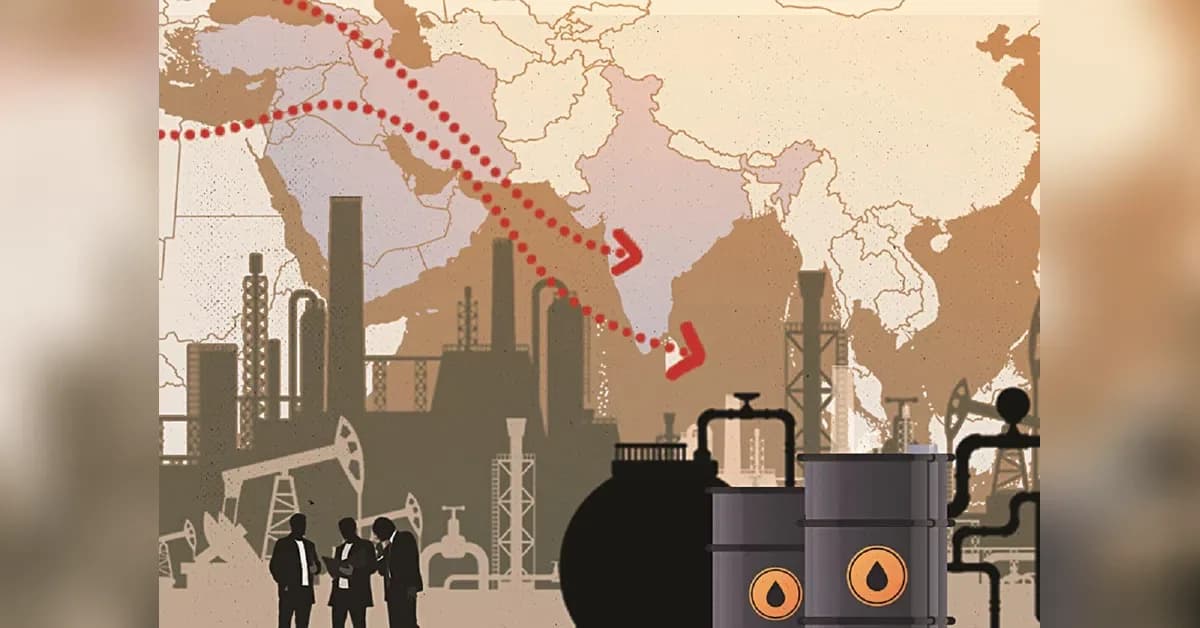
Despite the investment opportunities, India's 85% crude oil import dependence and 50% natural gas import reliance remain the biggest economic vulnerabilities amid prolonged regional tensions. The report highlights that India is likely to respond through a 'multi-pronged strategy' involving greater use of strategic petroleum reserves, coal gasification, renewable energy, electrification and faster rollout of nuclear power projects. The fertiliser sector remains another pressure point as India continues to depend heavily on imports for phosphatic and potassic fertilisers, making the agriculture sector vulnerable to supply disruptions and price spikes. Morgan Stanley noted that 38% of India's inward remittances still come from Gulf-linked economies, though the report said India's remittance base is becoming more diversified.
The Finance Ministry has issued a stark warning about the impact of the US-Iran conflict on India's economy, stating in its latest monthly economic review that the West Asia conflict and weak monsoon pose a downside risk to Indian economic growth. According to the ministry's assessment, the conflict may put pressure on inflation, fiscal and external deficits, representing a significant challenge to India's economic resilience. The ministry acknowledges that while the West Asia conflict constitutes a significant supply shock with rising risks to inflation, trade, and financial flows, India's domestic demand, policy buffers, resilient financial system, and sustained public investment provide some insulation. However, it emphasizes that whether these buffers would prove adequate in the event of prolonged uncertainty about energy and fertiliser supplies is an important question that requires careful monitoring.
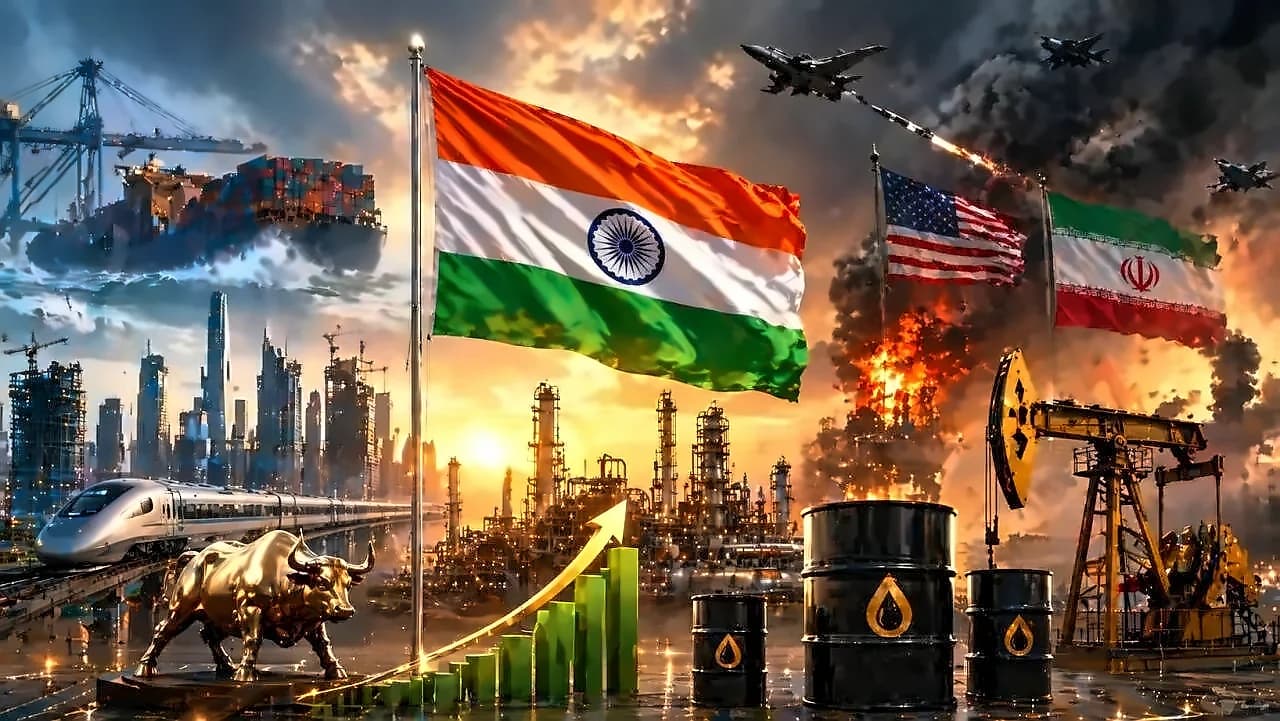
The conflict has created significant pressure on Indian financial markets and the rupee, with experts warning of continued volatility ahead. Indian equity markets declined in March amidst persistent uncertainty and selling pressures by foreign portfolio investors before recovering moderately in April on the announcement of temporary ceasefire and moderation in crude oil prices. Between April 2025 and March 2026, FPIs pulled out close to ₹1.81 lakh crore (over $19 billion) from India's equity market, with March alone seeing over ₹1.17 lakh crore in outflows. The Indian rupee witnessed depreciation against the US dollar in March, falling below 95 to the dollar for the first time on March 30, though it recovered slightly to 92.68 on April 10 after the US-Iran truce declaration. In the first 10 days of April, FPIs sold another ₹48,213 crore from the equity market, with experts expecting continued pressure if tensions persist.
Despite near-term risks, Morgan Stanley remains optimistic on India's economic outlook, maintaining that the country's real GDP growth is likely to remain in the 6.5-7% range, supported by capex-led expansion. The report emphasizes that the conflict may ultimately push India to strengthen economic resilience, boost domestic manufacturing, and accelerate long-term structural reforms in critical sectors. The RBI's cautious approach is reflected in its monetary policy decisions, with the central bank keeping the repo rate unchanged in its April monetary policy despite inflation remaining contained within tolerance bands. The Monetary Policy Committee (MPC) left rates unchanged in its latest meeting on April 8, with Nomura expecting the RBI to maintain this stance through 2026 due to exceptionally low inflation offering a longer runway for policy evaluation.