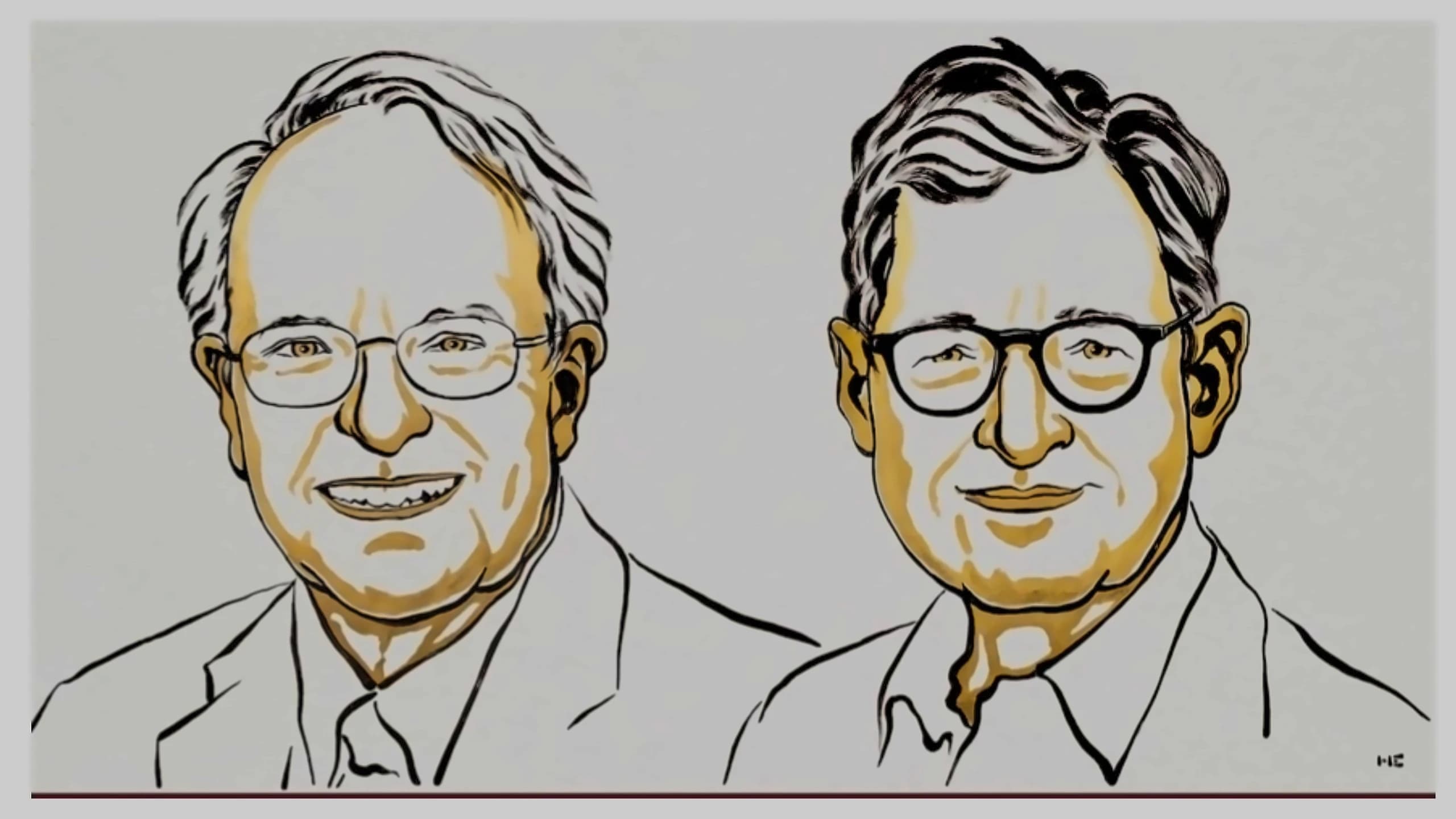
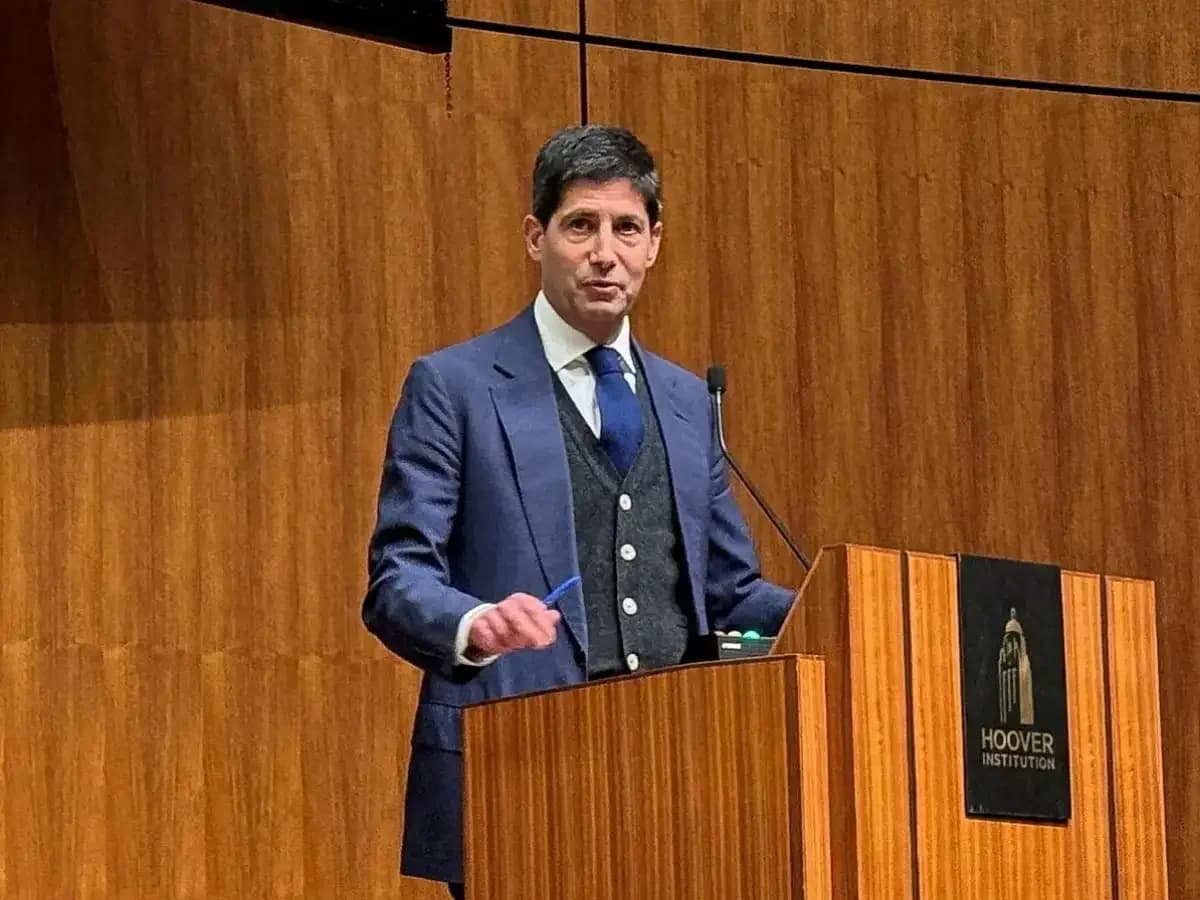
Michael Kremer, a Nobel laureate and University of Chicago professor, will assume the role of World Bank Group's chief economist on October 1. According to reports from Business Standard, Kremer, 61, will head research for the institution and succeed Indermit Gill, who retired last month. This marks a significant milestone as Kremer becomes the first chief economist to join the World Bank with a Nobel Prize, though other Nobel laureates including Joseph Stiglitz and Paul Romer received the honour after serving as the bank's chief economist. As reported by Reuters, Kremer will serve as chief economist and senior vice president for development economics, with his appointment coming shortly before the World Bank and International Monetary Fund annual meetings in Bangkok, Thailand. World Bank President Ajay Banga stated that "I am pleased to welcome Michael to the World Bank Group. He joins us at a time when the world needs bold solutions to its most pressing development challenges, including creating jobs that meet the expectations of the more than 1.2 billion young people who will reach working age over the next decade." Banga emphasized that "Michael has spent his career not just identifying what works in development but proving it at scale – and that is exactly the kind of thinking we need."
Kremer was awarded the 2019 Sveriges Riksbank Prize in Economic Sciences jointly with Abhijit Banerjee and Esther Duflo for their experimental approach to alleviating global poverty. As reported by Business Standard, he holds a PhD from Harvard University and previously taught economics at Harvard before becoming a professor at the University of Chicago, where he also serves as director of its Development Innovation Lab. He has been a research associate with the National Bureau of Economic Research and won a MacArthur 'genius grant' in 1997. According to Reuters, his research used randomised controlled trials to assess development interventions and identify programmes that could be tested and expanded. Kremer is a member of the National Academy of Sciences and a fellow of the American Academy of Arts and Sciences. His research interests include economic growth, technological change, and development economics, with the Nobel Prize noting that their approach has transformed emerging economies, which now represent a thriving field for research. His current research focuses on topics such as education, healthcare and access to clean water.
Kremer is renowned for using rigorous research to develop innovative solutions to real-world problems, often setting up programmes that have helped small farmers and given millions of people access to vaccines and school health programmes. According to Reuters, his research has contributed to programmes spanning health, education, agriculture and technology. His work on deworming schoolchildren showed a sharp drop in absenteeism, prompting governments in Africa and South Asia to provide two billion treatments since 2014. His research on digital agriculture and AI-based weather forecasting has informed government programmes reaching more than 50 million people in Africa and South Asia. Kremer co-founded Precision Development, which uses digital technology to improve productivity and incomes for smallholder farmers, and has worked on artificial intelligence-based agricultural weather forecasting. The World Bank noted that Kremer's work on vaccine access through Advance Market Commitments has helped vaccines reach 60 developing countries. Kremer and his wife Rachel Glennerster also pioneered the use of Advance Market Commitments, binding contracts made by donors to encourage pharmaceutical companies to research, develop and produce drugs for low-income countries, including a $1.5-billion AMC for a pneumococcal vaccine with Gavi and the World Bank Group.
Kremer has worked on artificial intelligence-based agricultural weather forecasting and cofounded Precision Development, which uses digital technology to improve productivity and incomes for smallholder farmers. As reported by Business Standard, in 2010, he co-founded Development Innovation Ventures, a fund administered by the US Agency for International Development, which was shut down by US President Donald Trump after he returned to the White House last year. Kremer's Development Innovation Ventures has invested in more than 300 innovations, reaching more than 200 million people. He and his wife, British economist Rachel Glennerster, also pioneered the use of Advance Market Commitments, binding contracts made by donors to encourage pharmaceutical companies to research, develop and produce drugs for low-income countries. Kremer's research on de-worming schoolchildren showed a sharp drop in absenteeism, prompting governments in Africa and South Asia to provide 2 billion treatments since 2014. In the early 2000s, he also proposed a framework aimed at preventing dictators from looting their countries and saddling future citizens with illegitimate or 'odious' debt.
The World Bank Group has moved deliberately to strengthen the connection between knowledge and impact, ensuring that world-class research and data drive its analytical agenda, shape policies and scalable solutions across the public and private sectors, and inform the full range of investments, partnerships and interventions it pursues around the world. Kremer noted that "The World Bank Group has tremendous research capacity to develop and test innovative solutions to development problems – and the operational reach to scale them up and improve people's lives." He emphasized that "The challenges ahead are enormous, including creating jobs at scale, unlocking the private capital needed to fund development and ensuring people have the health, education and other services they need to thrive." Kremer added that "At the same time, new technologies create huge opportunities to boost growth and human wellbeing. Data, evidence and research can help firms and governments navigate both the challenges and opportunities." The World Bank Group points out that Kremer's current research focuses on innovation in education, health, water, finance and agriculture in developing countries, with his work demonstrating "the kind of thinking we need" to address the world's most pressing development challenges.