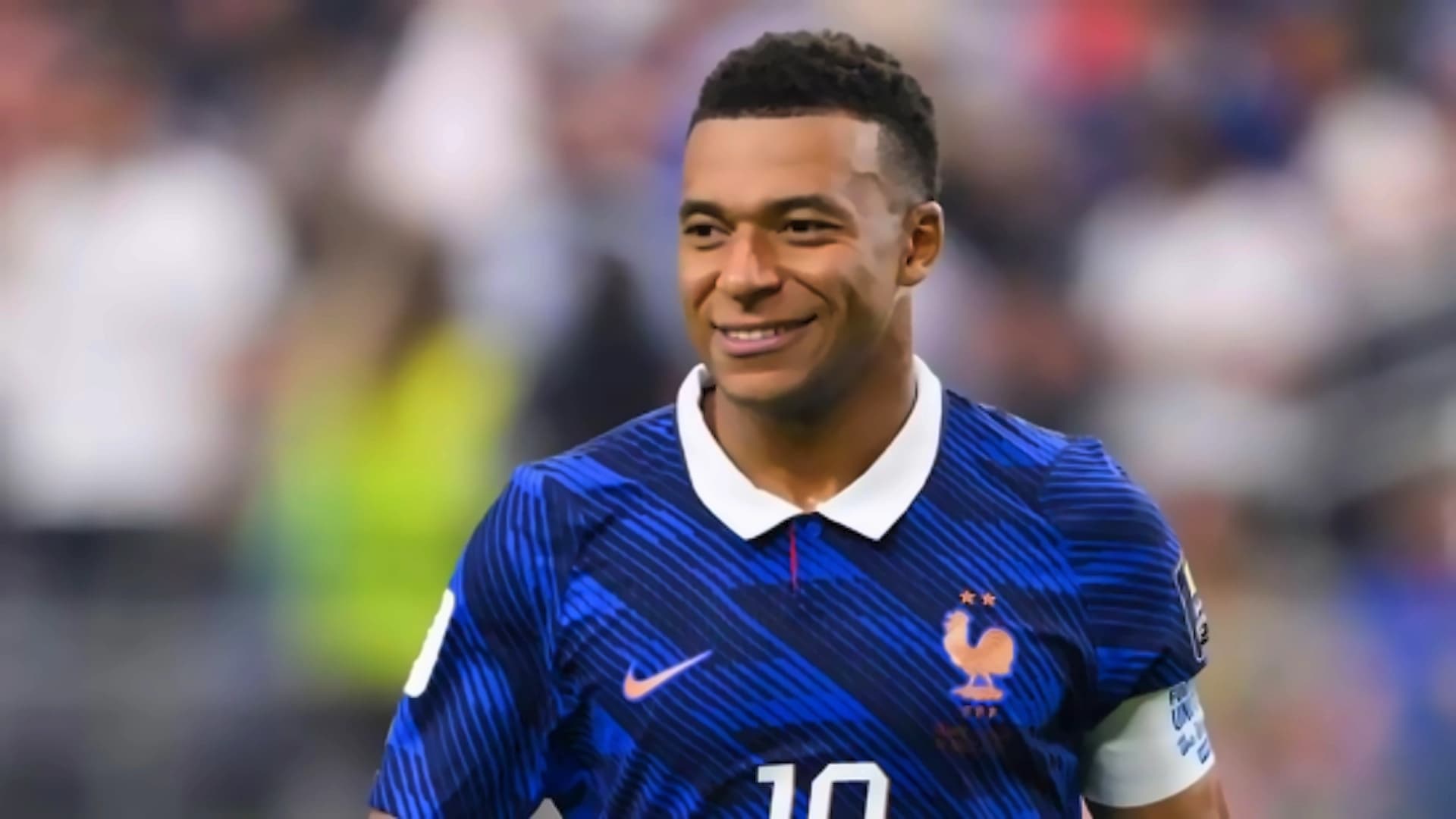
French football star Kylian Mbappé has issued a formal apology for his controversial comments about Mao Zedong, stating "My comment was ill-judged. I apologize to everyone my words have upset." According to Reuters, the apology came after Mbappé referred to Mao as "some guy—I think he's a Chinese dictator" in a clip from French program The Bridge, where he discussed a meme depicting his face superimposed onto the late Chinese communist party chairman. "During a recent interview, I reacted to an image of myself," Mbappé explained in his apology. "I now understand that it hurt many people in China and in Chinese communities around the world. This was absolutely not my intention. I have deep respect for the Chinese people and their history, and I am sincerely sorry." The meme is part of an internet trend where soccer fans have superimposed Mbappé's face onto pictures of military and political leaders as a play on his nickname "the dictator," referring to his perceived authority over football clubs and media. The original video, which shows Mbappé apparently joking about the meme, was purportedly filmed in April and has since been taken down from social media platforms. La Liga also apologized for the offense caused to Chinese fans, acknowledging the broader impact of the controversy.
The apology came after major brands had already severed ties with Mbappé following the initial controversy. China's largest dairy producer Mengniu and beverage giant Eastroc Beverage (also known as Dongpeng) announced the termination of their partnerships with Mbappé, citing "zero-tolerance policies" towards words or behavior that offend Chinese public feelings. Chinese drinks giant Dongpeng said on Tuesday it terminated its contract with Mbappé "with immediate effect." "Our company firmly opposes and has a zero-tolerance policy towards any behaviour that offends national sentiments," it said in a statement. Global brands like Dior and Hublot had reportedly removed their Mbappe-related content on Weibo, although neither had announced a global termination. Shares of mainland firms Eastroc Beverage Group and China Mengniu Dairy were flat on October 28 after they cut sponsorship ties with Mbappé, as reported by Bloomberg Intelligence. The episode highlights how little room for error remains for celebrities and global brands seeking to tap China's lucrative market. Mbappé, who until this incident was hugely popular among Chinese fans with millions of followers on social media, has become the latest sports star to fall foul of a faux pas in China.
China's official newspaper People's Daily issued a stern warning to global celebrities about the commercial risks of offending local audiences, stating that "once a line is crossed or the public is offended, all the glamour will quickly dissipate, and one may even face backlash." According to The Straits Times, the commentary published on October 28 emphasized that "learning to respect different countries and cultural backgrounds is an essential lesson." "Once a line is crossed or the public is offended, all the glamour will quickly dissipate, and one may even face backlash," the People's Daily commentary warned. "For Chinese companies, the immediate damage may prove manageable if they respond quickly," noted Bloomberg Intelligence analyst Elaine Lai, though she added that the misstep "highlights the risks of depending on expensive sponsorships to promote the brand." The companies were justified in doing so on principle and commercial grounds, the People's Daily said, acknowledging the business rationale behind ending partnerships with Mbappé.
The backlash followed the circulation of a clip from French program The Bridge, in which Mbappé discussed a meme depicting his face superimposed onto Mao. People's Daily, the official newspaper of the Chinese communist party's central committee, reinforced the criticism through its online commentary platform Renmin Ruiping, arguing that celebrities who cross public boundaries can become liabilities for brands. China's Ministry of Foreign Affairs spokesman Guo Jiakun addressed the controversy, noting that the ministry was aware of the reports and adding: "Words and actions that hurt the feelings of the Chinese people will naturally be met with joint opposition from all sectors of Chinese society." A spokesperson for China's Foreign Ministry said on Tuesday, before Mbappé's apology, that "words and deeds that hurt the feelings of the Chinese people will naturally be met with opposition from all sectors of Chinese society." Several Chinese news outlets condemned Mbappé's remarks without restating them, with soccer news outlet Dongqiudi stating "Kylian Mbappé made inappropriate remarks about China in an interview. As these remarks are likely to hurt China and its people, we cannot translate them." The Global Times said: "What did he say? Many Chinese would rather not repeat it. The message from Chinese consumers is clear: Respect is not optional; one doesn't get to profit from China while disrespecting it. Not a chance." China Daily noted that "a remark about an internet meme has triggered a backlash among his Chinese fans, threatened his lucrative commercial relationships and offered a sharp reminder of the limits of celebrity influence."
The backlash has had immediate financial consequences for Mbappé's sponsors and the broader Chinese sports market. Shares of Mbappé sponsors On Holding AG, Eastroc Beverage Group Co. and China Mengniu Dairy Co. fell Tuesday as investors weighed the business impact of having a high-profile endorsement lose its value almost overnight in the world's second-largest consumer market. Chinese state television blocked his matches and some international sponsors removed posts featuring the athlete. Real Madrid star had about a million followers on Xiaohongshu and Weibo each, with Reuters reporting that four topics relating to the football star were among Weibo's top 10 searches on October 27. Despite Mbappé's apology, the backlash has persisted online. State-linked Global Times said in a video commentary: "The message from Chinese consumers is clear: Respect is not optional; one doesn't get to profit from China while disrespecting it. Not a chance." Another article from state-linked newspaper Guangming Daily read: "Insulting China's late great leader is unacceptable! Eating Chinese food and then smashing the Chinese pot? Mbappé is not worthy." The AFP news agency reported that when it visited the Adidas flagship store in Beijing's Sanlitun shopping district, Real Madrid jerseys were available for sale, but none bearing Mbappe's name. La Liga President Javier Tebas said he held a meeting with the ambassador of China in Spain to address the situation and "seek solutions that allow us to overcome this episode." The incident follows a pattern of international brands facing Chinese backlash, including the NBA's years-long rebuilding effort after Houston Rockets executive Daryl Morey's 2019 Hong Kong protest support, and Hennes & Mauritz and Nike facing consumer boycotts over Xinjiang comments.
The incident illustrates the evolving dynamics of celebrity influence and political sensitivity in China, with broader implications for international brands operating in the market. Mbappé's "dictator" label triggered sharp rebuke in China, with several Chinese broadcasters suspending coverage related to Mbappé and Spanish soccer league LaLiga. Parodies of political figures have incurred anger and sanctions before, including CCTV suspending TV presenter Bi Fujian in April 2015 after mocking Mao, and Chinese social media platforms restricting Winnie-the-Pooh references in July 2017. Artist Gao Zhen was sentenced to three years in prison in August for making satirical sculptures of Mao, including a 2009 statue called Mao's Guilt that depicts the late leader kneeling in repentance. International sports brands have also faced scrutiny, with China pausing NBA sponsorship deals in October 2019 after Houston Rockets executive Daryl Morey posted online in support of Hong Kong protests, with CCTV suspending NBA broadcasts for a year. According to Le Parisien, French social media users criticized Mbappé for retreating on his comments, with Marc Julienne from IFRI noting that describing Mao as a "dictator" reflects Western historian consensus, though it remains taboo in China. Sports sponsorship expert Terrence Burns noted that "Mbappé's team knew, or should have known, what the true cost of Chinese brand endorsements was all about."