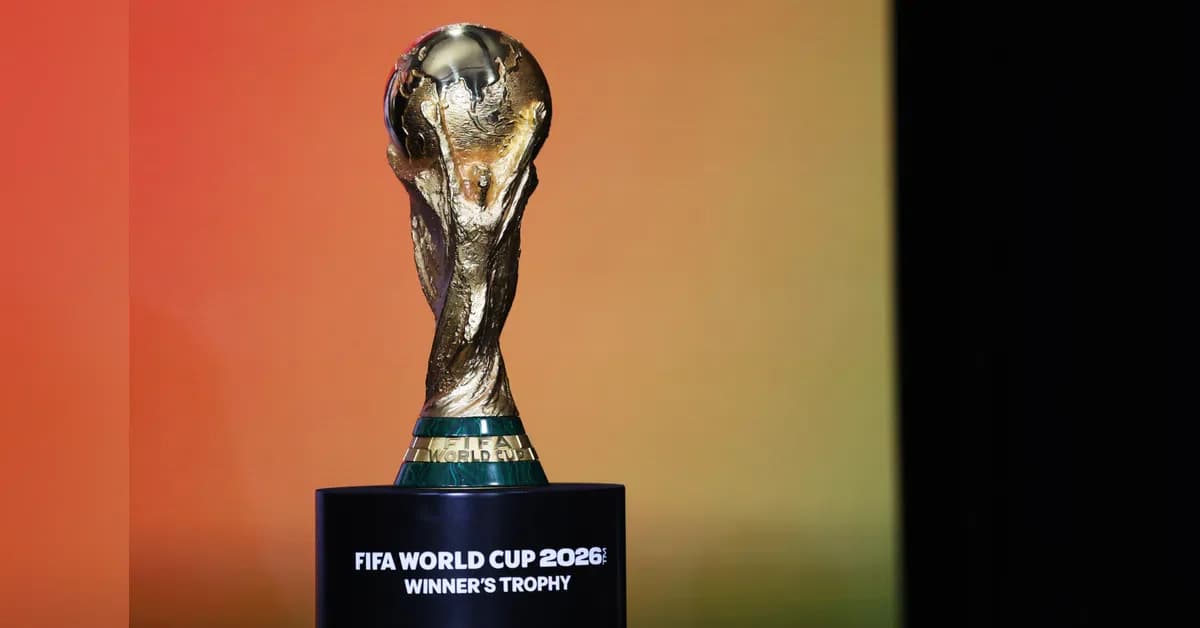
FIFA and China Media Group signed a broadcast agreement on Friday, just 27 days before the June 11 World Cup opener in North America. According to reports from Polymarket Sport, the deal covers the 2026 World Cup in mainland China with a $60 million payment, significantly below FIFA's initial $300 million asking price. The agreement extends through the 2027, 2030, and 2031 tournaments, providing China Media Group with exclusive rights across free-to-air TV, streaming, and mobile platforms in 4K and 8K formats. FIFA secretary general Mattias Grafström expressed satisfaction with the agreement, stating it was a "real pleasure" to find an agreement with CMG after his recent meetings in China with soccer federation officials.

China's state broadcaster CCTV's parent company China Media Group holds a monopoly on major international sports rights inside mainland China, giving it significant negotiating leverage. As reported by Polymarket Sport, this monopoly position allowed China Media Group to maintain an internal budget of $60-$80 million and ignore FIFA's opening price demands. The company's ability to control the Chinese sports broadcasting market meant it could set its own terms rather than accept FIFA's initial valuation, with no real bidding rival in the Chinese rights market structure. The $60 million figure represents a discount from China's payment for the 2022 Qatar tournament, despite the expanded edition featuring 50% more matches.
Two key factors significantly impacted FIFA's pricing power in the Chinese market. China's men's team failed to qualify for the World Cup, deflating domestic interest and reducing the commercial value of broadcast rights. Additionally, tournament evening slots in the United States, Canada, and Mexico land at 12 a.m. to 6 a.m. Beijing time, making the content difficult to monetize during prime viewing hours. The $240 million shortfall from FIFA's reported target demonstrates how the broader sports-rights market in China has cooled, with broadcasters less willing to pay inflated prices for international events. As Polymarket Sport reports, FIFA has now realized the negotiating tactics of its Chinese counterparts, who continue to apply ancient strategic principles in modern business negotiations.
Despite the discounted broadcast deal, Chinese companies have made significant investments in the 2026 World Cup, which is set to earn FIFA more than $11 billion. Technology firm Lenovo serves as one of FIFA's eight top-tier sponsor partners, while dairy firm Mengniu and electronics manufacturer Hisense have signed second-tier deals. However, Chinese conglomerate Wanda's long-term deal with FIFA, signed in 2016, was terminated two years ago. The country's ambitions to host international soccer competitions stalled during the COVID-19 pandemic, with the 2030 men's tournament now mostly hosted in Spain, Portugal and Morocco, and the 2027 Women's World Cup in Brazil.