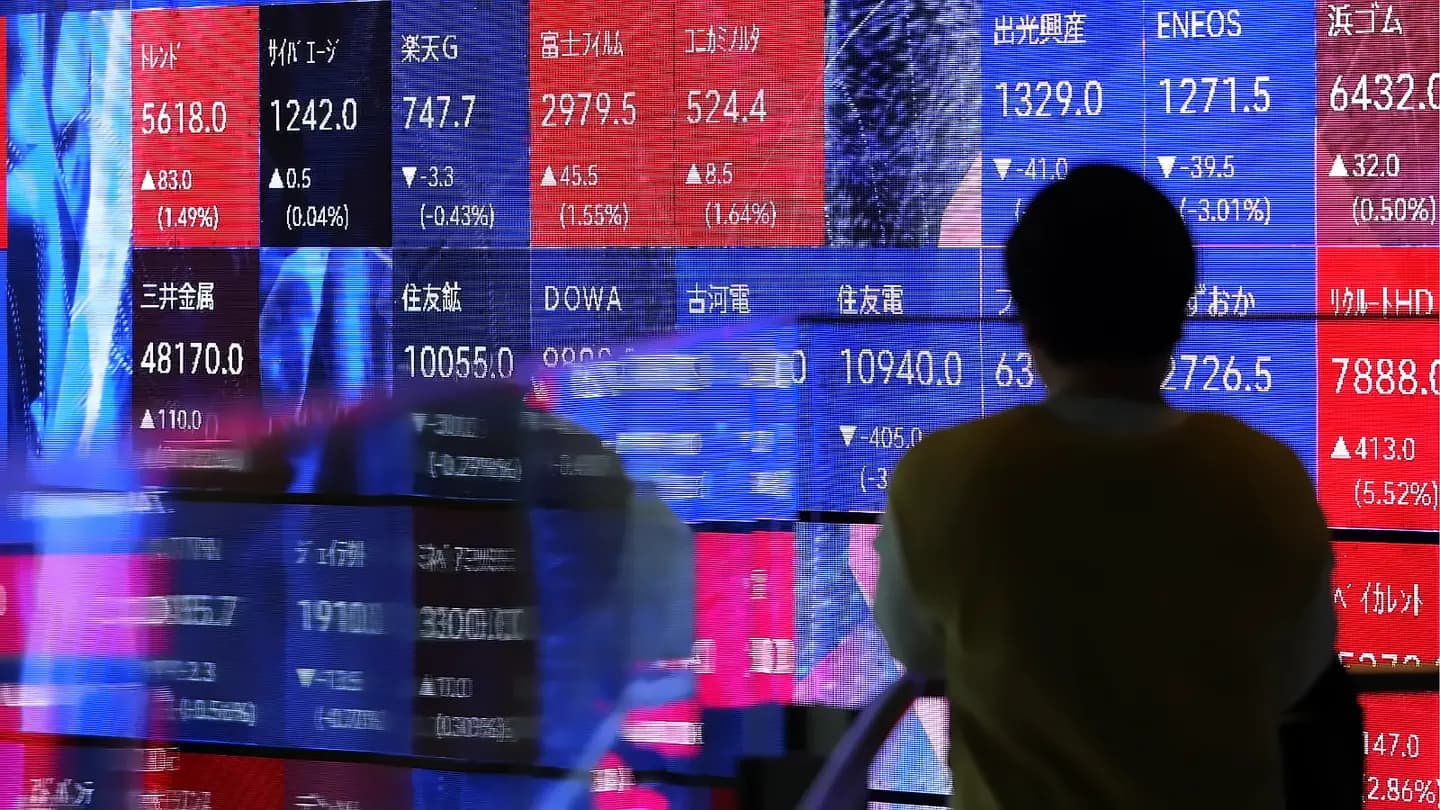
South Korean shares plunged 6.45% on Wednesday as Samsung Electronics and SK Hynix led the decline, triggering another Korea Exchange sell-side sidecar halt on the benchmark. The Korea Exchange activated a sell-side sidecar for the benchmark after Kospi 200 futures fell 5% or more for one minute, pausing program sell orders for five minutes without halting individual stock trading. Program trading on Kospi-listed shares was suspended for five minutes at 9:06 a.m. local time, interrupting a rebound that had lifted the index in prior sessions. Samsung Electronics and SK Hynix, which together drive much of the index's weighting, led Wednesday's decline as investors tracked overnight losses on Wall Street, where chip stocks also sold off.
The market's sharp decline occurred as Wall Street pulled further from its all-time high with artificial intelligence stocks resuming their decline. The S&P 500 fell 0.7% for a third straight modest loss, while the Nasdaq composite sank 1.3% as stocks that had been big winners in the AI boom tracked losses for their US rivals. Micron Technology dropped 7%, with the computer memory seller being one of the heaviest weights on the S&P 500, alongside Nvidia falling 2.3% and Broadcom sinking 3.2%. Even with recent swings, such stocks remain big winners, with Micron having more than tripled this year.
Asian markets broadly declined following South Korea's lead, with Japan's Nikkei 225 also declining more than 2% Wednesday, falling more than 2% as Tokyo names tracked the same overnight U.S. losses. The Shanghai Composite index shed 1.5% to 3,927.70, while Taiwan's Taiex fell 1.4% and Australia's S&P/ASX 200 slipped 0.4% to 9,083.70. Rising oil prices and bond yields added pressure across the region, with Brent crude gaining 0.75% to $91.50 a barrel Tuesday, adding to inflation worries. An Iranian official reportedly warned Tehran could shift to a 'fully offensive' posture should diplomatic efforts collapse, as a 60-day U.S.-Iran memorandum expired Monday without a broader agreement.

Crude oil prices have been swinging sharply due to uncertainty about US-Iran oil tanker deals, with Brent crude surging 0.9% to $91.83 per barrel and US benchmark crude oil gaining 1% to $84.88 per barrel. Bond yields have jumped since the war began because high oil prices are pushing inflation higher, with the 10-year US Treasury yield edging down to 4.70% from 4.72% but remaining well above its 3.97% level from before the Iran war began. The 30-year Treasury yield also ticked lower but is still near its highest level since 2007, with high yields making investors less willing to pay high prices for stocks, particularly expensive AI and technology stocks.