European Central Bank staff members have formally questioned the institution's stability in the face of rumours of early departures by President Christine Lagarde and board member Isabel Schnabel. In a letter seen by Euronews, the staff committee warned that "prolonged uncertainty regarding the future of the institution's senior leadership can therefore affect trust in the ECB's communications, create concern among staff and stakeholders, and complicate the orderly planning of leadership succession and strategic priorities." The staff members emphasized that while they "do not take a position on the accuracy of these reports, nor do they question the right of any individual to consider future professional or public responsibilities," they noted that "when such possibilities concern members of the Executive Board, and specifically the ECB President, they inevitably raise institutional questions." This unusual internal letter has thrust what was previously largely external succession speculation squarely onto the ECB's internal governance agenda, with the staff demanding "appropriate clarity regarding potential leadership transitions" as discussions of major departures can affect both monetary policy and ECB internal reforms.
France has made a formal proposal to support Klaas Knot for ECB president in exchange for securing the chief economist role for a French candidate, according to Reuters sources. The informal proposal has gained the support of French President Emmanuel Macron, but faces stiff resistance from Germany, setting the stage for high-stakes political negotiations among the eurozone's heavyweights. Under the proposed arrangement, Knot would take the presidency with France's blessing, while Paris would secure the chief economist position for one of its candidates. The succession race has gained momentum in recent weeks amid speculation that President Christine Lagarde and fellow Executive Board member Isabel Schnabel might both step down before their terms expire in late 2027, hastening a reshuffle at the top of the ECB. The contest for the chief economist position is equally intense, with Germany considering Princeton University economist Markus Brunnermeier and Stanford University professor Monika Piazzesi, while France favors Bank of France Deputy Governor Agnès Bénassy-Quéré, former OECD Chief Economist Laurence Boone, and BIS economist Helene Rey. As per BigGo Finance, the WEF is currently expected to decide on its next official chair by November, with Lagarde being the leading candidate, while her autobiography Lady First is scheduled for publication in January next year, further deepening market speculation about a possible early departure.
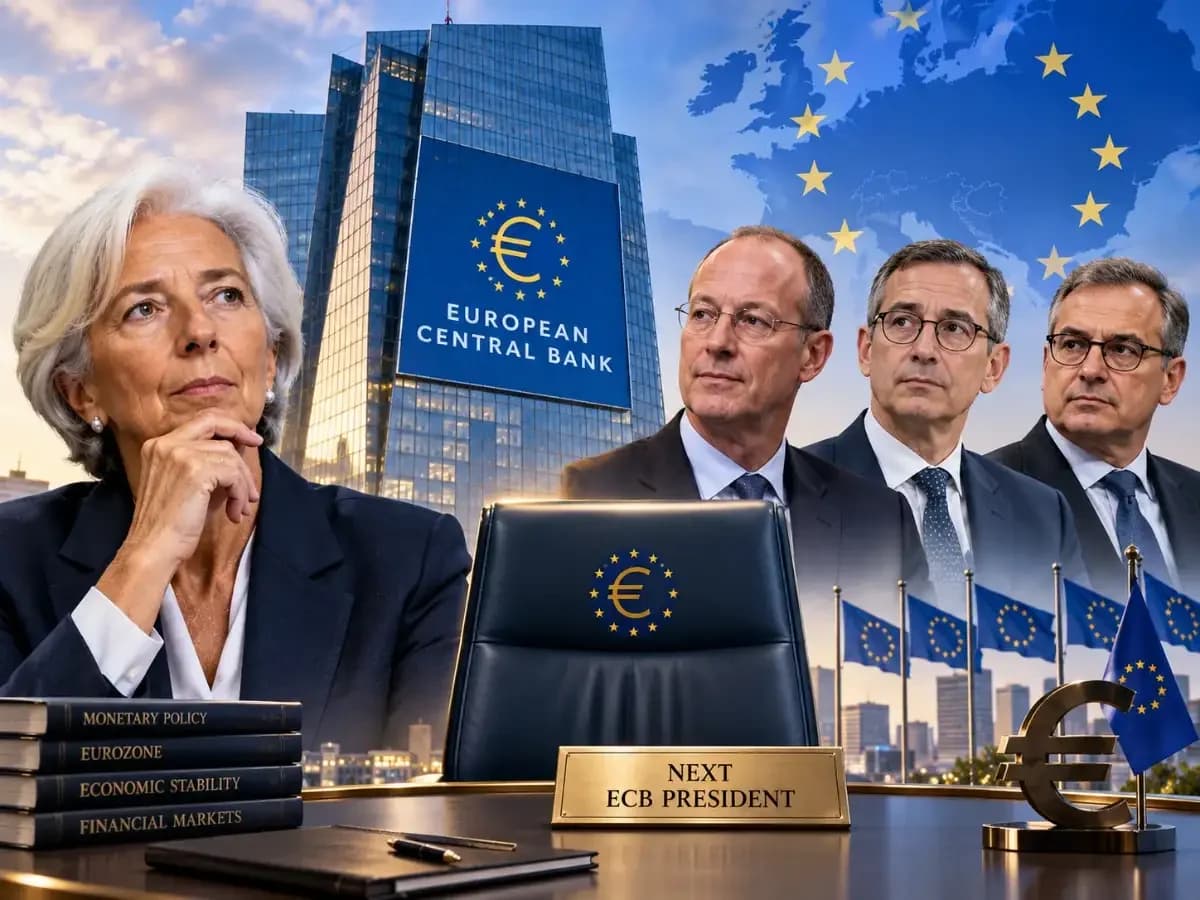
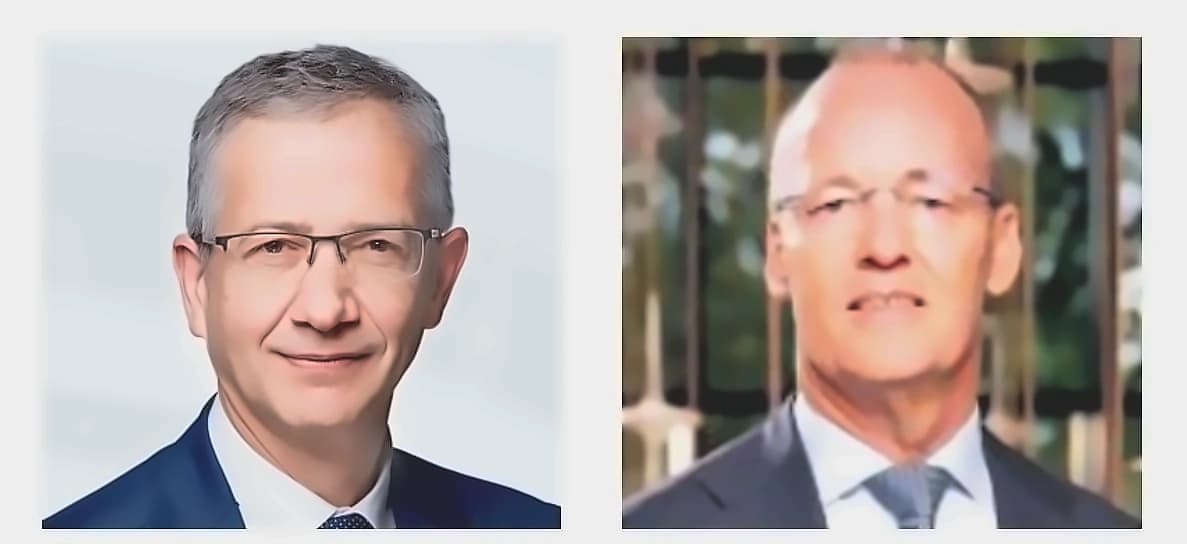
Klaas Knot, 59, served as president of the Dutch central bank from 2011 to 2025 and spent 14 years on the ECB's Governing Council, giving him extensive experience in eurozone monetary policy. Market participants view him as a pragmatist, naturally inclined toward tighter monetary policy but flexible enough to shift course as economic data dictates. As reported by Reuters, Knot is described as "a hawk, but in a smart way," with his tenure including sharply contrasting relationships with ECB presidents, initially criticizing Mario Draghi's aggressive monetary stimulus but supporting his commitment to preserving the euro during the sovereign debt crisis. The former Dutch central banker also chaired the Financial Stability Board from 2021, demonstrating his leadership capabilities beyond traditional monetary policy. Pablo Hernández de Cos, former head of the European Banking Authority and current General Manager of the Bank for International Settlements, is seen as Knot's primary rival, though his southern European origins would likely entail a northern country taking the chief economist role to preserve balance of power. Bundesbank President Joachim Nagel has also been considered a potential contender, but his chances are seen as limited because Germany simultaneously leading both the ECB and the European Commission would break with convention.
The proposal risks immediate pushback from Berlin, as officials there are also eyeing the chief economist role, widely considered the board's second most influential post. While the arrangement would leave Germany with Schnabel's vacated seat and her market operations portfolio, officials remain wary of any softening of the ECB's commitment to price stability. France's mounting debt woes have made Paris keener than ever to keep a firm hand on euro zone monetary policy levers, while less indebted and more economically orthodox Germany remains cautious about any policy softening. The ECB president and five other members of the Executive Board are appointed by consensus among leaders of the currency bloc's 21 countries, with the three largest economies holding de facto permanent representation. There are clear mutual constraints among the candidates, with Germany believing that if the president comes from Spain, it would be difficult to accept a French chief economist, while France may oppose a combination of a Dutch president and a German chief economist. As per BigGo Finance, the parties are likely to engage in an overall exchange across multiple positions rather than deciding individual appointments separately, with a senior official involved in the negotiations describing the ECB presidency as a "package decision" and representing Europe's most important personnel arrangement before European Commission President Ursula von der Leyen's term ends in 2029.
Lagarde's eight-year mandate formally concludes at the end of October 2027, with Schnabel's term ending two months later. An early exit by both women would also speed up the process of filling the role of chief economist Philip Lane, whose term expires in May 2027. Lagarde has stopped short of shutting down talk of an early departure, simply saying: "You are not going to see the back of me before 2027." Media reports have frequently linked her to the leadership of the World Economic Forum, while Schnabel has not commented on reports about discussions about a senior role at the International Monetary Fund. The WEF is currently expected to decide on its next official chair by November, with multiple people familiar with the matter saying Lagarde is the leading candidate. The intense focus on Lagarde's future is also tied to the ECB's impending large-scale leadership transition, with three key positions becoming vacant simultaneously - the presidency, chief economist role, and Executive Board member positions - being highly unusual in the ECB's history. France will hold presidential elections next April, with far-right leader Marine Le Pen currently viewed as a frontrunner, making European leaders more cautious in arranging ECB personnel matters.