The European Central Bank's succession planning has entered a critical phase following Isabel Schnabel's resignation, which set the process in motion for selecting successors to President Christine Lagarde and Chief Economist Philip Lane. According to reports from Business Standard, horse-trading has begun between European capitals for what Greece's premier calls 'a grand bargain' over top central bank roles. The key contenders remain Spaniard Pablo Hernandez de Cos and Dutch rival Klaas Knot, though the possibility of another candidate emerging cannot be ruled out given the complex nature of European Union decision-making. Lagarde hasn't announced any early exit, so the timing remains fuzzy even as capitals begin trading favors, with finance ministry officials confirming no easy backup list ready to go.
Klaas Knot, formerly chief of the Dutch central bank and one-time chair of the Financial Stability Board, brings significant experience as one of the longest-serving Governing Council members. As reported by Business Standard, his past hawkish tendencies may appeal to Germany's Bundesbank, which has maintained a similar stance. However, Knot would need backing from Chancellor Friedrich Merz and his help to secure the presidency, as President Emmanuel Macron is seen as trying to place one of his candidates in Lane's role. To clinch it, he would need not just the blessing of Chancellor Friedrich Merz, but help from Berlin to line up the rest, potentially offset by Germany filling Schnabel's powerful markets brief. The Dutch-Spanish puzzle adds complexity, as to avoid having two Dutch members on the ECB's Executive Board, Frank Elderson would need to step aside, with his seat potentially proposed by Madrid - potentially with a woman put forward.
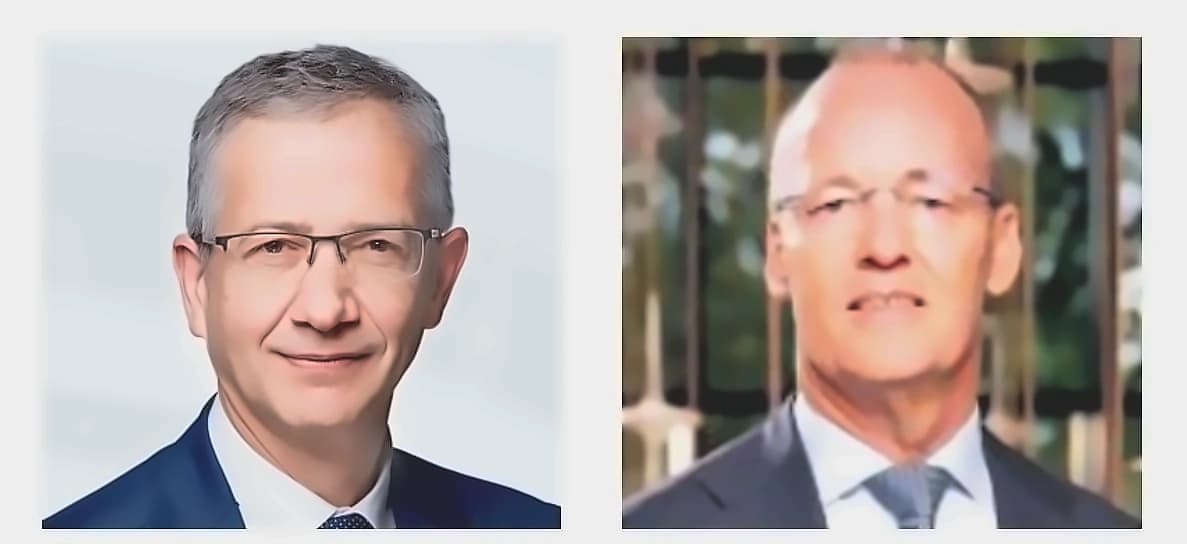
Pablo Hernandez de Cos, general manager of the Bank for International Settlements and former governor of the Bank of Spain, would become the first ECB president to have served there at staff level. According to Business Standard, no Spaniard has held the job before, which counts strongly in his favor. This outcome allows either France or Germany to get the chief economist role, with Berlin potentially having a better chance if countries object to a president and chief economist duo from highly indebted France and Spain. The prospect of France failing to get the chief economist could scupper de Cos' chances, while his prior image as a dove might draw opposition. Germany has other levers, including floating Bundesbank head Joachim Nagel - who previously worked at the BIS - as a successor to de Cos at the BIS, which would require Merz to actually want that outcome.
Three key principles emerge from the succession process: France and Germany must agree, the region's big countries need a seat on the six-member board, and at least one should be a woman. As reported by Business Standard, if gender emerges as an issue, potential tie-breakers include Spain's Pedro Sanchez proposing Nadia Calvino (former Spanish finance minister leading the European Investment Bank) or Finland's Governor Olli Rehn, who previously tried for both ECB positions. However, forcing one of the bigger countries to give up their board seat would complicate negotiations. If a stalemate persists beyond France's presidential elections in April-May, with current front-runner Marine Le Pen potentially winning, the ECB leadership could become a bargaining chip during market sensitivity. Two women in the mix from France are former OECD Chief Economist Laurence Boone and Bank of France Deputy Governor Agnes Benassy-Quere.