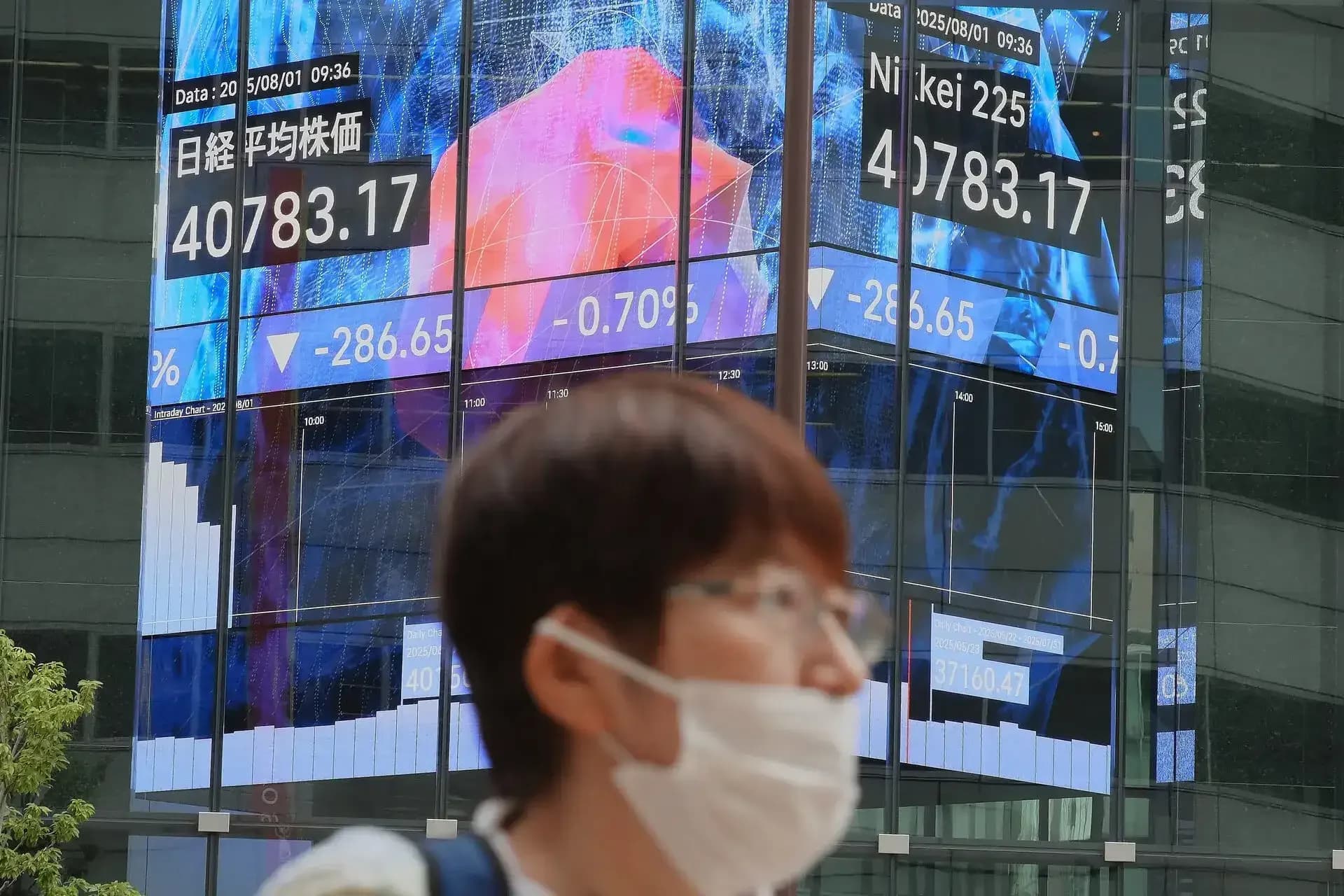
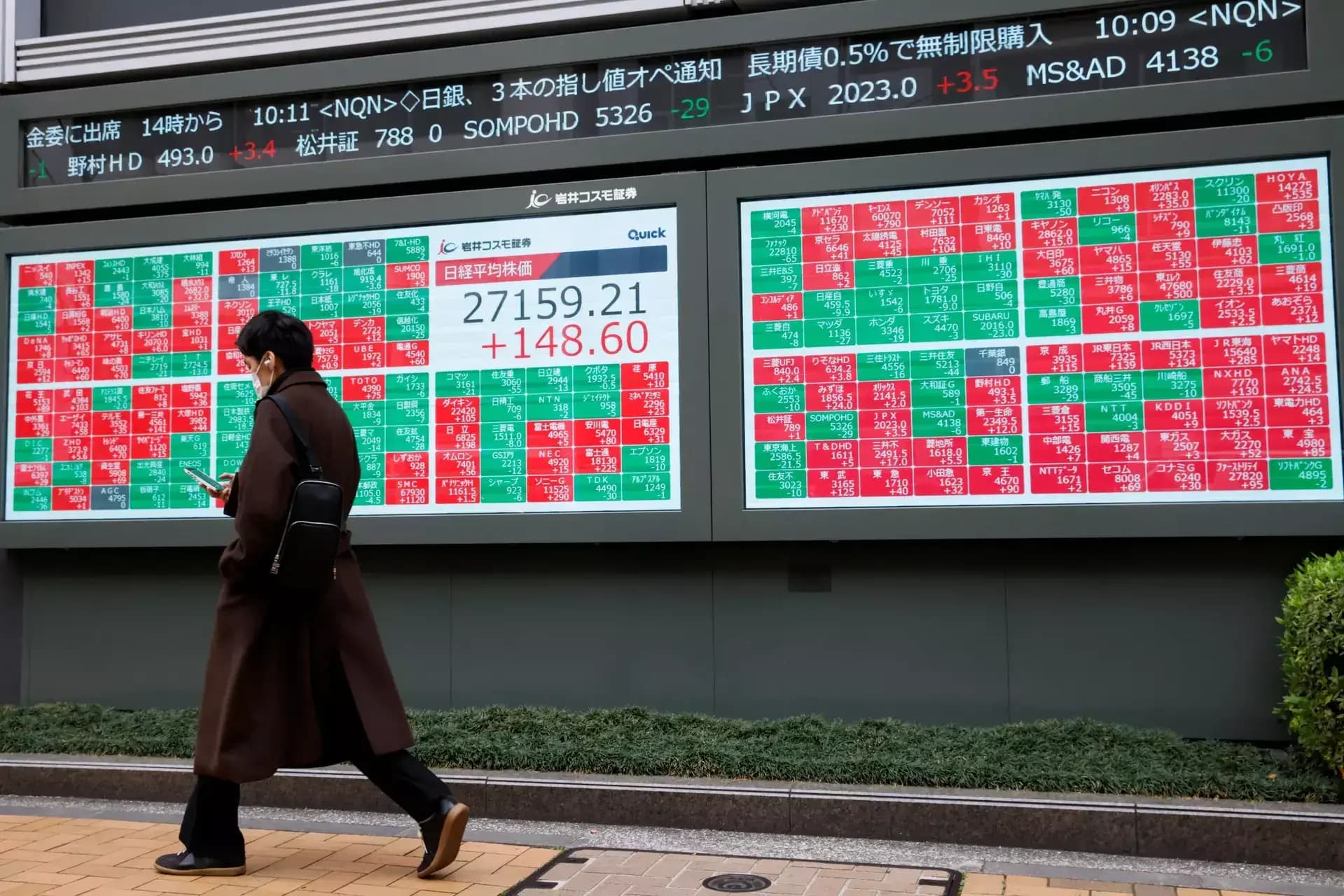
Japan's Nikkei 225 index recorded its biggest weekly gain in nearly two years, posting a 7.9% rise for the week - its sharpest weekly gain since August 2024. The index closed 0.28% higher at 71,250.06 on Friday after spiking 1.3% to a record of 71,952.99, marking its seventh consecutive session of gains and hitting consecutive record highs this week. According to The Economic Times, the index briefly crossed the 70,000 mark for the first time on Tuesday after the Bank of Japan raised interest rates to 1.00%, as widely expected. The broader Topix fell 0.57% to 4,044.96, with market breadth remaining strong as 137 stocks advanced against 85 decliners in the Nikkei. The sustained rally occurred despite the central bank's rate hike to a 31-year high, which typically concerns stock market investors, with the Bank of Japan marking its first rate hike since December. The rally was driven by easing Middle East conflict worries and sustained buying in AI-related shares ahead of the U.S. Federal Reserve's policy decision.
Official data showed that exports increased 17% year-on-year in May, marking the fastest growth since November 2022, driven by robust demand for automobiles and semiconductor-related products. As reported by Business Standard, this strong export performance provided additional momentum to the market rally alongside the positive geopolitical developments. Technology and semiconductor-related stocks led the market higher, with strong gains seen in Lasertec, Tokyo Electron, Taiyo Yuden, Murata Manufacturing, and Ibiden. The technology sector continued to lead gains, with 67 of Nikkei's 225 components rising while 157 fell, as reported by The Economic Times. Heavyweight stocks showed mixed performance, with Fujikura rising 9.02%, Kioxia closing up about 4.19%, and Advantest gaining 3.13%; Tokyo Electron fell 2.61% and Disco dropped 4.34%. The broader TOPIX index closed at 3,987.64 points, down 0.3%, indicating mixed sentiment across different market segments.
The Bank of Japan decided to raise its short-term policy rate to 1% from 0.75%, in line with market expectations and marking the first rate hike announced by the Japanese central bank since December. As reported by The Economic Times, Deputy Governor Shinichi Uchida welcomed the recent US-Iran peace deal but noted persistent inflationary risks. "Compared with the previous meeting, the risk of a sharp deterioration in the economy has diminished. On the other hand, price rises are broadening and there is a risk underlying inflation may deviate from our target," Uchida said in a news conference. According to The Associated Press, the rate hike reflects the central bank's assessment that risk of a sharp deterioration in the economy has diminished, though many issues remain uncertain with negotiations expected to continue over the next 60 days. Additionally, the Bank of Japan stated that it will suspend tapering its bond purchases from April 2027, maintaining the monthly Japanese government bond purchase scale at around 2 trillion yen. The move provided some hawkish signals to markets, especially given that the BOJ also said it was ready to hike rates further if inflation and the economy picked up as expected, with a key point of concern being rising inflationary risks from higher oil prices.
Friday's session saw a slight retreat as worries grew that talks to end the Iran war would be difficult, with Switzerland saying U.S. talks with Iranian negotiators on a pact to end the conflict in the Middle East would not take place on Friday, as Vice President JD Vance dropped plans to travel to Switzerland. As reported by The Economic Times, "The market expects more negotiations to come to end the war as there is a 60-day period to reach a final agreement, but this news came too suddenly and is an indication of a tough road ahead," said Daisuke Hashizume, senior strategist at Daiwa Securities. "In addition, the market wanted to lock in profits for the recent rally before the weekend, especially since the U.S. market is due to be closed on Friday," he added. The positive sentiment was earlier bolstered by the Iran-US peace deal framework, with US President Donald Trump announcing on Sunday that the agreement has been finalised, though recent developments have added uncertainty to the market outlook.
Friday's session saw significant gains in AI-related stocks, with Fujikura surging 15.69% to a daily limit high of 5,161 yen after the fibre-optic cable maker raised its annual net profit forecast to ₹229 billion ($1.42 billion). According to The Economic Times, the company had initially guided for a ₹156 billion profit, just shy of last year's ₹157.1 billion. Chip-related stocks also performed strongly, with Advantest rising 4.75% and Kioxia surging 12%. Fujikura's peer Furukawa Electric surged 15%, reflecting the broader optimism for AI-driven companies. However, bank shares dragged the Topix lower, with Mitsubishi UFJ Financial Group and Mizuho Financial Group down 2.85% and 4.42% respectively. The mixed performance across sectors highlighted the selective nature of the current market rally, with investors focusing on AI-related opportunities while remaining cautious about traditional banking stocks. Despite the mixed session, both indexes posted strong weekly gains, with the Nikkei rising about 8% and the Topix advancing around 4%, supported by a global rally in semiconductor and artificial intelligence-related stocks.